Strengthening Investment in Strategic Industries
"Focus Should Be on Domestic Production"
"Shift to an Integrated Supply Chain Strategy"
As global protectionism, led by the United States, continues to spread, a recommendation has been made to strengthen domestic investment incentives in order to solidify the production base for strategic industries. Additionally, there is growing potential for Korean companies to create new added value through artificial intelligence (AI) technology cooperation in overseas markets.
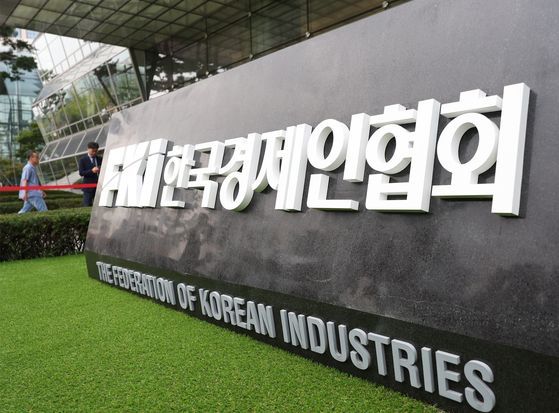
On December 1, the Korea Economic Research Institute (KERI) of the Federation of Korean Industries (FKI) co-hosted a seminar titled "Policy Measures for the Restructuring of Korea-Style Global Value Chains (K-GVC)" at the FKI Tower Conference Center in Yeongdeungpo-gu, Seoul, together with the Future Economic Growth Strategy Committee of the Democratic Party of Korea and the Korean Economic Association.
Jung Sunghoon, Head of the Supply Chain Research Team at the Korea Development Institute (KDI), assessed that the era of multilateralism centered on the World Trade Organization (WTO) is coming to an end, and a new era of bilateral transactions, dubbed the "Trump Round," is taking hold in earnest.
Jung pointed out, "Korea's trade structure is highly dependent on imports from China and exports to the United States, exposing the country to dual economic security risks from both China and the United States. In particular, exports to the United States are heavily concentrated in a few sectors such as automobiles, semiconductors, and machinery, making them potential primary targets of U.S. protectionist policies."
Regarding reshoring (the return of overseas companies to Korea), he advised, "Rather than being bound by formal requirements, we should focus on strengthening domestic investment incentives for strategic industry companies, both at home and abroad, shifting the focus from 'domestication of companies' to 'domestication of production.'"
He also emphasized the need to diversify trading partners, including joining the Comprehensive and Progressive Agreement for Trans-Pacific Partnership (CPTPP).
Shin Wonkyu, Senior Research Fellow at KERI, introduced the concept of "Just-in-Value," which focuses on where companies can generate the highest added value.
He stated, "The location of value creation will become a key criterion for corporate survival in the future. While the U.S.'s high tariff policies and increasing pressure for localization may be perceived as a threat of industrial hollowing-out, there is significant potential for Korean manufacturing to create new added value by combining with local AI technology and partnerships."
He added, "Korean investment in the United States can serve as a strategic bridgehead for our companies to expand into markets such as China, the European Union (EU), and the Global South by leveraging their U.S. bases. Going forward, supply chain policy should shift from a defensive approach of simply 'maintaining domestic factories' to an aggressive and integrated supply chain strategy that maximizes the total added value created by Korean companies in the global market."
Chung Chul, President of KERI, emphasized in his welcoming remarks, "Redesigning supply chains with geopolitical risks in mind is a matter of survival for our companies. Strengthening the domestic industrial base to further solidify Korea's strategic position in global supply chains is a core national priority."
In her congratulatory address, Lee Eonju, Chairperson of the Future Economic Growth Strategy Committee of the Democratic Party of Korea, said, "In an era where uncertainty has become the new standard, it is urgent to build a foundation for our economy's growth. I hope that the government, businesses, and academia will come together to develop and implement a Korea-style global supply chain strategy."
Lee Keun, President of the Korean Economic Association, remarked, "The current challenge of supply chain restructuring facing our economy goes beyond a simple trade issue and is directly linked to the innovation and competitiveness of our industrial structure. I hope that today's seminar will serve as an opportunity to seek solutions to this issue."
© The Asia Business Daily(www.asiae.co.kr). All rights reserved.












