"Cash Shortage Is the Cause of the Bitcoin Crash"
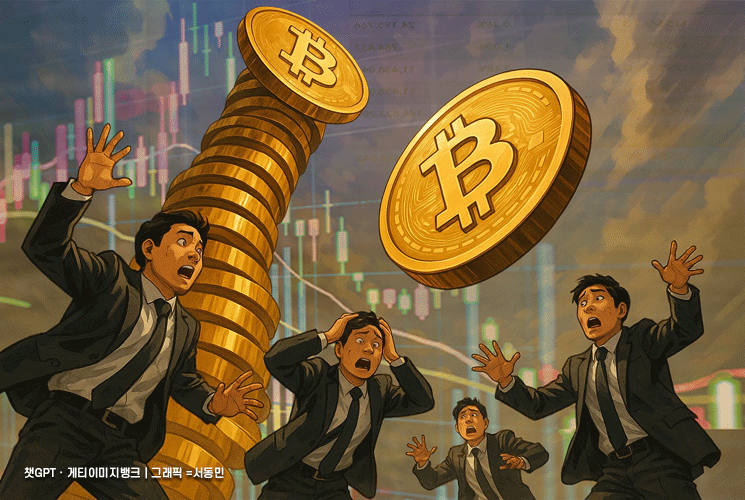
Robert Kiyosaki, author of the bestseller "Rich Dad Poor Dad," has recently expressed his intention to purchase more Bitcoin despite the ongoing downturn in the cryptocurrency market.

On November 15 (local time), Kiyosaki posted on his social media account to share his views on the recent sharp decline in Bitcoin prices. He stated, "Bitcoin is falling, but I am not selling. I am waiting," adding, "All markets are shaking because the world is suffering from a cash shortage." He went on to explain that he is not selling Bitcoin during this downturn because, as he put it, "I do not need cash."
"I Will Buy More After the Bitcoin Crash Ends"
Kiyosaki referenced the "Big Print" concept of Lawrence Lepard, founder of the U.S. hedge fund EMA, predicting, "The world is drowning in massive debt, and eventually, large-scale money printing will begin."
He added, "During this process, the value of real assets and cryptocurrencies such as gold, silver, Bitcoin, and Ethereum will rise, while fiat currencies will lose value." He also emphasized, "There are only 21 million Bitcoins in existence," and revealed, "Once this crash is over, I will purchase more Bitcoin."
Previously, in April, he also claimed that the price of Bitcoin would eventually reach $1 million in the long term. At that time, he stated, "Short-term corrections are inevitable, but I plan to buy more during downturns."
Meanwhile, some experts caution that Kiyosaki's price forecasts have often been exaggerated in the past, and his statements should be approached with caution. The business daily Economic Times reported that a sense of caution is spreading among both the coin community and experts. The publication pointed out that Kiyosaki's remarks can sometimes fuel fear and increase market volatility.
For this reason, some in the industry argue that "Kiyosaki's outlook should be used only as a reference for understanding market trends, and it is risky to treat it as direct investment advice." Therefore, some experts emphasize that his comments should be interpreted as a 'macroeconomic narrative' for understanding global economic trends, rather than as individual investment recommendations.
© The Asia Business Daily(www.asiae.co.kr). All rights reserved.












