Flu Cases Double in the 45th Week
Low Vaccination Rates Among High-Risk Groups
In November, the number of influenza (flu) patients in South Korea has surged, prompting health authorities to issue a warning.
According to the outpatient sample surveillance results for clinics released by the Korea Disease Control and Prevention Agency (KDCA) on November 15, the number of suspected flu cases observed at around 300 sample medical institutions nationwide during the 45th week (November 2-8) was 50.7 per 1,000 outpatients. This is approximately 2.2 times higher than the previous week's figure of 22.8. Suspected flu cases refer to patients exhibiting flu symptoms such as a fever of 38 degrees Celsius or higher, cough, and sore throat.
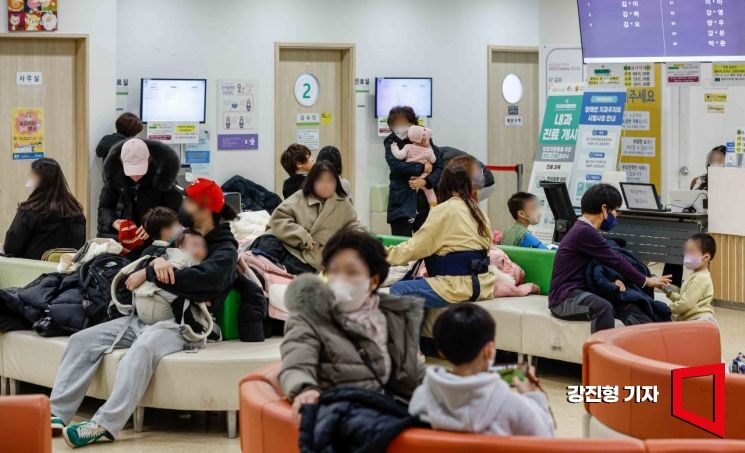 On the 13th, as influenza, COVID-19, and respiratory syncytial virus (RSV) simultaneously spread, a pediatric specialty hospital in Seongbuk-gu, Seoul, was crowded with children and their guardians, raising alarms about respiratory health management.
There has been a particularly sharp increase in cases among children and adolescents. Among those aged 7 to 12, the number of patients with flu symptoms was 138.1 per 1,000, far exceeding the overall average. For children aged 1 to 6, the figure was 81.1, and for adolescents aged 13 to 18, it was 75.6, indicating a clear trend of the flu spreading predominantly among younger age groups.
This year, the flu season began earlier than usual. A flu advisory was issued on October 17, about two months earlier than last year. Since then, the number of cases has risen steeply: 7.9 per 1,000 in the 42nd week, 13.6 in the 43rd week, 22.8 in the 44th week, and 50.7 in the 45th week. The KDCA predicts that "this winter's flu outbreak will be more widespread and prolonged than last winter, which was the most severe in the past decade."
Health authorities are urging high-risk groups to get vaccinated as soon as possible. Children aged six months to 13 years, seniors aged 65 and older, and pregnant women are eligible for the national vaccination program and can receive the vaccine free of charge. In particular, seniors aged 65 and older can receive the COVID-19 vaccine at the same time. To maximize immune response, the vaccines should be administered in different arms. This is because using different arms allows for sufficient antibody production, as the vaccines activate immune cells in the lymph nodes.
A KDCA official warned, "Unlike a common cold, the flu is accompanied by high fever, muscle pain, and general fatigue, so it is very important to alleviate symptoms through vaccination." The official also cautioned, "Recently, childhood vaccination rates have been declining for five consecutive years, which means this year's vaccination coverage may not be sufficient to prevent the spread of the flu."
© The Asia Business Daily(www.asiae.co.kr). All rights reserved.












