Debate Over Early Morning Delivery Restrictions Intensifies, Spreading Conflict
Concerns Raised Over Regulatory Fairness Between Domestic and Overseas Platforms
As the Korean Confederation of Trade Unions (KCTU) Delivery Workers’ Union pushes to restrict early morning delivery services (from midnight to 5 a.m.) by domestic platforms such as Coupang and Kurly, concerns are spreading across online communities about the potential market dominance of Chinese platforms.
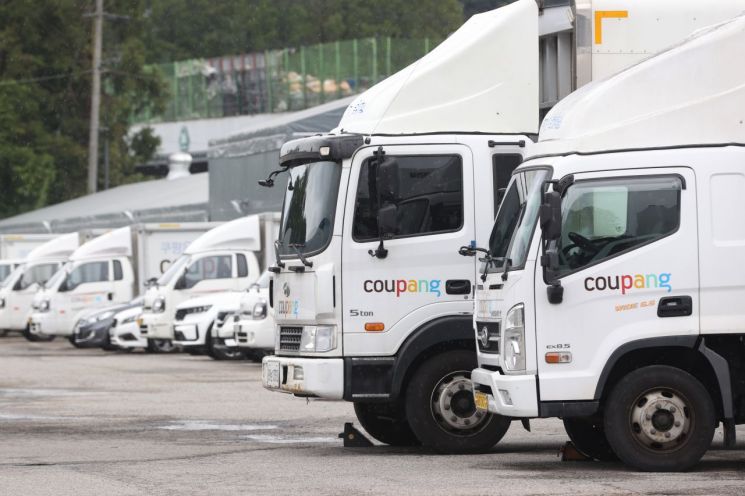
Recently, after the KCTU announced its stance to limit early morning deliveries to prevent overwork-related deaths among delivery drivers, consumers have voiced concerns, asking, "If domestic companies stop, won't overseas platforms like Aliexpress and Temu take over the market?" This anxiety stems from the fact that the KCTU’s call to restrict early morning delivery and the launch of Aliexpress’s ‘Alifresh’ were announced around the same time.
Last month, Aliexpress launched ‘Alifresh,’ a fresh food delivery service, in partnership with Shinsegae Group. ‘Alifresh’ is a service that delivers products such as fruits, vegetables, and meat through domestic courier companies within one or two days, and it is currently in a pilot phase. Industry insiders predict that Aliexpress is highly likely to introduce an early morning delivery model targeting Korean consumers in the medium to long term.

Meanwhile, the ‘Courier Social Dialogue Organization,’ which is currently discussing early morning delivery issues, includes the Ministry of Land, Infrastructure and Transport, the KCTU, and domestic companies such as Coupang, Kurly, and CJ Logistics, but does not include overseas platforms like Aliexpress and Temu. Critics point out that while domestic platforms are tied up in regulatory discussions, overseas platforms, which are outside the scope of these discussions, are likely to expand their market share.
In fact, Aliexpress has grown to become the second-largest e-commerce platform in Korea, with 9.09 million monthly active users. The company has announced plans to invest 1.5 trillion won to target the Korean market and is also pushing to build a large-scale integrated logistics center at a cost of 260 billion won. This is why there are concerns that if early morning delivery by domestic companies is restricted, overseas platforms could quickly fill the gap.
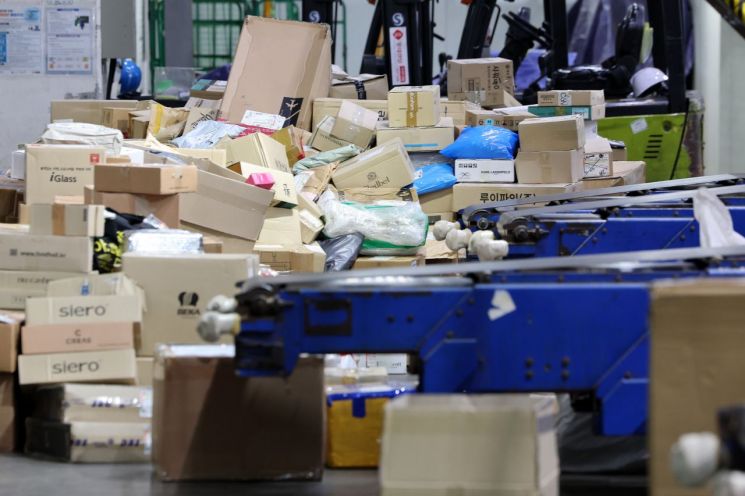
There is also strong backlash on the ground. The Coupang Partners Association, which includes about 10,000 of Coupang’s 20,000 contract drivers, conducted a survey of 2,405 drivers and found that "93% of delivery drivers oppose the proposal to restrict early morning delivery." Academia has also analyzed that banning early morning delivery could result in up to 54 trillion won in social losses.
Consumer backlash is also significant. In a previous online survey conducted by the Korea Consumer Association and the Korea Consumer Organization Association with 1,000 consumers, 64% responded that they would feel inconvenienced if early morning delivery were discontinued. Furthermore, on November 13, a post titled "Petition Against the Ban and Restriction of Early Morning Delivery" was uploaded to the National Assembly’s public petition board, further fueling the controversy.
As regulatory discussions around early morning delivery become increasingly complex-entangling consumer convenience, delivery workers’ conditions, and competition between domestic and overseas platforms-there is a growing call for effective and realistic alternatives that take into account the potential impact on the entire industry.
© The Asia Business Daily(www.asiae.co.kr). All rights reserved.



















