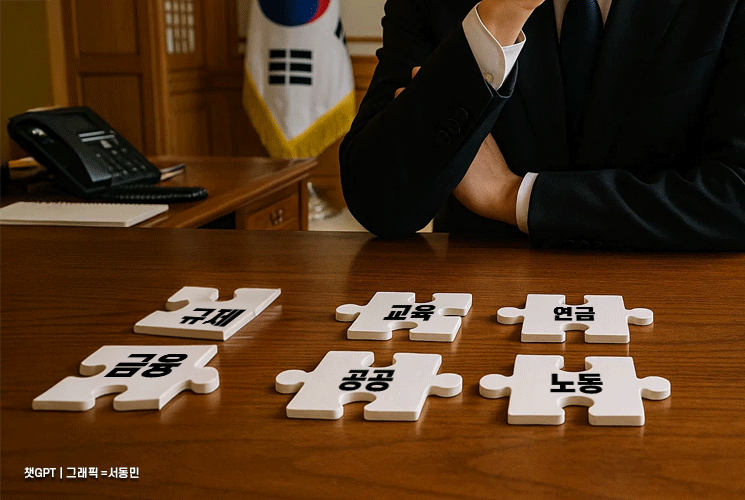
President Lee Jaemyung instructed his aides on November 13 to carry out structural reforms in six key areas: regulation, finance, public sector, pensions, education, and labor. He stated, "I will make next year the first year of a rebound in the potential growth rate."
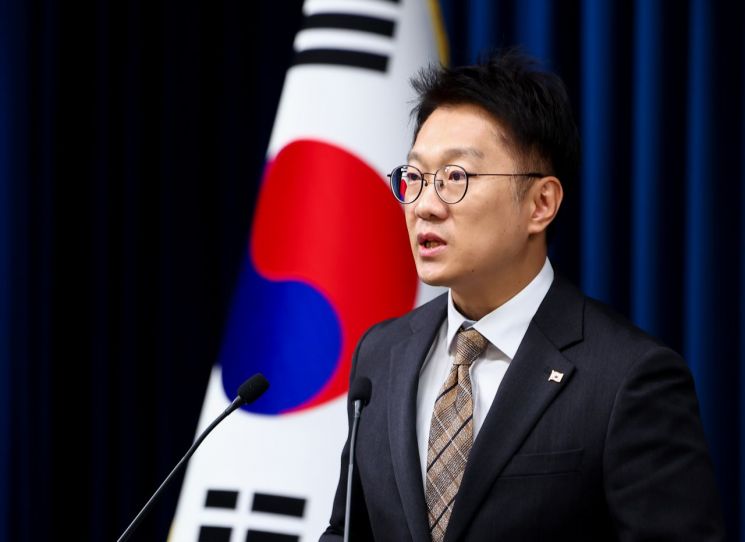
Kim Namjun, spokesperson for the Presidential Office, announced the main points of the senior aides' meeting presided over by President Lee at a briefing held at the Yongsan Presidential Office that afternoon. Kim explained, "Previous administrations set regulatory reform as an end in itself, which led to a focus on short-term achievements." He added, "The Lee Jaemyung administration plans to develop detailed reform measures for each sector and goal to ensure tangible results."
Regarding regulatory reform, Kim stated, "We plan to apply regulations flexibly to new technologies while maintaining appropriate levels of regulation in areas related to life and safety, thus pursuing rational regulatory reform in line with changing circumstances." He emphasized, "We will strengthen communication with economic organizations and local communities, and rationalize regulations accordingly."
On financial reform, President Lee pointed out, "Currently, the financial system has become a so-called financial class system, where the poor are forced to pay high interest rates." He stressed, "Financial institutions must fulfill their public functions." Kim added that President Lee instructed his team, "Do not be bound by existing ways of thinking; come up with solutions."
Kim also stated, "Public sector reform will focus on restoring public institutions as drivers of economic growth." He explained, "The government will adjust the functions of public institutions from the perspective of citizens as end-users and reform the evaluation system to support capabilities that lead the market in labor, safety, and balanced growth."
In particular, Kim conveyed that "President Lee made it clear that public institution reform should not mean dismissing powerless individuals under the pretext of reform, but rather eliminating unnecessary executive positions."
Pension reform will involve the National Assembly's special committee on pensions discussing concrete reform measures, with the government providing support to establish a multi-layered income security system.
Education reform will focus on fostering regional universities, including flagship national universities, to respond to changing circumstances. Labor reform will prioritize ensuring citizens' right to work and addressing polarization in the labor market.
© The Asia Business Daily(www.asiae.co.kr). All rights reserved.