Financial Services Commission Announces Revision to Supervisory Regulations for Specialized Credit Finance Companies
Rising Insolvency Risks for Card and Capital Firms
Plan to Strengthen Management Improvement Procedures
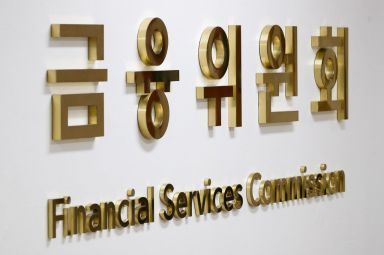
The government is expediting management improvement procedures for underperforming credit card companies and capital firms, as well as other specialized credit finance companies. The plan is to overhaul the prompt corrective action system for specialized credit finance companies experiencing management difficulties, in order to accelerate their turnaround.
Financial Services Commission Announces Revision to Supervisory Regulations for Specialized Credit Finance Companies
On November 3, the Financial Services Commission announced a revision to the supervisory regulations for specialized credit finance companies, with a focus on improving the prompt corrective action system for these firms. Specialized credit finance companies refer to businesses such as card companies, digital lenders, and leasing companies that provide credit without accepting deposits. Prompt corrective action is a measure taken by financial authorities when a financial institution's financial condition falls below a certain threshold or there are concerns about insolvency, in order to encourage management improvement. Depending on the severity of the insolvency, these measures are implemented in stages, such as management improvement recommendations, requirements, or orders.
Under the existing supervisory regulations, underperforming specialized credit finance companies are required to submit a management improvement plan within two months after a prompt corrective action is imposed. However, the Financial Services Commission explained that this two-month period is considered too long, so it will be shortened to 15 days, which is the same as the requirement for savings banks and other financial institutions. In addition, while the current system requires companies to submit a management improvement plan after a prompt corrective action is imposed, going forward, the plan must be submitted before the action is imposed. This change is intended to allow for more accurate and timely sanctions by obtaining the management improvement plan earlier.
The Financial Services Commission will also add the Act on the Structural Improvement of the Financial Industry (the Financial Industry Restructuring Act) as a basis for prompt corrective action. The current supervisory regulations do not specify the application of this law in the context of prompt corrective action, which has been a regulatory loophole. By adding provisions from the Financial Industry Restructuring Act, a legal basis will be established for imposing management improvement orders on insolvent financial institutions. Unlike banks or insurance companies, the specialized credit finance sector did not previously stipulate requirements for management improvement orders under this law, making it difficult to carry out swift restructuring procedures.
A Financial Services Commission official emphasized, "With this revision, we will establish a legal basis for imposing management improvement orders on underperforming specialized credit finance companies whose liabilities exceed their assets due to large-scale financial accidents or the occurrence of non-performing loans, thereby enabling the rapid resolution of insolvent financial institutions."
Proactive Measures Expected for Underperforming Card and Capital Companies
The government's move to strengthen oversight of the specialized credit finance sector is closely related to the recent difficulties faced by card companies and capital firms. According to the Financial Supervisory Service, the net profit of domestic standalone card companies in the first half of this year was 1.2251 trillion won, a decrease of 18.3% compared to the same period last year. Asset quality has also deteriorated. As of the end of the first half, the total delinquency rate for card company receivables was 1.76%, up 0.11 percentage points from 1.65% at the end of last year. This is the highest level since the end of 2014, when it was 1.69%. The ratio of substandard and below loans, which indicates non-performing loans, also rose to 1.3%, up 0.14 percentage points from 1.16% at the end of last year. This is due to the prolonged slump in domestic demand, as well as the government's tightening of lending regulations to manage household debt, which has led to sluggish performance in key card company businesses such as card loans.
Capital firms are also facing difficulties due to the fallout from problematic real estate project financing (PF) loans. According to the Financial Supervisory Service and the credit rating industry, as of the first half of this year, the PF loan exposure of major capital firms was in the 50% range relative to their equity capital. The resolution of low-quality PF loans has been delayed, and delinquency rates remain relatively high, fueling ongoing concerns about asset quality. A representative from NICE Credit Rating stated, "Capital firms are experiencing a continued deterioration in asset quality, particularly in PF loans and other loan receivables. Recently, delinquency rates for individual business loans and household loans have also reached higher levels compared to the past, further increasing asset quality risks."
© The Asia Business Daily(www.asiae.co.kr). All rights reserved.
















