"When Infected With Viruses Like Influenza,
Cardiovascular Risk Rises?Vaccination Is Essential for Prevention"
Research has found that viral infections such as influenza (flu) can sharply increase the risk of cardiovascular disease.
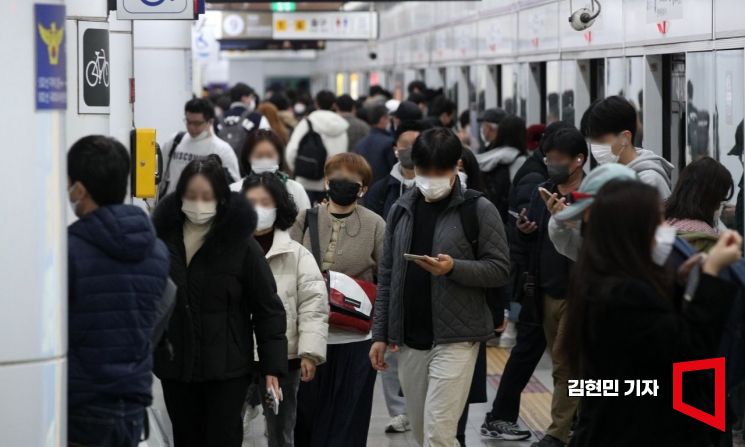 Citizens wearing masks are walking on the platform at Yeouido Station of the Seoul subway. The photo is not related to the specific content of the article. Photo by Kim Hyunmin
A research team from the David Geffen School of Medicine at the University of California, Los Angeles (UCLA) recently published a paper in the Journal of the American Heart Association (JAHA), stating, "Infections with influenza and COVID-19 viruses raise the risk of cardiovascular disease not only immediately after infection but also in the long term." This study is based on a comprehensive analysis of 155 related papers from around the world.
Stroke risk increases fivefold within a month of flu infection
The researchers found that, among those infected with influenza, the risk of myocardial infarction increased on average fourfold and the risk of stroke increased fivefold within one month after infection.
For people infected with COVID-19, the risk of myocardial infarction was three times higher and the risk of stroke was three times higher for 14 weeks following infection. These elevated risks persisted for up to one year.
Individuals with hepatitis C infection had a 27% higher risk of myocardial infarction and a 23% higher risk of stroke. Those who had shingles (herpes zoster) faced a 12% higher risk of myocardial infarction and an 18% higher risk of stroke. For people living with human immunodeficiency virus (HIV), the risk of myocardial infarction was 60% higher and the risk of stroke was 45% higher.
The research team analyzed that higher vaccination rates for influenza, COVID-19, and shingles could significantly reduce the overall incidence of myocardial infarction and stroke. They stated, "Preventive measures against viral infections, including vaccination, can play an important role in lowering the risk of cardiovascular disease," adding, "Prevention is especially important for adults who already have cardiovascular disease or possess risk factors for it."
Meanwhile, the number of flu patients in Korea has surged more than threefold compared to a year ago. There are concerns that the flu could become widespread, reaching the highest levels seen in the past ten years. According to sample surveillance by the Korea Disease Control and Prevention Agency (KDCA) at primary care clinics, the influenza-like illness (ILI) rate for week 43 of this year (October 19-25) was 13.6 cases per 1,000 outpatients, which is 3.5 times higher than the previous year's figure of 3.9 cases. Influenza-like illness refers to patients showing symptoms such as a fever of 38 degrees Celsius or higher, cough, and sore throat.
The KDCA predicted that the influenza epidemic during this winter season (2025-2026) will be similar in scale to the 2024-25 season, which saw the most severe flu outbreak in the past decade. The duration of the epidemic may also be prolonged. KDCA Commissioner Lim Seungkwan recommended vaccination, stating, "There is a strong possibility that influenza will be widespread again this winter, so thorough preparation is necessary."
© The Asia Business Daily(www.asiae.co.kr). All rights reserved.












