"Difficult to Attribute to Other Causes...
Causal Relationship Can Be Inferred"
A court has ruled that the government's refusal to compensate for adverse neurological reactions, such as Guillain-Barre syndrome, following COVID-19 vaccination, was unjustified.
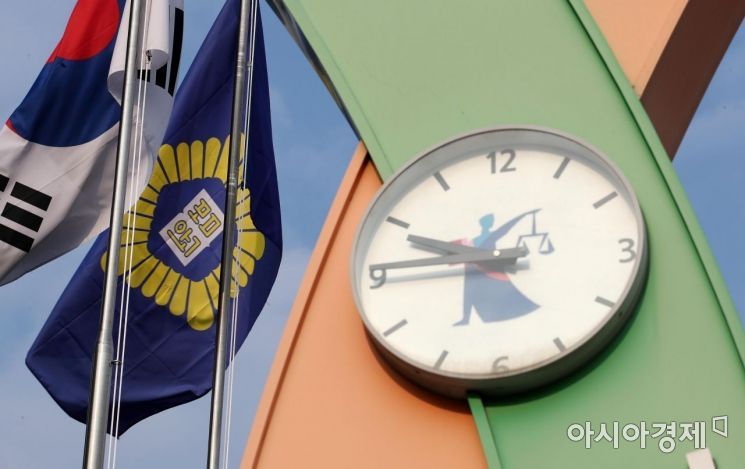
According to the legal community on November 3, the 8th Administrative Division of the Seoul Administrative Court (Presiding Judge Yang Soonjoo) ruled in favor of the plaintiff in a lawsuit filed by Mr. A against the Director of the Korea Disease Control and Prevention Agency, seeking to overturn the rejection of his application for compensation for vaccination-related injury.
In March 2021, Mr. A experienced adverse reactions including fever, nausea, vomiting, headache, and muscle pain approximately 10 hours after receiving the AstraZeneca (AZ) vaccine. While receiving inpatient treatment, he was successively diagnosed with "unspecified encephalomyelitis" and "Guillain-Barre syndrome." However, the Korea Disease Control and Prevention Agency twice rejected his application for compensation, stating that it was difficult to recognize a causal relationship with the vaccine.
Instead, the agency designated Mr. A as a recipient of the "Medical Expense Support Program for Severe Cases with Insufficient Causality" and provided partial support for his medical expenses. Mr. A subsequently filed a lawsuit, arguing that the adverse reactions, including Guillain-Barre syndrome, occurred in close temporal proximity to the vaccination and could not be attributed to other causes.
The court stated, "The medical expense support program is merely a temporary measure, and the compensation cap is limited to 50 million won, so it cannot be said that there is no legal interest in challenging the rejection of compensation." The court thus ruled in favor of Mr. A.
The court further explained, "Compensation for vaccination injuries does not require the causal relationship to be medically and unequivocally proven; it is sufficient if temporal proximity and the absence of other causes are demonstrated. In this case, Mr. A's neurological adverse reactions occurred about 10 hours after vaccination, and there are no circumstances to suggest another cause."
The court also found that, considering reports of Guillain-Barre syndrome and similar side effects following AZ vaccination both domestically and internationally, as well as the fact that the vaccine was approved through an exceptional emergency process, a causal relationship with the vaccination could be presumed.
© The Asia Business Daily(www.asiae.co.kr). All rights reserved.












