New Kumari Chosen in Nepal
A Newar Tradition Revered by Hindu and Buddhist Devotees
Challenges in Adjusting to Society After Retirement...
Signs of Modernization Emerging
In Nepal, a two-year-old girl has become the new Kumari. Known as the "living goddess," the Kumari is a traditional cultural figure among the Newar people, the indigenous inhabitants of the Kathmandu Valley.
According to reports from international media outlets such as the Associated Press and the New York Post, on September 30 (local time), 32-month-old Aryatara Shakya was elected as the Kumari.
Kumari means "virgin" in Nepali, and the role is filled by a girl from the Shakya family within the Newar community. The selection criteria for Kumari are strict: the girl is typically between two and four years old, must have flawless skin, eyes, teeth, and hair, and must not be afraid of the dark, among other requirements.
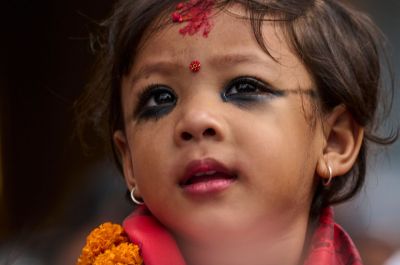 A 32-month-old girl, Ariyatara Shaka, was elected as the new Kumari in Nepal. Photo by New York Post
The Kumari is revered as a sacred being by both Hindu and Buddhist devotees, but it is believed that she returns to ordinary human life upon reaching puberty.
After being inaugurated as the new Kumari, Aryatara marched through the streets of the capital, Kathmandu, with her family and supporters before entering the temple palace. Devotees paid their respects by offering flowers and money and touching their foreheads to her feet. On October 2, she is scheduled to give her first official blessing to devotees, including the President of Nepal.
Her father, Ananta Shakya, told local media, "Until yesterday, she was my daughter, but today she has become a goddess." He added, "My wife dreamed of becoming a goddess while she was pregnant, and since then, we believed our daughter was destined for something special."
The girl chosen as Kumari lives a secluded life in the temple, with interactions limited to a few designated friends. She is only allowed to leave the temple a few times a year for festivals, which often makes it difficult for her to adjust to normal school life or society after retirement. Additionally, Nepalese folk beliefs include a superstition that men who marry former Kumaris will die young, leading some to avoid marrying them.
However, there have been signs of change recently. International media have reported that Kumaris now receive education from private tutors, and after retirement, they are provided with a monthly pension of about 110 US dollars (approximately 150,000 won) from the Nepalese government, indicating that the system is gradually becoming more modernized.
© The Asia Business Daily(www.asiae.co.kr). All rights reserved.












