October 9 Is "Eye Day"... 8 Out of 10 Adults Experience Symptoms
Proper Treatment Needed According to Cause
The second Thursday of October each year is designated as "Eye Day" by the Korean Ophthalmological Society to raise awareness about eye health. Among the most common eye diseases threatening modern people's eye health is dry eye syndrome. According to a 2023 survey conducted by the Korean Ophthalmological Society targeting the general public, 8 out of 10 respondents reported having experienced symptoms of dry eye syndrome, such as eye dryness, stinging, redness, foreign body sensation, pain, and decreased vision.
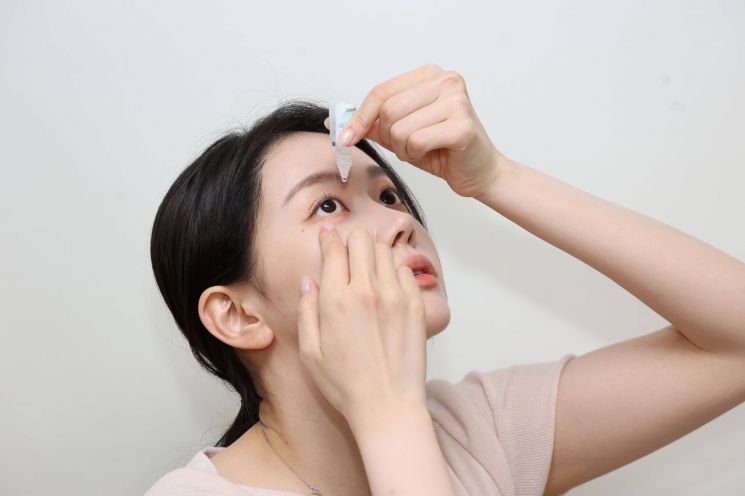
Dry eye syndrome is an inflammatory disease of the ocular surface that occurs when there is insufficient tear production or poor tear quality, causing tears to evaporate quickly and not remain on the eye surface for long. The tear film can be largely divided into the mucoaqueous layer and the lipid layer. If there is an abnormality in either layer, dry eye syndrome can occur. The mucoaqueous layer serves as a lubricant between the eyelid and the eyeball, while the lipid layer, originating from the meibomian glands at the edge of the eyelids, prevents tear evaporation and stabilizes the tear film.
The basic treatment for dry eye syndrome is the use of artificial tears to supplement insufficient tears and relieve inflammation of the eyelids and ocular surface. Artificial tears containing lubricants help lubricate the eyes and replenish tear components, thereby reducing damage to the ocular surface. Artificial tears containing lipid components protect the lipid layer of the tear film and reduce tear evaporation.
Artificial tears are classified according to whether they contain preservatives. Single-use eye drops do not contain preservatives and are advantageous for use more than six times a day or while wearing contact lenses. However, since microplastics may enter the solution when opening, it is recommended to discard the first drop before use. Multi-use eye drops containing preservatives may cause side effects with long-term use, so it is advisable to have regular ophthalmic check-ups to monitor eye health.
Gel or ointment-type eye lubricants can also help in cases of severe dry eye syndrome. Although they last longer, they may cause blurred vision after application, so it is best to use them before bedtime. If symptoms do not improve after using artificial tears for more than three months, it is recommended to revisit an ophthalmologist to receive a prescription for stronger dry eye treatments or consider procedures such as intense pulsed light (IPL) laser therapy.
If dry eye syndrome is dismissed as a mere inconvenience and left untreated, it may lead to complications such as conjunctivitis, keratitis, conjunctival concretions, corneal ulcers, decreased vision, and in severe cases, even blindness. Therefore, it is important to practice lifestyle habits that promote eye health and manage your eyes through regular ophthalmic examinations. When using computers, smartphones, or reading books, the frequency of blinking decreases, which can trigger dry eye syndrome. It is advisable to look into the distance or close your eyes and rest periodically during extended use. Additionally, regularly cleaning the eyelids with eyelid cleansers can help open blocked oil glands and facilitate the removal of waste.
Ko Kyungmin, a cornea specialist at Kim Eye Hospital, advised, "Dry eye syndrome is difficult to cure completely, but symptoms can be alleviated through the use of artificial tears and lifestyle improvements. Since there are various causes, it is necessary to consult an ophthalmologist and manage your eyes with prescriptions tailored to your individual condition."
© The Asia Business Daily(www.asiae.co.kr). All rights reserved.












