Decline Centered on Face-to-Face Consumption Such as Offline Shopping and Dining Out
Online Shopping Patterns Remain Steady Regardless of Weather
This Year's Cold Snaps and Heat Waves Lower Private Consumption by 0.18 Percentage Points
Lower Rainfall Boosts Consumption by 0.09 Percentage Points
It has been found that card spending, especially for face-to-face consumption, decreases during adverse weather conditions such as heat waves, cold snaps, and heavy precipitation. This year, heat waves and cold snaps are analyzed to have reduced private consumption by 0.18 percentage points. However, since rainfall was lower than average, the overall impact of major weather conditions on the private consumption growth rate this year was estimated to be minus 0.09 percentage points.
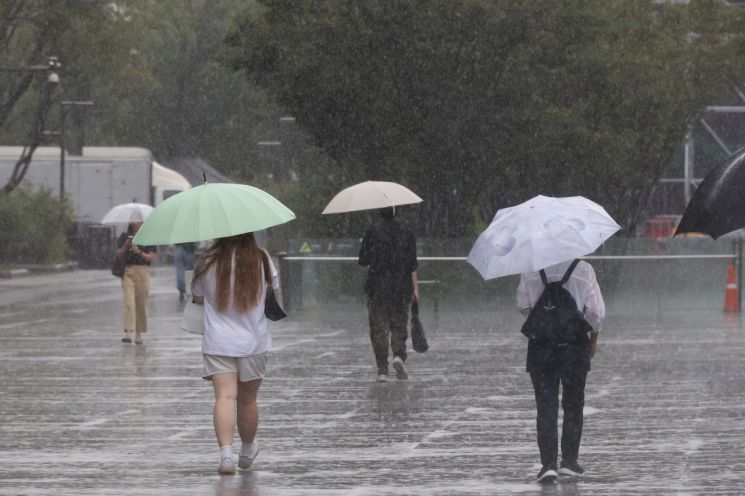
The Bank of Korea announced these findings on the 29th in its "BOK Issue Note - The Impact of Weather and Days of the Week on Consumption Based on High-Frequency Data" (Cho Byungsoo and Jang Sujeong). Cho Byungsoo, Deputy Head of the Economic Research Team at the Bank of Korea, stated, "During heat waves, cold snaps, and precipitation, card spending related to face-to-face consumption such as offline shopping and dining out decreased by 7%, 3%, and 6%, respectively." This result is due to restrictions on face-to-face activities during adverse weather, which in turn affects consumer spending.
Consumption patterns also vary significantly by day of the week, so the impact of adverse weather depends on which day it occurs. According to daily consumption patterns, total card spending was highest on Fridays, while face-to-face consumption was most concentrated on Saturdays compared to other days. On weekdays (Monday to Friday), the share of online shopping was relatively high, and spending was prominent in sectors related to business days such as automobiles, healthcare, and education.
When estimating the impact of adverse weather on Fridays and Saturdays-the days with the highest face-to-face spending-it was found that rainfall on these days led to a greater decline in card spending related to face-to-face consumption compared to other days. A "pent-up" effect, where spending increases more than usual once the weather improves after a period of restricted consumption due to precipitation, was also partially observed. On the other hand, the impact of heat waves and cold snaps did not vary significantly by day of the week. Cho explained, "This is because seasonal demand, such as vacations and purchases of cooling or heating products during summer and winter, partially offsets the impact of the weather."
Based on this, an estimate of the impact of major adverse weather events that occurred this year on consumption found that cold snaps in the first quarter and heat waves during the summer (June to August) acted as factors lowering the annualized private consumption growth rate by about 0.18 percentage points. However, during the same period, lower-than-average rainfall acted as a factor increasing consumption by about 0.09 percentage points. Cho stated, "The overall impact of weather conditions on the private consumption growth rate is estimated to be around minus 0.09 percentage points."
Cho added, "This study provides useful grounds for promptly understanding consumption trends by utilizing daily card spending and weather data," and "By quantifying the temporary factors that cause fluctuations in consumption, it will contribute to improving the accuracy of short-term forecasts."
© The Asia Business Daily(www.asiae.co.kr). All rights reserved.












