"Let's Create a New Role Centered on Hongneung Together"
Park Jumin, Chairman of the National Assembly Health and Welfare Committee and a member of the Democratic Party of Korea, announced on September 26 that he visited the Hongneung Forum, a non-profit organization in which institutions from the Hongneung area of Dongdaemun-gu, Seoul participate, to discuss the future of Hongneung as an R&D-focused bio cluster.
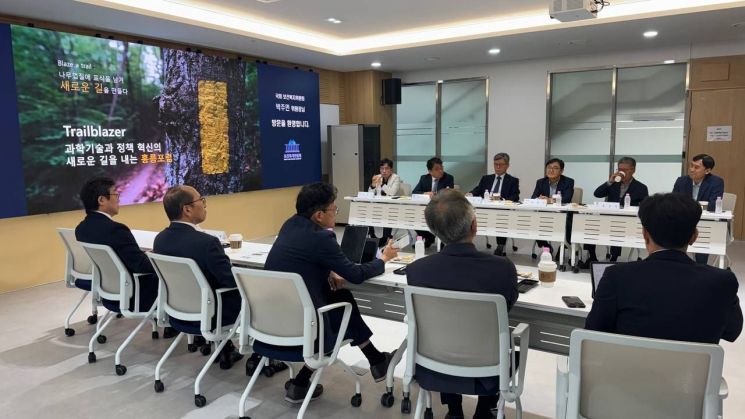 Park Jumin, a member of the Democratic Party of Korea (center in the bottom row), is holding a meeting with officials from the Hongneung Forum at Seoul Bio Hub in Dongdaemun-gu, Seoul, on the 26th. Photo by Park Jumin's office
At the meeting, Moon Kiljoo, Chairman of the Hongneung Forum, outlined the vision and direction for Hongneung, while Kim Hyunwoo, Director of the Seoul Bio Hub Project Group, explained the role of Seoul, and in particular, Hongneung.
They highlighted the region's strengths, which include 7,000 PhD-level professionals, approximately 120,000 university students, four national research institutes including the Korea Institute of Science and Technology, four university hospitals, and innovation support organizations such as Seoul Bio Hub.
Director Kim especially emphasized that Hongneung, as an R&D-centered bio cluster, has unique advantages that set it apart from Songdo in Incheon or Osong in North Chungcheong Province. Despite these strengths, attendees pointed out the lack of cultural infrastructure, living environment for researchers, and educational facilities for researchers’ children in the Hongneung area. Outdated residential, cultural, and educational environments were cited as reasons why foreign researchers and international students leave Hongneung, and the need for consistent policies from both the central government and the Seoul Metropolitan Government was also highlighted.
The initiative to develop Hongneung as an urban regeneration-based bio-medical R&D hub began in 2015. At that time, the Seoul Metropolitan Government proposed strategies such as establishing a bio-medical R&D anchor on the former site of the Korea Rural Economic Institute, attracting leading bio companies and overseas research institutes, and building a cluster in collaboration with major universities and hospitals.
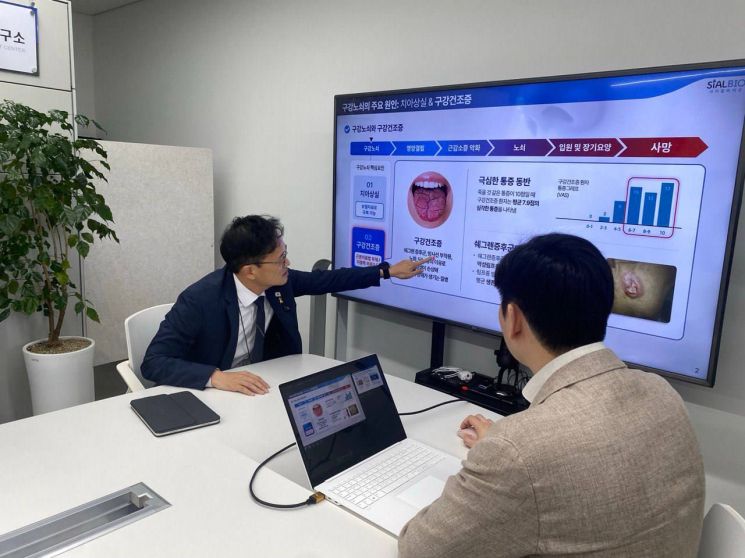 Park Jumin, a member of the Democratic Party of Korea (left), visited Seoul Bio Hub in Dongdaemun-gu, Seoul on the 26th and held a meeting with Cyalbio, which is developing a treatment for dry mouth syndrome. Photo by Park Jumin's office
The first phase of Seoul Bio Hub opened in 2017, and last year, the Seoul Bio Hub Global Center was launched. In September 2019, the Ministry of Science and ICT designated the Hongneung area as an "Innovative R&D Special Zone." From the perspective of urban regeneration, the Seoul Metropolitan Urban Regeneration Committee conditionally approved the Hongneung Urban Regeneration Revitalization Plan in 2019, and the Ministry of Land, Infrastructure and Transport selected it as Seoul's first "economic-based urban regeneration project."
Through these efforts, approximately 500 billion won was to be invested in the Cheongnyangni and Hoegi-dong areas of Dongdaemun-gu by this year. However, due to difficulties in securing land and the downsizing or integration of some projects (such as startup support and living labs), the project budget was reduced from 504.3 billion won to 366 billion won, a decrease of about 140 billion won, which has weakened the momentum for developing the area as a bio-medical R&D hub.
Park Jumin stated, "Universities, general hospitals, and research institutes are concentrated in the northeastern part of Seoul, centered around Hongneung," and proposed, "I hope we can work together to create a new role for the northeastern region of Seoul, centered on Hongneung, both domestically and internationally."
© The Asia Business Daily(www.asiae.co.kr). All rights reserved.













