Ex Officio Investigations into Mobile Phone Restrictions and Discrimination in Restrooms for People with Disabilities
Leading the Enactment of the Gwangju Human Rights Ordinance
Expanding Education and Cooperation Nationwide
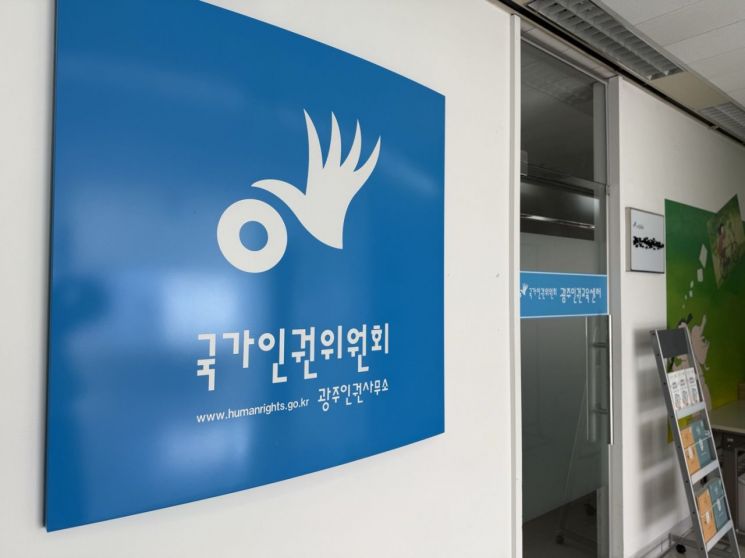
The Gwangju Human Rights Office of the National Human Rights Commission is celebrating its 20th anniversary. The Gwangju Human Rights Office, which opened in October 2005 as the nation’s first regional office dedicated to human rights, has played a central role as a local human rights organization by handling 12,165 petitions and 83,523 consultations over the past 20 years.
In 2022, the Gwangju Human Rights Office conducted an ex officio investigation into the restrictions on students’ possession and use of mobile phones in dormitories at public high schools. The office concluded that collecting or restricting mobile phones for the purpose of guaranteeing the right to sleep or study constitutes a violation of basic rights. This was the first time an ex officio investigation and recommendation of this kind had been carried out by any regional human rights office nationwide.
In 2020, the office determined that operating gender-neutral restrooms for people with disabilities constituted discrimination, and recommended that local governments secure budgets and establish plans to improve accessibility. That same year, the office also ruled that preventing test-takers from using restrooms during written exams at public institutions amounted to a human rights violation. Additionally, the office investigated a case in which a university hospital professor repeatedly assaulted a resident physician and recommended disciplinary action.
Among the petitions handled by the Gwangju Human Rights Office, 11,645 cases (95.7%) involved human rights violations, making up the majority, while 502 cases (4.1%) concerned discrimination against people with disabilities. By institution, correctional facilities accounted for the most cases at 4,794 (39.4%), followed by protective facilities with 4,389 cases (36.1%), educational institutions with 890 cases (7.3%), and the police with 700 cases (5.8%). The actual relief rate was 13.5%, including 547 recommendations (4.5%) and 873 cases (7.2%) resolved during the investigation process.
The office also continued its educational and cooperative activities. It led the enactment of the Gwangju Metropolitan City Human Rights Ordinance in 2010, the first of its kind in the country, and held 100 sessions of the “Human Rights Policy Roundtable” to identify local issues. Human rights video contests, the Youth Human Rights Golden Bell, and cultural events commemorating the Universal Declaration of Human Rights, all of which began in Gwangju, have since spread nationwide. Since its opening in 2015, the Gwangju Human Rights Education Center has provided human rights education to 150,000 people.
A representative of the Gwangju Human Rights Office stated, “The reality of human rights in the Republic of Korea remains challenging, but with the mindset of a 20-year-old, we will reaffirm our original commitment that ‘there is no compromise on human rights’ and prepare for the next 20 years.”
© The Asia Business Daily(www.asiae.co.kr). All rights reserved.












