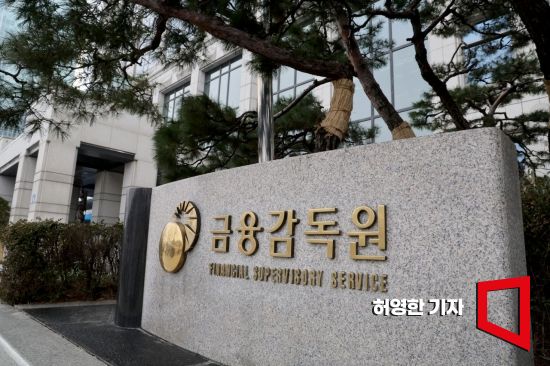
The Financial Supervisory Service has urged newly established private equity management company CEOs to keep their fiduciary duty to investors in mind throughout all management decision-making processes and to reflect such internal control systems in their responsibility structure charts. The agency also announced its policy to hold violators accountable through active removal from the market in cases of illegal conduct.
On the morning of September 25, the Financial Supervisory Service announced that it held a "New Private Equity Management Company CEO Briefing" at the Korea Institute of Financial Investment in Yeouido, Seoul, together with the Korea Financial Investment Association, attended by over 150 executives from newly established private equity management companies.
At the event, the Financial Supervisory Service pointed out that, due to the small workforce structures of private equity management companies, numerous legal violations have occurred as a result of inexperienced work. The agency directly called on CEOs to practice compliance management. The number of registered private equity management companies in Korea has been rapidly increasing, rising from 273 at the end of 2021 to 414 at the end of last year.
Seo Jaewan, Deputy Governor, emphasized in his opening remarks, "As asset management companies act as trustees responsible for managing investors' assets, they must always keep their fiduciary duty to investors in mind throughout all management decision-making processes."
In particular, Deputy Governor Seo requested that CEOs personally inspect the internal control systems for investor protection and reflect them in their responsibility structure charts. For private equity management companies, the responsibility structure chart will be implemented starting in July 2026. He added, "Going forward, if companies prioritize their own interests over those of investors or commit illegal acts that undermine the order of the capital market, we will hold them strictly accountable, including through active removal from the market."
During the briefing, specific cases of violations resulting from carelessness or insufficient understanding of regulations were shared, including breaches of the prohibition on compliance officers holding concurrent positions and failures to disclose details and reasons for exercising or not exercising voting rights.
Previously, Mr. B from Company A was caught using undisclosed information-such as the extension of a lease contract for a building owned by a fund-to have his family's corporation acquire beneficiary certificates from existing fund investors. Company C failed to disclose the reasons for not exercising voting rights at a shareholders' meeting of a company whose voting rights were held by one of its funds. These acts constitute violations of Articles 54(1) and 87(8) of the Capital Markets Act, respectively.
The Korea Financial Investment Association also introduced in detail its current educational programs related to internal controls at private equity management companies, including back office operations, compliance officer training, compliance system workshops, and practical guidance on preparing responsibility structure charts.
A Financial Supervisory Service official stated, "We plan to continue communicating with the industry to help private equity management companies expand investor access to investments and faithfully fulfill their original role of supplying venture capital to the market."
© The Asia Business Daily(www.asiae.co.kr). All rights reserved.












