Financial Supervisory Service Announces Status of Overseas Real Estate Alternative Investments by Financial Institutions
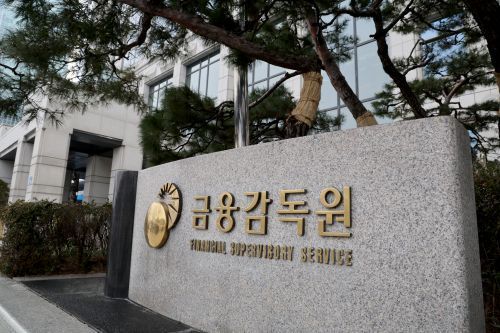
As of the first quarter of this year, the total value of overseas non-performing real estate assets held by domestic financial institutions was found to be close to 2.5 trillion won.
According to the "Status of Overseas Real Estate Alternative Investments by Financial Companies as of the End of March" released by the Financial Supervisory Service on September 23, the total amount invested by domestic financial institutions in single overseas real estate projects stood at approximately 32.9 trillion won at the end of the first quarter. Of this, 2.49 trillion won, or 7.57%, triggered an Event of Default (EOD).
An EOD refers to a situation where a creditor demands repayment of a loan from a debtor before maturity. It is essentially a "stop-loss" measure to prevent further losses on the investment.
The EOD amount for overseas real estate held by domestic financial institutions increased by more than 1 trillion won in just over two years, rising from 1.33 trillion won in the first half of 2023 to 2.49 trillion won in the first quarter of this year. This increase is attributed to a significant contraction in commercial real estate markets in advanced economies such as the United States, which has led to a rise in non-performing overseas real estate investments by domestic financial institutions.
The total balance of overseas real estate alternative investments in the financial sector stood at 55.5 trillion won at the end of the first quarter, down 500 billion won from the previous quarter. By sector, insurance companies held the largest share at 30.3 trillion won, followed by banks at 12.1 trillion won, securities companies at 7.5 trillion won, and mutual finance at 3.4 trillion won. By region, North America accounted for the largest portion at 34.4 trillion won, followed by Europe at 10.3 trillion won and Asia at 3.7 trillion won.
An official from the Financial Supervisory Service stated, "Although the overseas commercial real estate market is showing slight signs of recovery, the office sector continues to lag due to structural demand contraction driven by changes in work patterns and persistently high vacancy rates. Therefore, the risk of further losses remains." The official added, "While there are concerns about expanding losses centered on office investment assets among domestic financial institutions, the overall investment scale is not large and their loss-absorbing capacity is sufficient, so the likelihood of this developing into a systemic risk is low."
© The Asia Business Daily(www.asiae.co.kr). All rights reserved.












