Japanese Media Cite Chinese Sources
Trade Negotiations Also Pose Obstacles to Trump's Visit to China
Japanese media have analyzed that the Taiwan issue could become a key factor in U.S. President Donald Trump's visit to China.
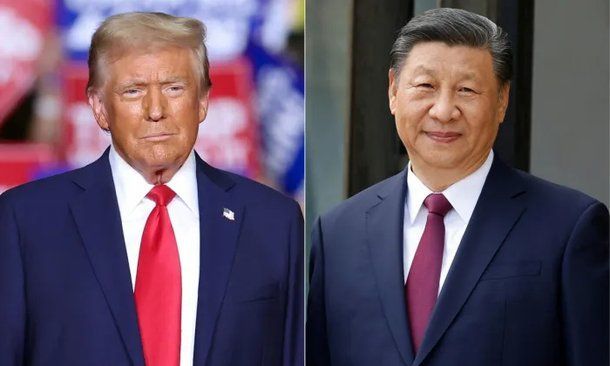
On September 21, the Yomiuri Shimbun reported, "There are obstacles to the realization of President Trump's visit to China," adding, "Negotiations between the United States and China are likely to intensify for the time being." The outlet pointed out that, following a phone call between President Trump and Chinese President Xi Jinping, neither side mentioned the Taiwan issue, which is the most pressing security concern. Citing sources familiar with the inner workings of the Xi Jinping administration, the report stated that China wants the U.S. government to issue a statement saying it does not support Taiwan independence as a precondition for President Trump's visit to China.
Previously, right after the launch of the second Trump administration in February, the U.S. State Department deleted the phrase "does not support Taiwan independence" from its "Fact Sheet on U.S. Relations with Taiwan." This move was enough to provoke China, as it contradicts the "One China" principle to which China is highly sensitive. The Yomiuri Shimbun analyzed, "President Trump, who is seeking a 'deal' with China, is showing signs of reducing his involvement with Taiwan, such as delaying approval of military aid," and added, "China may see this as an opportunity and try to extract further concessions from the United States."
The stagnant state of trade negotiations is also speculated to be an obstacle to President Trump's visit to China. The Yomiuri Shimbun explained, "There are numerous pending issues, including China's rare earth export restrictions and the United States' semiconductor export controls against China," and added, "The United States is also urging other countries to impose high tariffs on China for its imports of Russian crude oil."
The Nihon Keizai Shimbun (Nikkei) also interpreted that the ongoing difficulties in trade negotiations between the two countries are the reason President Trump's visit to China has not materialized this year. After his phone call with President Xi, President Trump emphasized that "progress has been made on many issues," while the Chinese side reported that President Xi said, "We must prevent undermining the achievements gained through multiple rounds of consultations," highlighting the differences in their official statements.
Nikkei added, "China has long been pushing for President Trump's visit to China," but also noted, "At this point, the United States cannot guarantee any concessions in trade negotiations, and it seems China is considering prolonging the talks to secure more favorable terms."
Meanwhile, on September 19 (local time), President Trump announced on his social networking service (SNS) that he had agreed to meet with President Xi Jinping at the Asia-Pacific Economic Cooperation (APEC) summit, which will open in South Korea at the end of next month. He stated that he would visit China early next year after meeting President Xi at the APEC summit, adding, "President Xi will also visit the United States at an appropriate time."
© The Asia Business Daily(www.asiae.co.kr). All rights reserved.












