Spread of 'Job Seeker's Market' Amid Low Birth Rates and Aging Population
Japanese Companies Race to Improve Salaries, Benefits, and Education
Number of Companies and Positions for High School Graduate Recruitment Continues to Rise
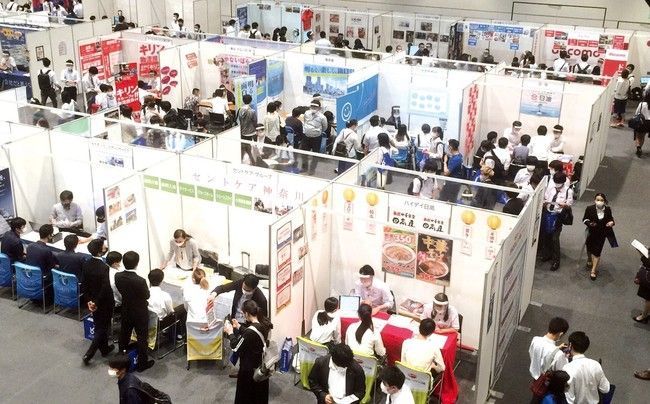
The recruitment season targeting high school students in Japan who are set to graduate next spring has officially begun. Amid intensifying labor shortages caused by low birth rates and a declining population, Japanese companies are breaking away from their traditional focus on hiring university graduates and are now making bold investments in recruiting high school graduates. Companies are offering dramatically higher starting salaries, university tuition support, and waiving certification fees, signaling the start of a fierce competition for talent. Experts predict that "in Japan, where the 'job seeker's market'-with far more job openings than job seekers-has become firmly established, competition to secure high school graduates will only become more intense."
Job Seeker's Market... Accelerating Improvements in High School Graduate Recruitment
According to the Nihon Keizai Shimbun (Nikkei) on September 16, accounting systems company TKC has decided to introduce a program supporting university tuition for all high school graduates joining the company next year. The purpose of this initiative is to offer high school hires the same career opportunities as university graduates. New high school graduate employees will be able to allocate part of their work hours to university classes, aiming to graduate within five years. TKC's high school recruitment manager told Nikkei, "Our goal is to hire outstanding students who could not attend university due to financial reasons," adding, "We already have high school graduates who have completed their degrees and are now thriving as university graduates."
Japanese companies facing low birth rates and a shrinking population are experiencing severe labor shortages. According to the Ministry of Health, Labour and Welfare, as of the end of July, about 126,000 high school students hoped to find employment after graduating next spring, a 0.5% increase from the previous year. During the same period, the number of job openings for high school graduates was 467,000, up 0.3%. The job-offers-to-applicants ratio stood at 3.69, maintaining a similar level to last year’s record high of 3.70. Nikkei pointed out, "This ongoing 'job seeker's market,' where hiring demand far exceeds the number of job seekers, is driving improvements in working conditions for high school graduates." In effect, companies are now competing to be chosen by job seekers.
Significantly Enhanced Starting Salaries and Benefits... Fierce Competition for High School Graduate Recruitment
In response, some companies are raising starting salaries for high school employees or expanding various welfare benefits such as certification support and dormitory accommodations to attract talent. Highway bus operator Willer Express has offered a remarkable annual salary of 6 million yen (about 5.6 million won) from the first year, regardless of experience or age. According to the Ministry of Health, Labour and Welfare, the average monthly wage for high school graduates in 2024 is about 180,000 yen (about 1.7 million won), which translates to an annual salary of about 2.1 million yen (about 2 million won). Restaurant chain Red Lobster Japan announced plans to double its annual recruitment of high school graduates from five to ten by improving working conditions and the work environment. Major beverage company Hitomairu also operates a system that supports the cost of obtaining a driver’s license after joining the company and waives the entire cost for those who remain with the company for three years.
The number of companies newly introducing or strengthening high school graduate recruitment is also increasing. More than 30% of Japanese companies planning to hire graduates in 2026 stated they would increase the number of high school graduate hires, and 34% had started recruiting high school graduates within the past five years. This trend is especially pronounced in industries facing severe labor shortages, such as construction, transportation, and IT-related sectors, according to media reports. Nikkei analyzed, "The 'job seeker's market,' where hiring demand far exceeds the number of job seekers, is driving improvements in working conditions for high school graduates," adding, "As more companies seek to secure outstanding talent regardless of academic background, the high school graduate recruitment market is entering a completely new phase."
Expansion of High School Graduate Recruitment... A Shift Away from Academic Credential-Based Practices
Experts say this trend reflects not just a change in hiring practices but a broader transformation in Japanese society. As the workforce shrinks due to population decline and aging, companies are placing greater value on the ability to adapt quickly on the job and a willingness to continue learning, rather than academic credentials. Additionally, within Japan’s unique culture of long-term employment, companies find it more efficient to hire high school graduates early and nurture them within the organization. Experts predict, "High school graduate recruitment is no longer a secondary option but has become an important strategy for enhancing corporate competitiveness," and "This could lead to changes in the traditional academic credential-based employment practices."
© The Asia Business Daily(www.asiae.co.kr). All rights reserved.













