US Research Team: "Junk Food Negatively Affects Brain Cognitive Function"
It has been found that consuming junk food for just a few days can lead to a decline in cognitive function. Conversely, adjusting eating habits can help restore impaired brain function.

According to SciTechDaily, a U.S. science media outlet, on September 16 (local time), a research team from the University of North Carolina (UNC) School of Medicine recently published a study in the international journal Neuron, stating, "An ultra-processed, junk food-centered diet rapidly alters the hippocampus, the brain's memory center, and increases the risk of cognitive decline."
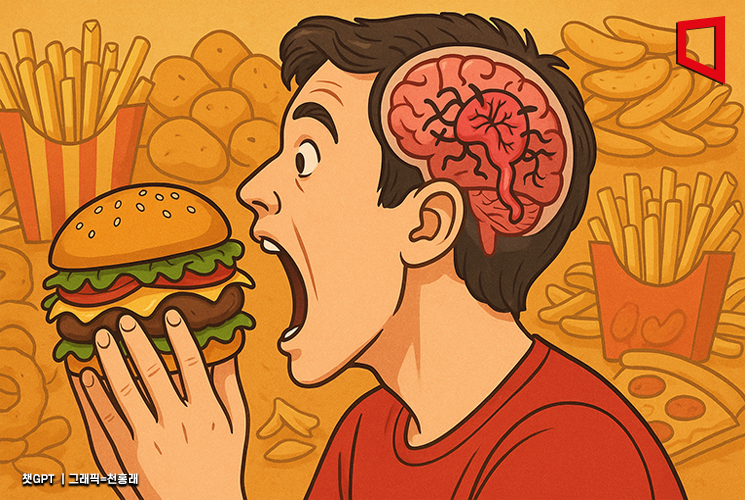
The research team conducted behavioral tests after feeding laboratory mice junk food and high-fat Western foods. They found that within just four days, a specific type of neuron in the hippocampus, called CCK interneurons, became abnormally overactive.
This overactivation occurs because the brain cannot properly absorb glucose. The study showed that consuming saturated fat-rich junk foods, such as cheeseburgers and French fries, for only a few days can disrupt memory processing in the hippocampus. The researchers also identified that the enzyme protein 'PKM2,' which regulates energy use in brain cells, plays a key role in driving these negative effects.
The research team warned that the brain's memory circuits are strongly influenced by eating habits and that a diet high in saturated fats can increase the risk of neurodegenerative diseases such as dementia or Alzheimer's disease.
Juan Song, a professor of pharmacology at UNC who led the study, said, "We knew that diet and metabolism could affect brain health, but we did not expect to discover that a specific group of neurons in the hippocampus-CCK interneurons-could be directly damaged after just a short period of exposure to a high-fat diet." She added, "What surprised us most was how quickly the activity of these cells changed in response to decreased glucose supply, and that this change alone could impair memory."
"Managing Eating Habits Can Restore Brain Health"
The study confirmed that brain health impaired by high-fat food consumption can return to normal by restoring glucose supply and adjusting eating habits. It also found that managing diet or using medication is effective in preventing obesity-related neurodegeneration. In particular, even dietary management alone, such as intermittent fasting after a high-fat diet, was able to normalize CCK interneurons and improve memory function.
Professor Song said, "This study shows how quickly the food we eat can affect brain health, and suggests that early interventions such as fasting or medication can protect memory and reduce the risk of long-term cognitive problems associated with obesity and metabolic diseases. In the long term, these strategies could help reduce the burden of dementia by providing a comprehensive approach to managing both the body and the brain."
The research team is currently conducting further studies on how glucose-sensitive neurons disrupt brain rhythms that support memory. They plan to verify whether such targeted therapies can be applied to humans and whether a high-fat diet can be a factor in Alzheimer's disease. They will also explore whether eating patterns that stabilize brain glucose can offer protective effects.
© The Asia Business Daily(www.asiae.co.kr). All rights reserved.












