The Socially Disadvantaged Are Unable to Apply
Due to Complicated Procedures and Lack of Information
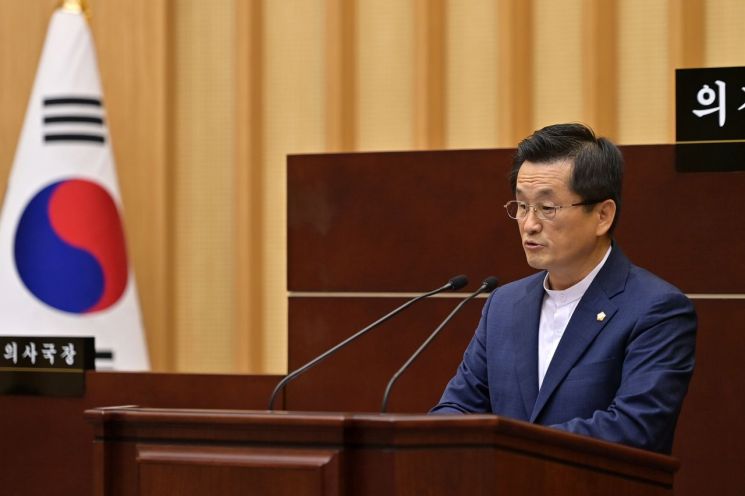
On September 16, Jonghan Baek, a member of the Seo-gu Council representing Hwajeong 3-dong, Hwajeong 4-dong, and Pungam-dong in Gwangju, delivered a five-minute free speech during the second plenary session of the 333rd extraordinary meeting, addressing the topic of pioneering the automatic payment system instead of the application-based welfare system.
Assemblyman Baek began his remarks by stating, "The hard work and dedication of welfare public officials have become the foundation for Seo-gu's progress today." He added, "Although we provide tailored services to those in need, there are still blind spots in the system."
He went on to say that socially disadvantaged individuals are often excluded from the benefits of the system because complicated procedures and lack of information prevent them from even applying, calling this a serious issue that undermines the very purpose of the system.
Assemblyman Baek pointed out that, in Gwangju and Jeonnam alone, over the past five years, unused funds for the energy voucher program have reached 38.8 billion won. He explained that this amount represents the suffering of vulnerable groups during the scorching heat of summer, the severe cold of winter, and the burden of lives left unattended.
He also proposed several measures that Seo-gu District Office could implement to promote an automatic payment welfare system rather than an application-based one, including the establishment of an integrated welfare service desk, strengthening public data integration, and piloting AI-based application simplification projects.
Finally, he concluded his speech by urging the Seo-gu District Office to seek practical alternatives that can be implemented immediately in the field, rather than waiting for the ideal of a complete revision of the law to be realized.
© The Asia Business Daily(www.asiae.co.kr). All rights reserved.












