FT Reports Employment Shock from Tariffs
Many Executives Cite Uncertainty
Hiring Halted or Layoffs Initiated
Industries hit hardest by the tariff policies pursued by the Donald Trump administration have halted hiring or begun layoffs, leading to an effective standstill in the growth of the U.S. labor market, according to recent assessments. Experts point out that tariffs have increased costs and heightened managerial uncertainty, resulting in reduced hiring by companies.
The Financial Times (FT) reported on the 14th (local time) that industries most exposed to tariff-induced cost shocks are cutting back on hiring and initiating layoffs, causing stagnation in the U.S. labor market.
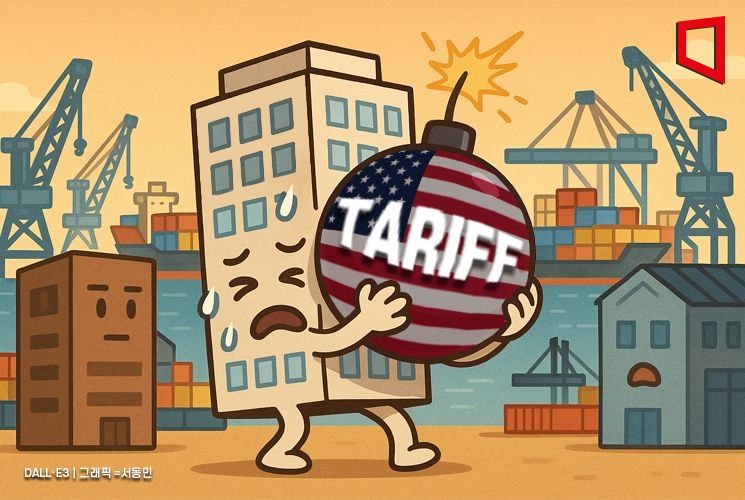
The Trump administration promoted tariffs as a means to encourage domestic investment (reshoring) and thereby expand employment, but many business leaders are postponing hiring due to uncertainty.
Julie Robbins, CEO of EarthQuaker Devices, a guitar effects manufacturer in Akron, Ohio, told FT, "These tariffs are a sudden tax with no benefit for American manufacturers like us," adding, "To meet demand, we would need to hire three or four more people in addition to our staff of 35, but we have effectively frozen hiring." She continued, "Without policy stability and cost predictability, neither hiring nor growth is possible. Right now, we are just trying to endure in an uncertain environment."
Tracy Tafani, CEO of Wyoming Machine, also said, "Tariffs are changing too quickly and erratically, making it hard to do business," adding, "Our current strategy is not to fill vacancies left by departing employees."
Many companies are also resorting to layoffs to cope with the sharp rise in tariff costs. John May, CEO of John Deere, stated, "Tariff costs will reach $300 million in 2025 and could double by the end of the year." As a result, John Deere laid off 238 workers at its Illinois and Iowa plants, and its third-quarter net profit fell by 26% compared to the same period last year.
Many of the sectors embroiled in the trade turmoil triggered by President Trump are those he promised to revive during his election campaign. Michael Madowitz, chief economist at the Roosevelt Institute, said, "The problem in manufacturing is not a labor supply issue but a slowdown in demand, and the sector is falling victim to abrupt policy changes that have yet to be resolved."
The oil industry, a strong supporter of President Trump, is a prime example. Tariffs have cut revenues and raised equipment costs such as steel pipes, and these challenges have been compounded by falling oil prices. To withstand declining profitability, companies have turned to restructuring. According to the Bureau of Labor Statistics (BLS), at least 4,000 people have left the oil industry since January this year, marking the fastest pace of job reduction since the pandemic in January 2021. Chevron and ConocoPhillips, two leading U.S. oil companies, have announced plans to cut up to 8,000 and 3,250 jobs, respectively, with further layoffs expected. Contrary to expectations of a boom under the Trump administration, the industry is experiencing the opposite trend.
Elliot Doyle, an oil entrepreneur in Texas, said, "The current situation is quite frightening, and there are widespread forecasts that next year will be even worse," adding, "Companies are laying off workers in anticipation of an economic downturn."
FT also reported that dozens of small shale producers and oilfield service companies in Texas have begun reducing their workforce. Brian Sheffield, a Texas oil entrepreneur and managing partner at private equity firm Formentera, said, "Tariffs only add to uncertainty," and "It has become even more difficult for oil and gas CEOs to make decisions about capital investment."
This trend of reduced hiring and layoffs is also reflected in the statistics. According to the U.S. Department of Labor, nonfarm payrolls increased by only 22,000 in August, far below the Dow Jones forecast of 75,000, indicating a slowdown in job growth. In the same month, manufacturing lost 12,000 jobs, bringing the total loss for the year to 78,000, while mining (including oil and gas) lost 6,000 jobs in August. The wholesale trade sector has lost 32,000 jobs this year. Contrary to the government's promises that tariffs would increase jobs, the actual employment figures have deteriorated. Reuters noted that manufacturing jobs have declined for four consecutive months, highlighting the clear impact of tariffs.
© The Asia Business Daily(www.asiae.co.kr). All rights reserved.












