Increase in Lightning Due to Global Warming
Surge in Building Damage and Home Appliance Failures Explained
The amount of insurance payouts related to lightning incidents has risen significantly in Japan due to an increase in lightning occurrences.
On September 14, Yonhap News reported that Nihon Keizai Shimbun (Nikkei) analyzed 50 years of data from the Japan Meteorological Agency.
According to the analysis, the number of days with confirmed thunder in 11 major cities, including Tokyo and Osaka, averaged 180 days per year during the first 25 years (1974-1998), but increased to an average of 209 days per year during the latter 25 years (1999-2023), representing an increase of approximately 16.3%.
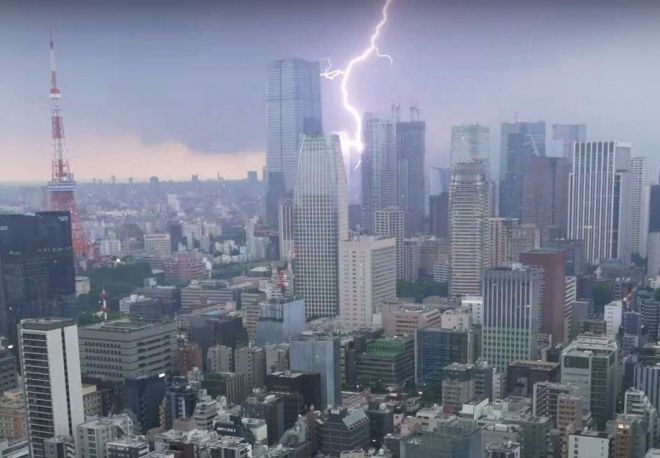
In fact, news of accidents caused by lightning strikes continues to emerge in Japan. On September 11, when frequent lightning and short-duration heavy rainfall occurred, about 10,000 households around Tokyo experienced power outages, and a fire suspected to have been caused by lightning broke out in a residential building in Tachikawa, Tokyo.
At Haneda Airport, the runway pavement was stripped off, leading to a series of flight cancellations, with lightning also cited as the cause of runway damage. As of noon that day, 70 flights operated by All Nippon Airways and 42 flights operated by Japan Airlines were confirmed canceled, affecting 20,000 passengers.
In April, six middle and high school students in Nara City, Nara Prefecture, were taken to the hospital due to lightning. Global warming has been cited as a reason for the increase in lightning. Takuro Michibata, a professor at the Research Institute for Applied Mechanics at Kyushu University, explained, "As the temperature rises, cumulonimbus clouds that cause lightning are more likely to develop."
This summer, Japan recorded its highest average temperature since weather observations began. The national average temperature from June to August this year was 2.36 degrees Celsius higher than the 30-year average from 1991. In both 2023 and last year, the previous record, the temperature was 1.76 degrees higher than the average.
Nikkei reported that, as in Korea, the main factors behind the temperature rise were the simultaneous coverage of the Japanese archipelago by the North Pacific High and the Tibetan High.
On August 5, Isesaki City in Gunma Prefecture, central Honshu, recorded a historic high temperature of 41.8 degrees Celsius. In central Tokyo, the daily maximum temperature exceeded 35 degrees Celsius for 10 consecutive days from August 18 to 27. This year, Tokyo recorded 26 days with maximum temperatures above 35 degrees Celsius, the highest number ever.
Damage to buildings and home appliances caused by lightning has also increased, with insurance payouts in 2022 reaching 14.7 billion yen (about 138.76 billion won), more than six times the amount in 2009.
A representative from the private weather company Franklin Japan said, "Last year, the number of certificates issued reached a record high of about 20,000." The company has developed a lightning observation system and issues "lightning certificates" for insurance claims. It collects lightning data using electromagnetic sensors installed at 29 locations across Japan, and then provides forecast information on areas with a high probability of lightning occurrence to businesses and consumers in need.
© The Asia Business Daily(www.asiae.co.kr). All rights reserved.












