Spread of Elementary School VTubers on Social Media
Current Legal System Struggles to Regulate Avatar-Based Sexual Harassment
Naver's streaming platform Chzzzyzik permanently suspended the channel of elementary school student VTuber "A" on September 8. Although born in 2013 and only 12 years old, she created an account under her guardian's name, violating the platform's terms of service, which state that users under 14 years of age cannot sign up.
Furthermore, "A" had been broadcasting as an avatar character with a flushed face and partially exposed upper body, asking viewers to "help with homework." A VTuber is an online streamer who uses a virtual 3D model or graphic avatar instead of revealing their real face.
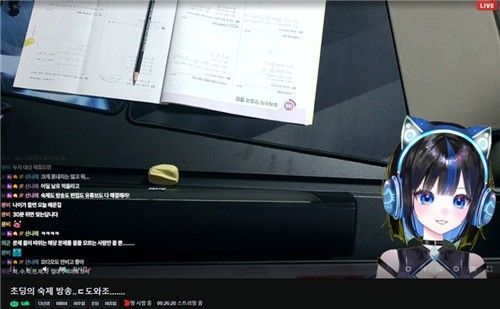 Actual streaming broadcast scene of a VTuber claiming to be an elementary school student. Website capture Yonhap News Agency
On September 14, Yonhap News Agency reported that after being expelled from Chzzzyzik, "A" moved her activities to YouTube, where explicit comments such as "young and firm" and "better than adults" have been posted.
In South Korea, cases of elementary school students starting their own broadcasts are increasing, with information on "how to become a VTuber" being shared on social networking services (SNS).
In fact, there are a significant number of accounts on streaming platforms such as Chzzzyzik, YouTube, and TikTok under names like "VTuber born in 2014" or "elementary school VTuber." Under the current legal system, it is difficult to impose penalties or regulations for sexual harassment or sexual objectification mediated by avatars.
For "virtual idol" groups that perform dances and songs as avatars, there have already been several criminal complaints filed through their agencies for sexual harassment, defamation, and insults.
Laws such as the Act on Special Cases Concerning the Punishment of Sexual Crimes and the Act on the Protection of Children and Youth Against Sexual Offenses define their legal protection targets as "real persons." Avatars remain in a legal blind spot. As a result, there are calls for new laws and regulations to address changing social realities, such as the emergence of underage VTubers.
Some argue that streaming platforms profiting from VTubers should first significantly strengthen their own regulations.
Lee Yunho, a professor of police administration at Dongguk University, told Yonhap News Agency, "Children watch personal broadcasts more than TV, but there are no review mechanisms in place," adding, "Platforms should be held responsible to some extent."
© The Asia Business Daily(www.asiae.co.kr). All rights reserved.












