Over 20 Rounds of Negotiations Since May's Initial Meeting
Talks Stalled After Tentative Agreement Rejected in July
Base Salary Increase: 130,000 Won vs. 140,000 Won
The labor union of HD Hyundai Heavy Industries launched its first full-scale strike of the year, but actual participation remained in the single digits. Since the breakdown of negotiations following the rejection of a tentative agreement in July, the union has escalated its protest by staging a high-altitude demonstration. However, as the momentum behind the strike weakens, there are concerns that this could also limit the prospects for negotiations.
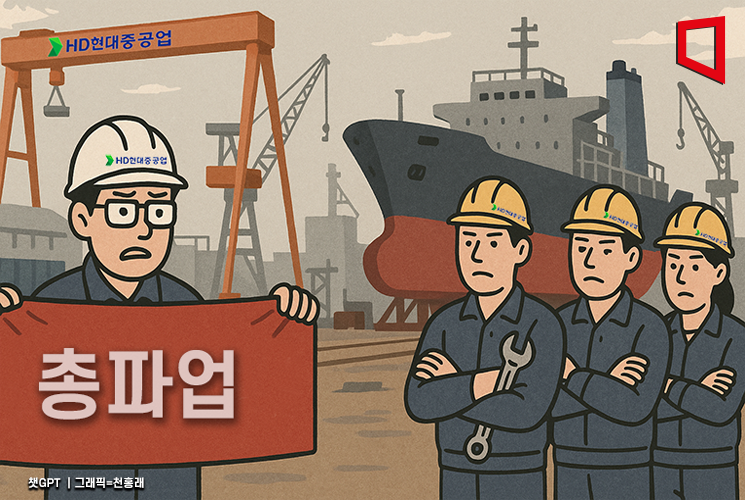
According to industry sources and the union on September 12, the HD Hyundai Heavy Industries labor union began a full strike at 8 a.m. the previous day. However, participation was low. Out of a total of 6,551 union members, only 300 to 400 people (4.6 to 6.1%) participated according to management estimates, and about 500 people (approximately 7.6%) according to the union’s own figures. Despite the union’s declaration of a “general strike,” participation did not exceed 10%, leading to the abrupt cancellation of the planned protest at the Seoul GRC Center on the same day. On-site, with essential personnel continuing to work as usual, most expect that shipbuilding schedules will not be disrupted for the time being.
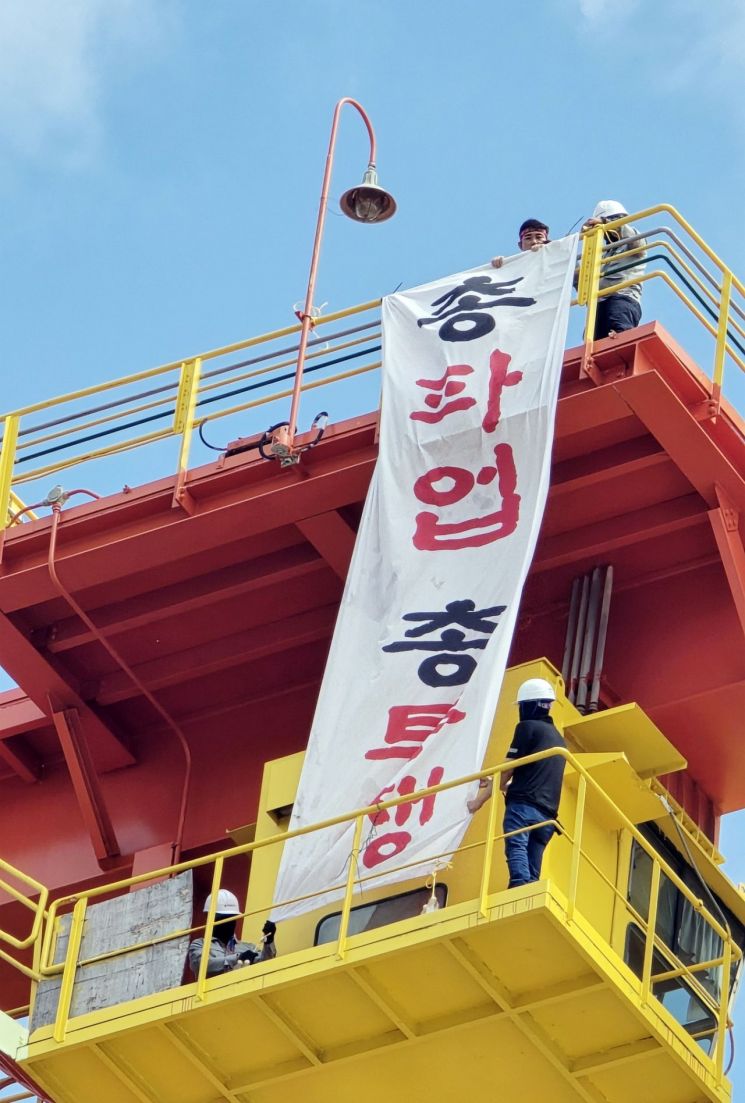 The labor union of HD Hyundai Heavy Industries announced that due to difficulties in this year's wage negotiations, Baek Ho-sun, the head of the union branch, began a high-altitude protest on the morning of the 10th on a crane within the Ulsan shipyard. The 40-meter-high turnover crane where Baek is stationed. Photo by Yonhap News.
Some in the industry attribute the low strike participation rate to the substantial compensation package already proposed in the tentative agreement. The financial burden of a prolonged strike and fatigue from extended negotiations are also cited as factors discouraging members from active involvement. In fact, compared to the thousands who joined the union strike in 2019, this strike shows significantly less solidarity. An industry official commented, “Despite the union’s full-scale strike, the impact on operations has been minimal. Since both labor and management have kept the door open for negotiations, whether or not talks resume will be the key variable going forward, rather than the strike itself.”
This strike comes about two months after the tentative wage and performance bonus agreement was rejected in a general vote by union members in July. The agreement included: ▲ a base salary increase of 133,000 won (including seniority raises), ▲ a 5.2 million won incentive payment, ▲ a special bonus (100% of the agreed wage), and ▲ a performance bonus. Management estimated that this would provide an average compensation benefit of about 27 million won per union member. However, of the 6,193 union members who voted, 3,949 (63.8%) voted against the deal, leading to its rejection. Since then, labor and management have held more than ten rounds of negotiations over two months but failed to bridge their differences. The union claims, “Management has not presented a new proposal,” while management maintains, “There is still room for further discussion.”
The core issue in the negotiations is the size of the base salary increase. The union is demanding an increase of 143,000 won, but the company is reluctant, arguing that “it is already higher than at Samsung Heavy Industries and Hanwha Ocean.” Amid this standoff, union leaders are intensifying their protest. On September 10, Baek Hoseon, head of the union branch, began a high-altitude protest atop a 40-meter turnover crane at the Ulsan shipyard. This is the first crane occupation in over four years, since July 2021, and is symbolic as the crane is a key facility in shipbuilding. Baek stated, “As HD Hyundai Heavy Industries expands its stature through the merger with HD Hyundai Mipo and the MASGA project, union members who have delivered these results deserve fair compensation.” The union is currently planning to continue both the high-altitude protest and the full strike, aiming to reach a settlement by October.
© The Asia Business Daily(www.asiae.co.kr). All rights reserved.













