Bank of Korea Releases Monetary and Credit Policy Report
Soo-Hyung Lee, Monetary Policy Committee Member of the Bank of Korea, stated on September 11 that, when deciding the timing and magnitude of any future additional base rate cuts, the most important factors will be the growth trend and financial stability.
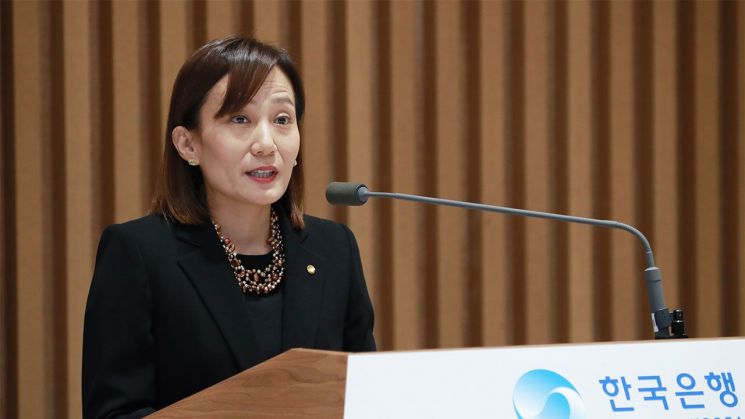
Lee explained this direction for future base rate policy in a message as the lead committee member for the Monetary and Credit Policy Report released by the Bank of Korea that day.
He said, "We expect inflation to remain generally stable around 2%. The timing and magnitude of any further rate cuts will be determined by the growth trend, as well as the stability of the housing market and household debt situation."
He continued, "Specifically, while growth is showing some improvement, it is expected to remain below its potential level for the time being, so there is a need for additional measures to ease downward pressure on growth. From a financial stability perspective, as housing prices in the Seoul area continue to rise and expectations for further increases remain high, it is necessary to carefully assess the effects of the housing supply measures announced on September 7 and the impact of accommodative financial conditions on housing price expectations when deciding the timing of additional rate cuts."
Lee added, "In this process, it is necessary to continuously monitor the effects of the four base rate cuts implemented since October last year, not only from a macroeconomic perspective but also across key sectors such as households and businesses."
He emphasized, "In the longer term, our economy faces structural challenges such as accumulated household debt, a rapid decline in potential growth rate, and intensifying polarization. We must make efforts to improve these structures and establish a more sophisticated policy analysis foundation. Structural issues like the decline in potential growth rate cannot be addressed by monetary policy alone; fundamental solutions are only possible through structural improvements in the economy."
He particularly assessed that easing monetary policy in response to structural low growth could actually worsen long-term side effects. Lee said, "While such measures may alleviate difficulties in the short term, under domestic conditions where there is a high concentration of real estate credit, it could stimulate the housing market, leading to greater financial imbalances and increased housing costs. This could further weaken the vitality of our economy and the spending power of households, thereby exacerbating structural problems."
He further noted, "With high household debt levels and a rapid decline in potential growth rate, the possibility of conflicts between growth and financial stability has increased. As polarization intensifies and heterogeneity among economic agents grows, we need to enhance both macro and micro-level analysis to improve policy effectiveness."
© The Asia Business Daily(www.asiae.co.kr). All rights reserved.












