Mass Departure of Caregivers Causes On-Site Disruption
Haenam County in South Jeolla Province has significantly expanded its customized elderly care service program this year, leading to a severe staffing shortage at local care facilities. As many caregivers are leaving their positions to become life support workers, which is considered a less demanding job, the operation of nursing homes and day care centers is being seriously disrupted.
According to Haenam County on September 9, a total of 205 life support workers have been assigned to the customized elderly care service program this year. Of these, 102 were placed at the Haenam Welfare Center and 103 at the Haenam Comprehensive Social Welfare Center. The problem is that a large number of staff from local care facilities have moved to the customized elderly care service, leading to growing complaints from the field.
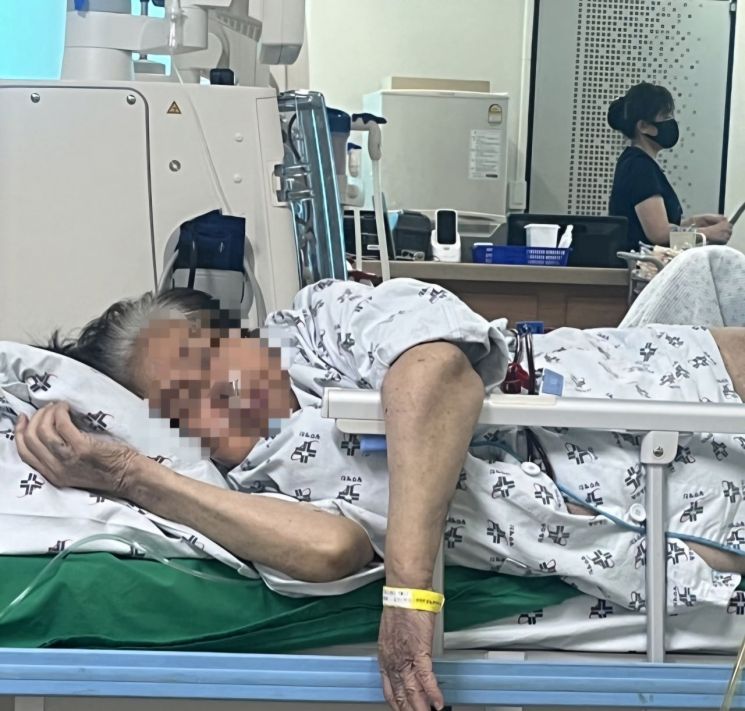 Haenam County's caregivers are massively leaving their positions to become life support workers, causing significant disruptions in the operation of nursing homes and day care centers. Photo by Lee Jungyeong
Mr. A, who runs a nursing home in Haenam, said, "Many of our existing caregivers have transferred to become life support workers, and despite posting multiple job advertisements, there are hardly any applicants. I am losing sleep at night, worried that there will be gaps in caring for the elderly."
In reality, there is a stark difference in the work intensity between life support workers and caregivers. The main duties of a life support worker are a weekly home visit and two phone consultations per week, whereas caregivers are responsible for physically demanding tasks such as assisting with meals, managing excretion, changing positions, and helping with bathing.
A representative of a day care center explained, "Caregivers work eight hours a day and must provide direct care for each elderly person, but life support workers only work four to five actual hours per day and receive higher pay relative to their workload. Naturally, this structure leads to caregivers leaving their positions."
He emphasized, "While the actual care provided by life support workers is limited, the staffing shortage at care facilities directly impacts the safety of elderly people with mobility issues. Although we cannot stop government policy, if local governments train life support workers through education, it could at least help prevent the loss of caregivers."
What is even more serious is that, although the government strengthened the caregiver staffing standard this year from one caregiver per 2.3 recipients to one per 2.1 recipients, Haenam County is redirecting existing staff to other programs instead.
Experts point out that the core of the problem is Haenam County's pursuit of policy based solely on central government guidelines, without considering local realities. They note, "Customized elderly care services are necessary, but if they are not harmonized with the existing care infrastructure, the overall quality of elderly care services may decline. In areas like Haenam, where population aging is particularly severe, a more cautious approach was needed."
There is also controversy over the actual work patterns of life support workers, with some arguing that the care provided is merely formal. It has been pointed out that some life support workers are not meeting the required working hours, resulting in inadequate care services.
One life support worker, who requested anonymity, confessed, "Although it is supposed to be a weekly visit, in many cases it only amounts to a brief welfare check. Most of the phone consultations are also conducted in a perfunctory manner."
On the other hand, care facilities are concerned about a decline in service quality due to staff shortages. This is especially problematic for elderly people with dementia or severe illnesses, who require specialized care but are at increasing risk of not receiving adequate support due to staffing gaps.
In response to these concerns, a Haenam County official stated, "The customized elderly care service is being implemented in accordance with central government policy, so there are unavoidable aspects. However, we will also consider ways to resolve the staffing shortage at care facilities." Nevertheless, there are growing calls from the field for more fundamental solutions.
Meanwhile, the proportion of residents aged 65 or older in Haenam County stands at 38.7%, far exceeding the national average of 18.4%, which further highlights the importance of elderly care services in the region.
© The Asia Business Daily(www.asiae.co.kr). All rights reserved.












