An early diagnostic technology for Hemolytic Uremic Syndrome has been developed in South Korea.
The Korea Research Institute of Bioscience and Biotechnology announced on September 9 that the research team led by Dr. Moosung Lee at the Environmental Disease Research Center, in collaboration with Professor Ohseok Kwon's team at Sungkyunkwan University, has developed an ultra-sensitive biosensor using graphene, enabling early diagnosis of Hemolytic Uremic Syndrome.
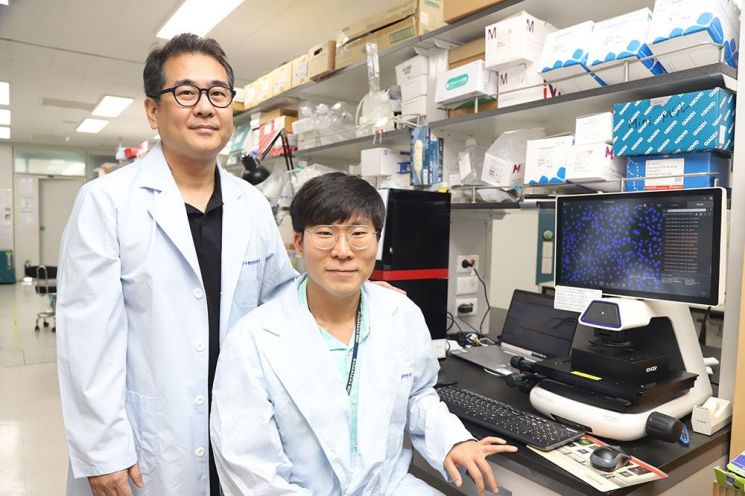 (From left) Dr. Moosung Lee, Dr. Kyungsoo Lee. Courtesy of Korea Research Institute of Bioscience and Biotechnology
Hemolytic Uremic Syndrome is a disease that can cause complications such as decreased platelet count and renal failure in patients. In severe cases, patients may require kidney dialysis or suffer from lifelong organ damage.
However, in its early stages, the disease presents only mild symptoms similar to enteritis, such as simple abdominal pain and diarrhea, making early detection extremely difficult.
Currently, Hemolytic Uremic Syndrome is diagnosed through blood tests and enzyme immunoassays. However, these diagnostic methods are laboratory-based, require a long time to interpret results, and need skilled professionals, making them difficult to use immediately in the field.
The joint research team focused on graphene to overcome these limitations. Graphene, a material in which carbon atoms are arranged in a thin honeycomb structure and is the main component of pencil lead, has excellent electrical conductivity and allows for the detection of minute biological signals with extreme sensitivity.
Utilizing the unique properties of graphene, the joint research team developed a biosensor capable of directly detecting toxins at the femtogram level. Unlike conventional testing methods, this sensor allows results to be confirmed through changes in electrical signals, without the need for fluorescent markers or complex preprocessing steps.
In particular, through animal experiments (using mouse blood and fecal samples) to verify biocompatibility, the joint research team confirmed excellent reproducibility and speed, demonstrating that it is possible to detect low concentrations of toxins that existing tests cannot identify.
This research achievement opens the way for early diagnosis of Hemolytic Uremic Syndrome, a fatal kidney disease, thereby increasing patient survival rates and reducing medical costs.
Furthermore, the joint research team expects that the developed technology will help prevent the spread of mass food poisoning, strengthen public health response capabilities, and enhance the competitiveness of the next-generation diagnostic device industry.
Dr. Lee, the lead researcher, said, "The biosensor developed by the joint research team can detect even trace amounts of toxins, which will contribute to saving patients' lives through early diagnosis and maximizing treatment effectiveness. Above all, it is expected to have a significant social impact as it can be used in infectious disease response, food safety, and the entire next-generation bio-diagnostics industry."
This research was supported by the Ministry of Food and Drug Safety, the Ministry of Science and ICT, the National Nano Fab Center, and major projects of the Korea Research Institute of Bioscience and Biotechnology.
© The Asia Business Daily(www.asiae.co.kr). All rights reserved.












