Leading Contenders Koizumi and Takaichi Emerge
Series of Far-Right Moves Cast Cloud Over Japan-South Korea Relations
With Japanese Prime Minister Shigeru Ishiba abruptly announcing his intention to resign on the 7th, the race to become the next prime minister has emerged as a new variable in Korea-Japan relations. As leading candidates continue to make anti-Korean remarks and visit Yasukuni Shrine, concerns are being raised that relations between the two countries may once again enter a period of heightened tension.
The two prominent candidates highlighted by Japanese media are former Minister for Economic Security Sanae Takaichi, 64, and Shinjiro Koizumi, 44, the Minister of Agriculture, Forestry and Fisheries and the second son of former Prime Minister Junichiro Koizumi. In a public opinion poll on the suitability of the next prime minister conducted by the private broadcasting news network JNN on September 6-7 among 1,030 people, both Takaichi and Koizumi received 19.3% support, tying for first place. Within the ruling party as well, they are regarded as the leading contenders to succeed Ishiba.
'Female Abe' Draws Criticism for Anti-Korean Remarks
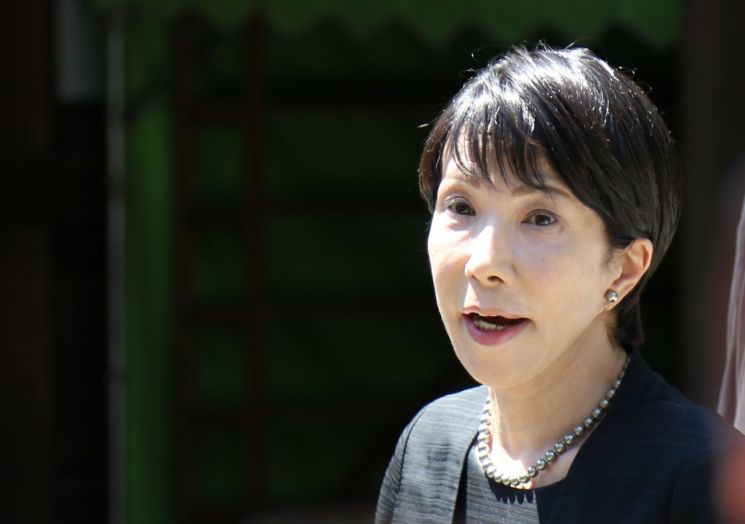 On the 15th of last month, marking 80 years since Japan's defeat, Sanae Takaichi, a member of the ruling Liberal Democratic Party, visited Yasukuni Shrine in Tokyo and responded to questions from the press. The Yasukuni Shrine enshrines Class A war criminals from the Pacific War. Photo by Yonhap News Agency
Known as the 'female Abe' or 'Abe girl,' former Minister for Economic Security Sanae Takaichi is a female, non-hereditary lawmaker who built her career in the Shinzo Abe cabinet, serving as Minister of Internal Affairs and Communications and as chair of the Liberal Democratic Party's Policy Research Council. She has strongly advocated for constitutional revision and has regularly visited Yasukuni Shrine, where Class A war criminals from the Pacific War are enshrined, thereby maintaining strong support among conservatives. She is widely seen as inheriting the overall political line of former Prime Minister Abe, including his emphasis on a 'strong Japan.'
At a symposium hosted by the far-right group 'Yasukuni Shrine Reverence Association' in Tokyo in February 2022, Takaichi used the derogatory expression "climbing up" to belittle South Korea. In response to opposition from neighboring countries such as South Korea and China over visits to Yasukuni Shrine, Takaichi said, "When we act ambiguously, such as stopping our visits to Yasukuni Shrine midway, the other side climbs up (tsukeagaru)." The Japanese term 'tsukeagaru' means 'to take advantage of someone’s politeness or kindness and act impudently,' which in Korean slang is equivalent to 'climbing up.'
Takaichi further stated, "As the representative of a sovereign nation, it is only natural to offer respect and gratitude to our forebears," and added, "If we simply continue to do what is natural, neighboring countries (such as South Korea) will eventually look foolish and stop complaining." She thus continued to make controversial remarks. Regarding the term 'comfort women,' she claimed, "There were people called comfort women, but the term 'military comfort women' does not exist," thereby denying the Japanese military's responsibility for the forced mobilization of sex slaves. There are concerns that if Takaichi becomes the next prime minister, Korea-Japan relations could deteriorate further.
Another Leading Contender Koizumi Also Visits Shrine
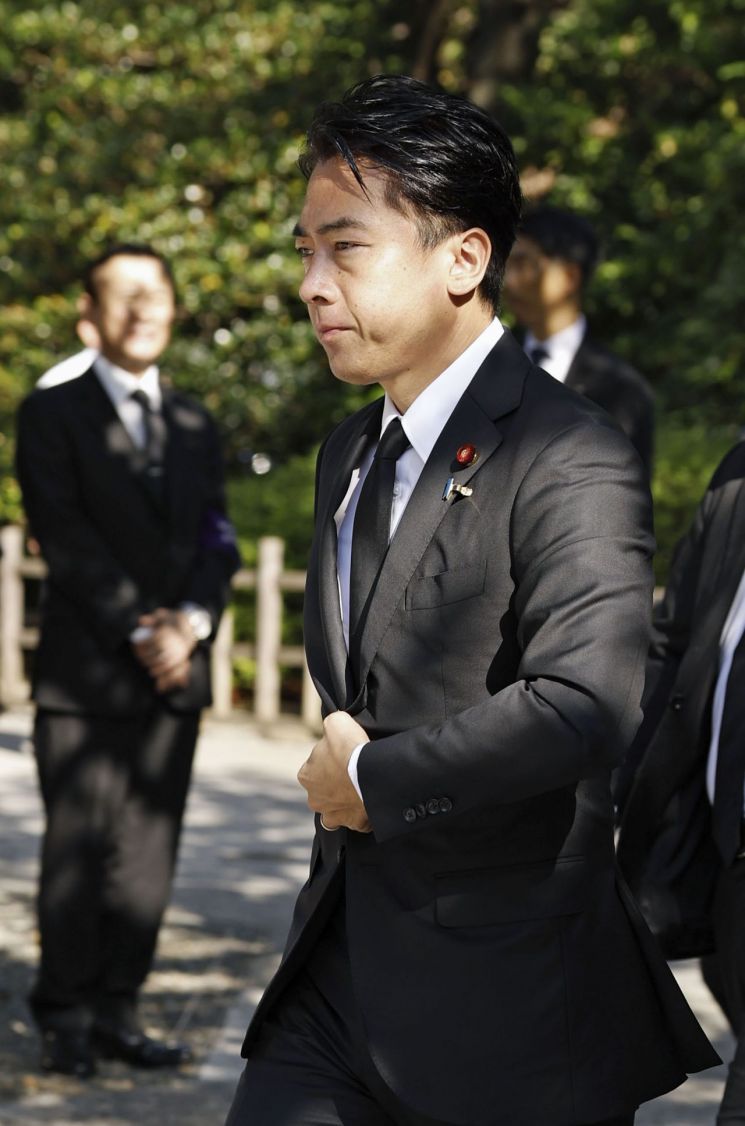 Shinjiro Koizumi, Japan's Minister of Agriculture, Forestry and Fisheries, is moving to visit Yasukuni Shrine in Tokyo on the 15th of last month, the day of Japan's defeat in World War II. Photo by Yonhap News
Another leading candidate for the next prime minister, Shinjiro Koizumi, also visited Yasukuni Shrine on the 15th of last month. Regardless of which of these far-right-leaning candidates comes to power, it is expected to have a negative impact on Korea-Japan relations.
In relation to this, Kyodo News reported, "President Lee Jaemyung visited Japan in August and held talks with Prime Minister Ishiba, reaffirming cooperation for the stable development of Korea-Japan relations," and added, "In South Korea, Ishiba is known to be relatively moderate on historical issues, so after his resignation, there are likely to be concerns about the future of Korea-Japan relations."
© The Asia Business Daily(www.asiae.co.kr). All rights reserved.













