According to analysis from domestic securities firms, the Indian government’s upcoming Goods and Services Tax (GST) reform, scheduled for this month, is expected to serve as a key catalyst for strengthening the country’s consumption-driven growth momentum. Despite uncertainties surrounding tariff shocks originating from the United States, if a recovery in domestic demand is confirmed, investment sentiment in the Indian stock market is likely to improve, highlighting the attractiveness of the consumer goods sector.
Kim Geuna, a researcher at Hana Securities, stated in the report “Emerging Markets Strategy: The Significance of India’s GST 2.0” on September 9, “This policy (GST reform) is the most powerful economic stimulus following the government’s income tax cut announced in February and the cumulative 100 basis points (1bp = 0.01 percentage point) interest rate reduction.”
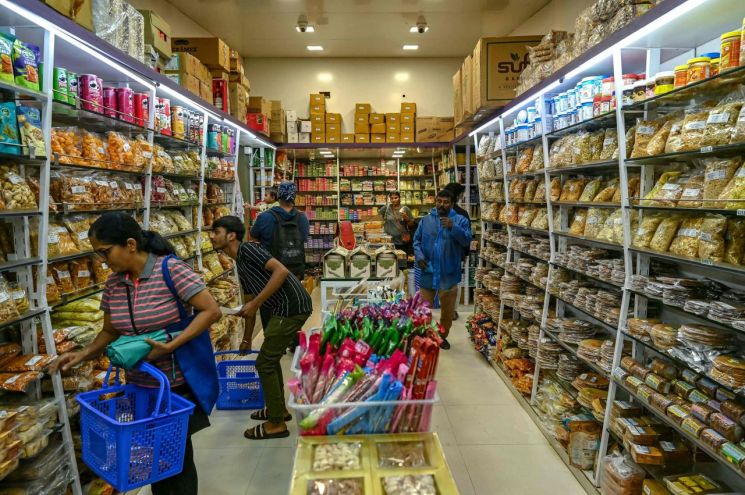
GST 2.0, which will take effect on September 22, will simplify the existing four-tier tax rate structure (5%, 12%, 18%, 28%) into three tiers (5%, 18%, 40%). Specifically, the tax rate on essential goods and agricultural products will be uniformly reduced to 5%, while major durable goods such as automobiles and home appliances will see their rates drop from 28% to 18%. In contrast, luxury and discretionary items such as tobacco, carbonated beverages, and luxury cars will be subject to a high tax rate of 40%.
Kim analyzed, “While previous policies indirectly contributed to increased consumption by raising disposable income, this GST cut is distinctive in that it will directly boost consumer sentiment by lowering perceived prices, making it more positive in terms of strengthening consumption momentum.” She also noted that the timing of the policy coincides with India’s major festival seasons, including Navaratri (September 22 to October 2) and Diwali (October 18 to October 23), which could further maximize its effects.
In particular, this measure is expected to serve as a buffer against shocks from US tariffs. Kim explained, “The sectors expected to be hit hardest by the (US) 50% tariff are labor-intensive manufacturing industries-such as textiles, apparel, and jewelry-where exports to the US account for more than 30% of total exports.” She added, “If domestic demand momentum is strengthened, it should partially absorb these shocks and help mitigate downside risks to the economy.”
Accordingly, Kim emphasized, “In conclusion, the implementation of GST 2.0 is expected to become a key turning point in strengthening consumption-driven growth momentum and will further solidify India’s structural growth story.” She added, “In the case of the stock market, if tariff negotiations with the US persist, short-term uncertainties will remain and upside for the index may be limited. However, if a recovery in domestic demand is clearly confirmed, investment sentiment will gradually improve, and the relative attractiveness of consumer goods sectors such as FMCG (fast-moving consumer goods) and automobiles will come into focus.”
© The Asia Business Daily(www.asiae.co.kr). All rights reserved.












