Samil PwC Releases "The Future of AI and Jobs" Report
Emergence of New Roles Such as Prompt Engineers and Data Validation Specialists
Contrary to concerns that the advancement of artificial intelligence (AI) will lead to a reduction in human jobs, a new argument has emerged that AI could actually become a driving force for job creation. This is especially relevant for South Korea, which is currently mired in a 'low-growth trap,' as the introduction of AI is emphasized as a means to boost both the growth rate and employment rate.
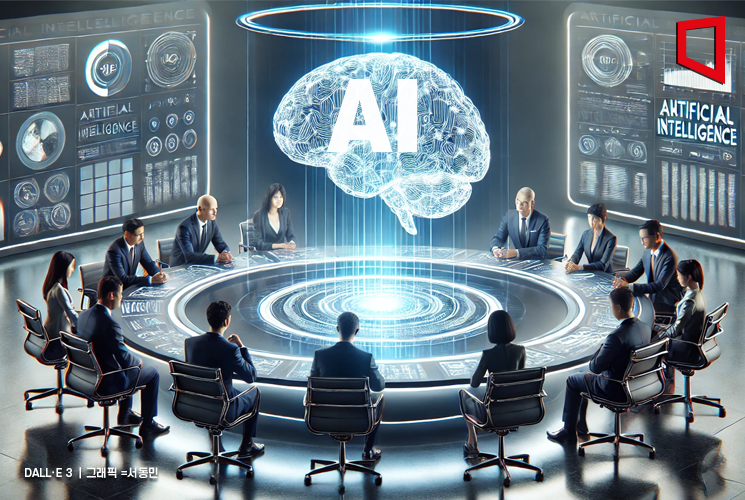
On September 3, Samil PwC announced the publication of its report, "The Future of AI and Jobs." The report was prepared to examine the changes that AI will bring to the labor market and to review recent research trends.
The report pointed out that social anxiety over the relationship between AI and employment has intensified, citing recent workforce reductions by big tech companies such as Microsoft and Meta. The background for these restructuring efforts, despite strong financial performance, is the expansion of work automation due to the adoption of AI. The report diagnosed, "Unlike previous technologies, AI can perform cognitive tasks, so not only simple jobs but also professions requiring specialized knowledge are now being affected."
However, the report predicted that, contrary to these concerns, AI will have a positive impact on employment in the medium to long term once the current transitional period passes. While some jobs may be replaced by automation technologies, new roles such as prompt engineers and data validation specialists are emerging. The World Economic Forum (WEF), in its "Future of Jobs Report 2025" released in January this year, projected that while 92 million jobs will disappear in the next five years due to AI, 170 million new jobs will be created.
The report further stated that employment could actually increase in occupations with high AI exposure, and that it is more likely that workers who utilize AI will dominate labor market demand, rather than AI itself posing a threat. AI exposure refers to the extent to which AI technology can be used in a given job, and is generally higher in professions requiring advanced degrees or specialized qualifications. The report analyzed, "By assisting in solving complex problems, AI can drive productivity improvements and industrial growth, creating new labor demand," adding, "As AI becomes a work assistant, humans will be able to focus more on value-added tasks."
As strategies to respond to the AI era, the report suggested: strengthening soft skills, securing job expertise, and establishing a social safety net. The report explained, "As AI accelerates changes in the work environment, uniquely human capabilities such as empathy, creativity, and teamwork-soft skills-will become core competitive strengths," and added, "Since the quality of AI responses varies depending on the prompting method, job expertise for effective AI utilization remains important."
The report also advised that a social safety net is needed for certain workers at risk of job loss. In particular, it emphasized the need for early career development programs and youth entrepreneurship support policies targeting young people just entering the workforce.
Jae-Kook Chung, Samil PwC’s Technology, Media, and Telecommunications (TMT) Industry Leader (Partner), stated, "While AI is replacing simple tasks and increasing work efficiency, it can also become a barrier to entry for young people seeking their first jobs in the labor market," adding, "We need to mitigate the inevitable employment shock through social attention and policy support."

© The Asia Business Daily(www.asiae.co.kr). All rights reserved.













