Agreement Reached on Price Control and Production Cuts in Battery Industry Following Solar Sector
"Trade-In for New Appliances" Policy Expected Ahead of National Day in Early October
Steady Progress in Advanced Technology Upgrading and Talent Development
15th Five-Year Plan (2026?2030) to Begin Next Year
As China gradually loses its influence in the global market due to ongoing US-China tensions, the country is steadily advancing four major mid- to long-term policies. In terms of industrial restructuring, China has reached production cut agreements not only in the solar sector but also in the battery industry. The framework for future industries, such as energy and quantum technology, has also been established. On September 2, DB Financial Investment released a report titled "Four Policies Being Simultaneously Formulated in China," analyzing that these four major policies will be consolidated next year.
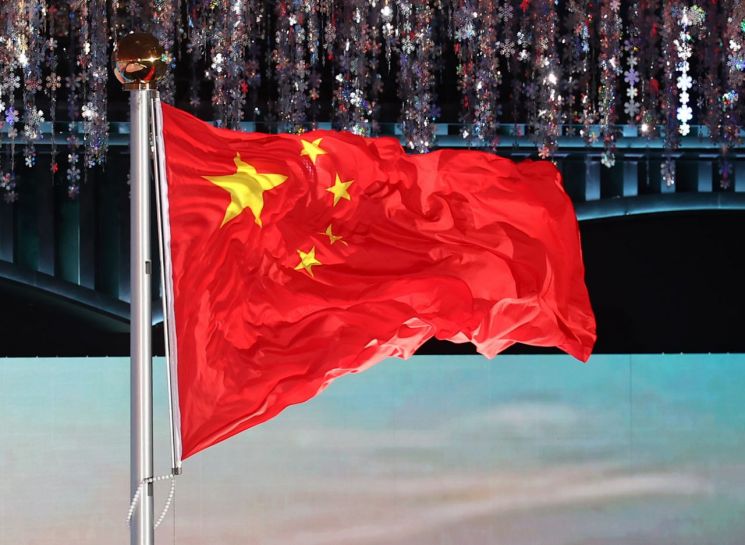
China Begins Implementing Mid- to Long-Term Policies One by One
The Chinese government is systematically implementing mid-term policies, including the Anti-Internal Competition, Dual Circulation, and New Quality Productive Forces policies, as well as the 15th Five-Year Plan (2026-2030).
First, the Anti-Internal Competition policy, which emerged from concerns about self-destructive price competition caused by oversupply in nearly every industry, is becoming increasingly visible. Early last month, the top six solar polysilicon producers established a restructuring fund worth about 50 billion yuan (7 billion dollars) and began reducing annual production by 1 million tons, which is one-third of total capacity. At the end of last month, eight major dry-process lithium battery separator companies reached an anti-internal competition agreement, which included halting capacity expansion. In the steel industry, the "Stable Growth Promotion Plan (2025-2026)" has been announced, and rapid production cuts are expected to begin in September.
The Dual Circulation policy, which aims to foster domestic demand and promote mutual growth between the domestic (internal circulation) and international (external circulation) economies, is also gaining momentum. For example, Alibaba Cloud mentioned supporting the domestic supply chain through a multi-chip strategy. In addition, several policies to boost consumption are expected to be announced this month. During the National Day holiday season (the first week of October), the "Trade-In for New Appliances" campaign is expected to be actively promoted to support household appliances and other sectors.
The New Quality Productive Forces policy, first introduced by President Xi Jinping during his visit to Heilongjiang Province in September 2023, is a high-quality development strategy that focuses on advanced technology, industrial upgrading, and improving the quality of production factors, rather than simple quantitative growth. In response to the technological hegemony competition with the United States and workforce shortages, the government is steadily promoting scientific and technological self-reliance and the modernization of industrial systems under state leadership.
The 15th Five-Year Development Plan, which will begin next year, is a comprehensive national mid- to long-term plan that encompasses all these policies. It includes strengthening economic resilience, enhancing technological innovation and self-sufficiency, reinforcing domestic capabilities in core technologies, revitalizing the domestic market and expanding consumption, as well as promoting energy reform, integrating renewable energy, achieving the carbon emission peak target, and ensuring environmental sustainability.
Growth Expected in Related Industries
The Anti-Internal Competition, Dual Circulation, and New Quality Productive Forces policies envisioned by the Chinese government are accelerating in each industry. Kim Sunyoung, an analyst at DB Financial Investment, stated, "All these policies are expected to be consolidated in 2026," and added, "The details of the policies and the activities at the corporate level are progressing faster than expected for mid-term policies."
The targeted industries differ for each policy. The Anti-Internal Competition policy focuses on sectors such as solar energy, e-commerce, automobiles, oil and gas transportation, process machinery, electricity, steel, pharmaceuticals, food and beverages, wind power, batteries, internet finance, gaming, logistics, and software. The Dual Circulation policy includes construction machinery driven by large-scale hydropower projects. The New Quality Productive Forces policy covers: ▲strategic emerging industries such as next-generation information technology, biotechnology, new energy, new materials, advanced equipment, new energy vehicles, green environmental protection, low-carbon aerospace, and marine equipment; and ▲future industries such as fusion energy, quantum information, brain science, future networks, deep-sea and space exploration, hydrogen energy, and energy storage.
© The Asia Business Daily(www.asiae.co.kr). All rights reserved.












