Results of a Detailed VOC Emissions Survey in Northern Gyeonggi Industrial Facilities
In-depth Investigation of 35 Sites Across 5 Industries
Repeated Detection of Toluene and Xylene
The Gyeonggi-do Institute of Health and Environment announced on August 30 that it had investigated the emissions of volatile organic compounds (VOCs) from five major types of industrial facilities in northern Gyeonggi Province last year. The results revealed that pollutants not currently regulated by law, such as toluene and xylene, were repeatedly detected in certain industries.
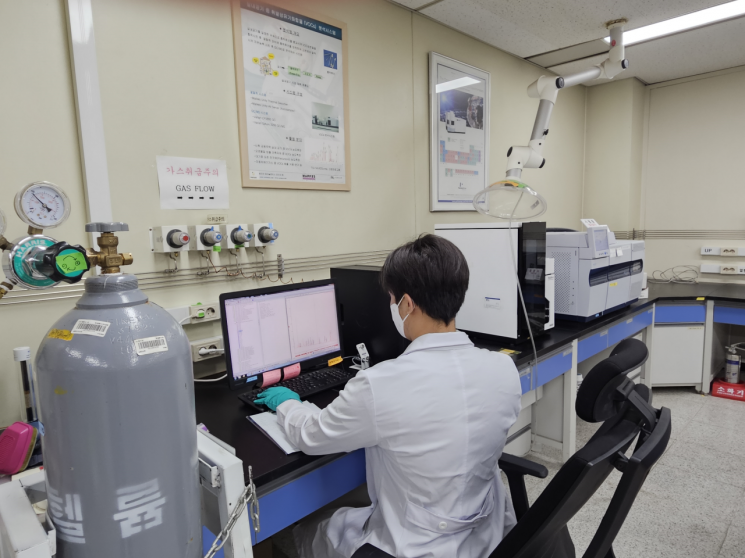 Exhaust Gas Analysis (Gas Chromatography). Provided by Gyeonggi-do Institute of Health and Environment
Volatile organic compounds (VOCs) are chemicals that easily vaporize from liquid or solid states and disperse into the atmosphere. Some VOCs are harmful to humans and can cause health problems if exposure is prolonged.
The investigation was conducted on 35 business sites across five industries: painting and drying facilities, solid fuel facilities, printing facilities, textile processing facilities, and animal incineration facilities. The institute collected exhaust gas samples from these sites and analyzed a total of 17 types of VOC components.
The results showed that "aromatic compounds" (compounds with ring-shaped carbon structures, mainly toluene and xylene) accounted for more than 80% of total VOC emissions in all industries. In solid fuel facilities, the proportion of chlorinated VOCs (volatile substances containing chlorine) was high, while in painting, printing, and textile processing facilities, oxygenated VOCs (volatile substances containing oxygen) were relatively prevalent.
In particular, toluene, which currently has no emission limit under the Clean Air Conservation Act, was repeatedly detected at concentrations of up to 1.333 ppm (parts per million), and xylene at up to 0.420 ppm. These substances are known to be hazardous, potentially causing neurological disorders, respiratory irritation, and liver function impairment with prolonged exposure. As a result, there is a growing call for the establishment of management standards for these substances.
Moon Heecheon, head of the Northern Branch, stated, "This investigation is significant as it provides basic data on unregulated pollutants that have so far been overlooked in management. Moving forward, we will continue to protect residents' health and establish policy foundations for a safe and pleasant atmospheric environment through field-based investigations and scientific analysis."
© The Asia Business Daily(www.asiae.co.kr). All rights reserved.












