At least nine people have lost their lives due to floods and landslides caused by Typhoon Kajiki, which struck Vietnam and Thailand, and power outages affected 1.6 million people in Vietnam alone.
According to AP and Bloomberg News on the 27th (local time), Typhoon Kajiki made landfall on the night of the 25th in Nghe An and Ha Tinh provinces in northern and central Vietnam, bringing gusts of up to 150 km/h and nearly 20 centimeters of torrential rain.
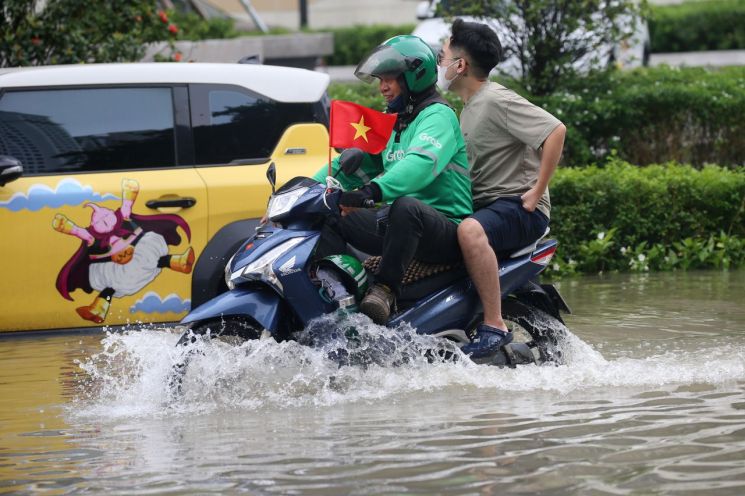
As a result, floods and landslides occurred in various regions, leaving seven people dead, one missing, and 34 injured, according to the Vietnamese government.
Additionally, more than 21,000 trees were toppled, and over 815 square kilometers of rice paddies were submerged, devastating rice farming. Heavy rain also hit the capital, Hanoi, flooding around 10,000 homes and submerging roads throughout the city.
Afterward, Kajiki weakened into a tropical storm as it moved toward Thailand and Laos. However, local media outlet Bangkok Post reported that heavy rain brought by Kajiki triggered a landslide in Chiang Mai province in northwestern Thailand, resulting in two deaths and one person missing.
Experts have identified Southeast Asia as one of the regions most vulnerable to climate change in the world, warning of the intensification of extreme weather events such as typhoons and heat waves.
According to a recent report by the World Meteorological Organization (WMO), the average temperature in Asia last year was 1.04 degrees Celsius higher than the 1991-2020 average, marking the highest on record. As a result, sea surface temperatures have risen to unusually high levels, leading to more frequent and powerful typhoons.
Dr. Andra Garner, assistant professor at Rowan University in the United States, explained, "We are heating this planet and also raising sea surface temperatures. Warmed seawater is the key energy source for hurricanes."
© The Asia Business Daily(www.asiae.co.kr). All rights reserved.












