A Bowl of Sea Urchin Rice Now Costs 170,000 Won
"Even on Special Occasions, It's a Luxury"
Sea Temperatures Rise by 5 Degrees
Cold-Water Species Hit Hard
Japan Faces Triple Whammy:
Heatwaves, Weak Yen, and Climate Change
"Everyone is shocked when they see the prices. It has become common for several people to share a single bowl of sea urchin rice and each order a separate bowl of ramen."
Record-breaking heatwaves and rising sea temperatures have caused seafood prices in Japan to soar. The price of sea urchin, a representative luxury ingredient, has nearly doubled due to a decline in catch volume. A single bowl of sea urchin rice now easily exceeds 170,000 won. Climate change is shaking up food prices at the dinner table.
A Bowl of Sea Urchin Rice Over 170,000 Won... "A Luxury Even on Special Occasions"
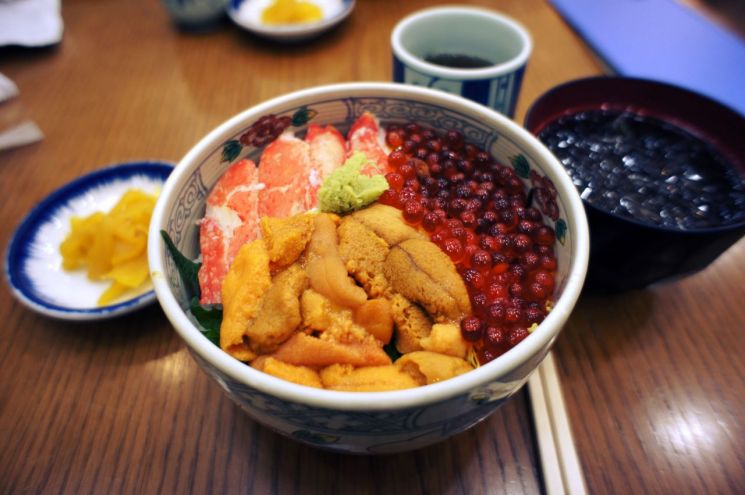 Record-breaking heatwaves and rising sea temperatures have caused seafood prices in Japan to soar. The price of sea urchin, a representative luxury ingredient, has nearly doubled due to a sharp decline in catch volume, with a bowl of sea urchin rice easily exceeding 170,000 won. The photo is an image to aid understanding of the article and is not directly related to the content. Pixabay
According to Reuters on August 26, restaurants on Rishiri Island in Hokkaido are selling bowls of rice topped with 100 grams of Bafun sea urchin, known for its rich sweetness, for 15,000 to 18,000 yen (about 140,000 to 170,000 won). This is nearly double the price from just a few years ago.
Sato Kimiko, who has run a restaurant near Rishiri Port for more than 50 years, said, "Everyone is shocked when they see the prices," adding, "It has become common for customers to share a single bowl of sea urchin rice and each order a separate bowl of ramen." While sea urchin has always been a luxury ingredient, it has recently become a dish that is difficult to enjoy even on special occasions.
Sea Temperature Rises by 5 Degrees... Cold-Water Species Take a Direct Hit
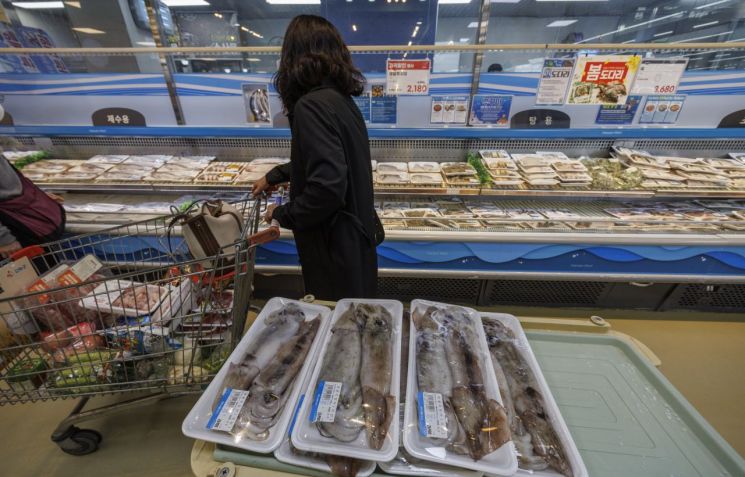 In recent years, the sea temperature near Japan has risen by an average of more than 5 degrees Celsius. As a result, the catch volume of pelagic fish species has sharply declined over the past 20 years, and their price per kilogram has increased nearly fivefold. The photo is an image to aid understanding of the article and is not directly related to the main text. Photo by Yonhap News
According to Yamakami Tatsuaki, executive director of the Rishiri Fisheries Cooperative, this year's sea urchin catch has plummeted to half of last year's level. With 40 years of experience in the industry, he explained, "The low catch volume is causing prices to surge," and pointed out, "The rising sea temperature appears to be the cause."
The Japan Fisheries Research and Education Agency analyzed that, in recent years, the sea temperature near Japan has risen by an average of more than 5 degrees Celsius. Bafun sea urchin, which grows in cold water, has seen its price per 10 kilograms soar from 40,000 yen two years ago to 90,000 yen recently, more than doubling.
It's not just sea urchin that is affected. Cold-water species such as salmon, squid, and saury have seen their catch volumes sharply decline over the past 20 years. Their price per kilogram has increased nearly fivefold. Experts point out that "climate change is pushing the habitats of certain fish species further north, threatening the sustainability of Japan's fishing industry."

Japan Faces Triple Whammy of Heatwaves, Weak Yen, and Climate Change
Record-breaking heatwaves are also worsening the situation. According to the Japan Meteorological Agency, last month's average temperature was the highest in 127 years since weather observations began in 1898. Major cities such as Tokyo and Sapporo recorded the highest number of days with temperatures exceeding 35 degrees on record. As marine heatwaves persist, not only the fishing industry but also agricultural productivity is being negatively affected.
On top of this, the weak yen and rising import prices have further accelerated food inflation in Japan. Food accounts for about 30% of household spending in Japan, the highest proportion in 43 years. Last month, food prices rose 7.6% year-on-year, up from 7.2% in June.
Naoki Tamura, a policy board member at the Bank of Japan, said in June, "Since early 2022, the price increase rate of fresh foods such as seafood has been much faster than the overall inflation rate," attributing this to "the effects of abnormal weather caused by climate change." Stefan Angrick, head of Japan and emerging markets economics at Moody's Analytics, commented, "With extreme weather events and rising global temperatures, inflation is expected to be structurally higher in the future than in the past."
© The Asia Business Daily(www.asiae.co.kr). All rights reserved.














