Birol and Lee Ho-hyun Highlight
Urgent Need for Power Grid Investment and Critical Mineral Diversification Amid AI and EV Boom
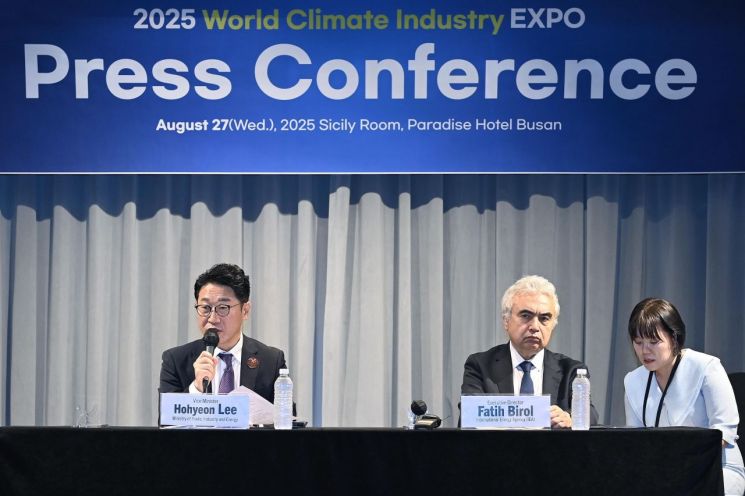
"We have entered the 'Age of Electricity.' Over the next decade, electricity demand will grow at a rate six times faster than the overall increase in energy demand."
Fatih Birol, Executive Director of the International Energy Agency (IEA), made this statement at the Korea-IEA press conference held in Busan on August 27, emphasizing that the surge in electricity demand, driven by the spread of AI and the adoption of electric vehicles, is reshaping the global energy landscape.
Birol pointed out, "For every 1 dollar invested in fossil fuels, 2 dollars are invested in clean energy. However, investments in transmission, distribution networks, and storage facilities are not keeping pace with the rising demand for electricity. While 1 trillion dollars are spent annually on power generation facilities, only 400 billion dollars are allocated to power grids."
He also identified dependence on critical minerals as the greatest risk. "In 19 out of the 20 strategic minerals such as lithium, copper, and rare earth elements, a single country dominates the refining sector. China not only leads mining in Africa and South America but also accounts for 70% of refining," he warned. "Such concentration in supply chains means that natural disasters or geopolitical risks could impact everything from medical devices and drones to semiconductors." He further stressed, "Diversifying supply chains and fostering international cooperation are at the heart of 21st-century energy security."
The Korean government also shared this sense of urgency. Lee Ho-hyun, Second Vice Minister of Trade, Industry and Energy, stated, "To respond to the rapidly increasing electricity demand driven by AI and electric vehicles, we will expand carbon-free power generation facilities and promote industrial decarbonization through the introduction of RE100 industrial complexes and high-efficiency heat pumps." He added, "Korea will implement an optimal energy mix by comprehensively considering price competitiveness, public acceptance, energy security, and carbon neutrality."
Vice Minister Lee emphasized, "The government will expand stable power grid infrastructure, such as the 'energy highway,' and present directions for innovation in energy systems linked with AI. We will achieve a major transition centered on renewable energy while simultaneously fostering advanced industries."
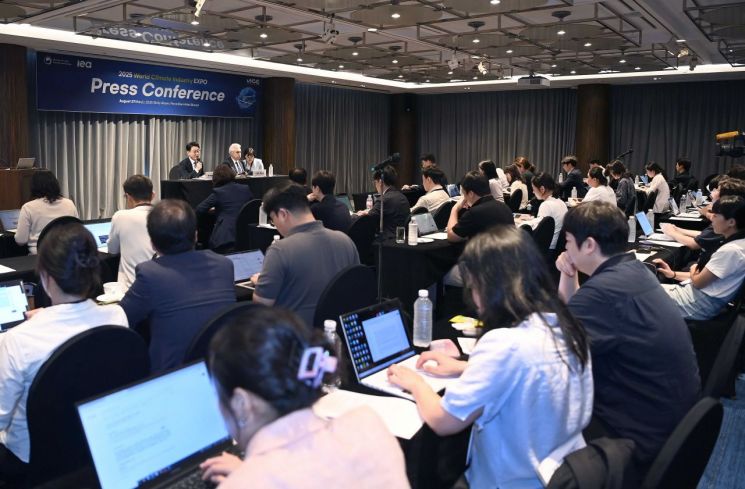
During the Q&A session, nuclear power and hydrogen drew particular attention. Executive Director Birol stated, "2025 will mark the 'peak of nuclear power,' with global nuclear generation reaching its highest level in history. Korea has consistently demonstrated its ability to meet deadlines and budgets in nuclear power plant construction and operation, and is fully capable of being a reliable export partner." Vice Minister Lee also explained, "Nuclear power is highly competitive in terms of cost, public acceptance, and safety, which is why countries around the world are focusing on it as a key Korean industry."
Regarding hydrogen, Executive Director Birol said, "Hyundai Motor Company is a global leader in hydrogen mobility. Korea is setting an example in the mobility sector, including cars, buses, and trucks. The cooperation of private companies is key to driving the energy transition."
The connection between the AI era and energy was also highlighted. He noted, "AI requires energy. Without a stable and low-carbon power grid, there can be no AI competitiveness. Now, industrial competitiveness depends on how reliable a power grid a country possesses." He added, "Korea's 'energy highway' policy and expansion of renewables provide an important foundation for competitiveness in the AI era."
He continued, "The clean energy technology market will grow from 700 billion dollars today to 2 trillion dollars by 2035. Korea already holds a leading position in the battery supply chain and can further expand its leadership in power grid equipment such as transformers and cables. With the convergence of AI and the energy transition, Korea can seize even greater opportunities."
Meanwhile, the 2025 Climate Industry International Expo opened on this day at BEXCO in Busan. Co-hosted by the Korean government, the IEA, and the World Bank, this event is a core program of 'Energy Super Week,' encompassing the Clean Energy Ministerial, Mission Innovation Ministerial, and APEC Energy Ministerial meetings. The event is attended by over 700 participants, including ministerial delegations from more than 40 countries, international organizations, and CEOs of global companies, who are discussing global cooperation measures for climate and energy.
© The Asia Business Daily(www.asiae.co.kr). All rights reserved.













