Long-term Study of 25,000 Taiwanese Adults
Greater Impact on Manual Laborers and Rural Residents
A study has found that repeated exposure to heatwaves causes 'accelerated aging' in the human body. The analysis indicates that heatwaves not only increase the short-term risk of death but can also have fatal impacts on health throughout a person's lifetime.
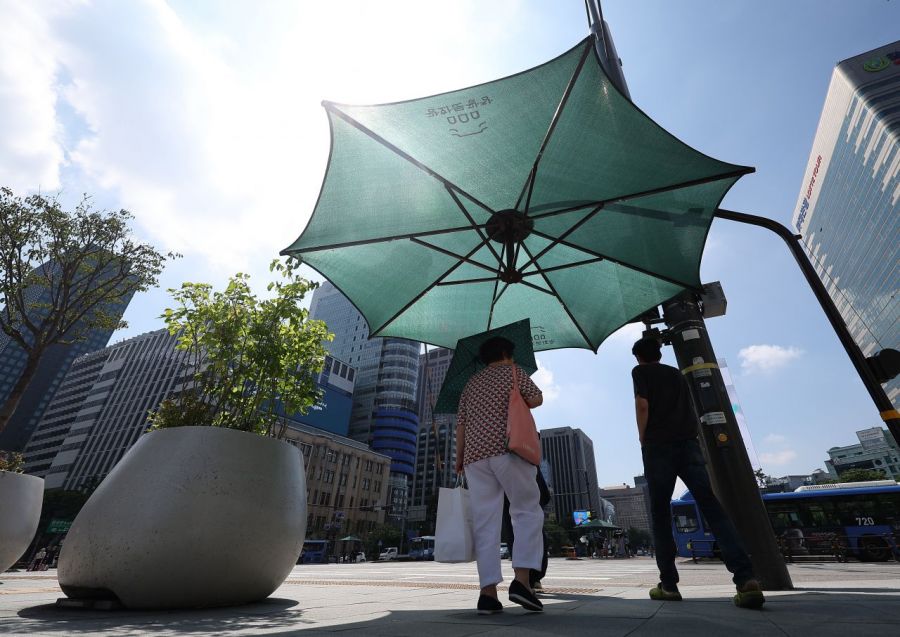 On the 5th, as the heatwave continues, Seoul citizens are taking shelter in the shade to avoid the sunlight. This is unrelated to the article. Yonhap News Agency
According to reports from foreign media outlets such as The Guardian in the United Kingdom on the 25th (local time), Professor Guo Cui's research team at the University of Hong Kong published a paper in the international journal "Nature Climate Change," stating, "Heatwaves rapidly deteriorate bodily functions and, in the long term, accelerate biological aging, which is directly linked to lifespan extension."
The researchers conducted a long-term follow-up of health data from 24,922 Taiwanese adults from 2008 to 2022. The team calculated each participant's 'biological age' by integrating indicators such as blood pressure, inflammation levels, cholesterol, and lung, liver, and kidney function, and compared these to the number of days exposed to heatwaves.
The results showed that when the cumulative period of heatwave exposure increased by an interquartile range (IQR) according to statistical indicators, biological age increased by an average of 8 to 11 days. In particular, for those whose number of heatwave days increased by 4 days over two years, biological age accelerated by about 9 days. The effect was even more pronounced among manual laborers, rural residents, and residents in areas with fewer air conditioners per household. For outdoor workers, biological age advanced by an average of 33 days during the same period.
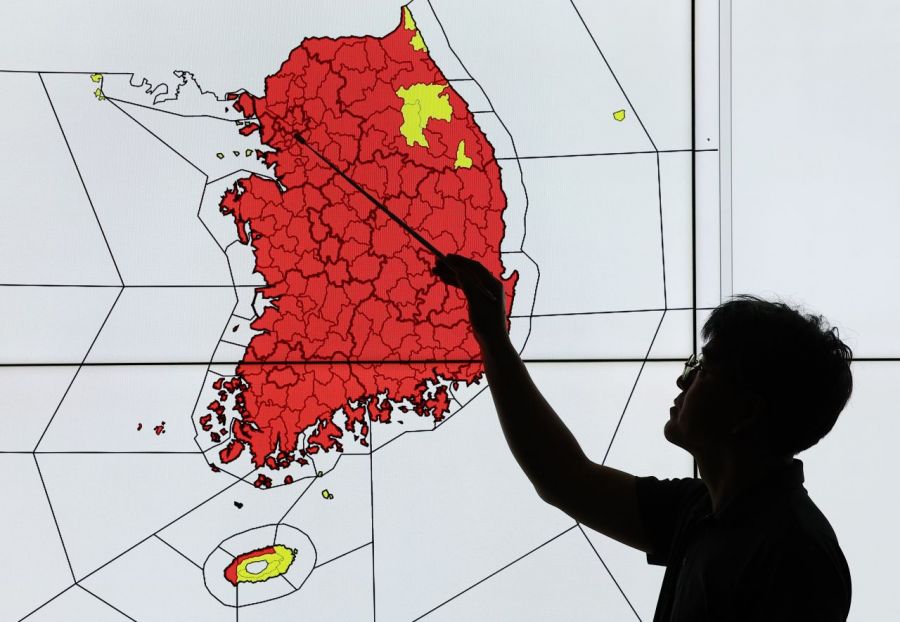 The Korea Meteorological Administration monitor displaying regions under a heatwave advisory. Unrelated to the article. Photo by Yonhap News.
Expert: "The effects of heatwaves appear throughout the entire lifespan"
Professor Guo warned, "Although the numbers may seem insignificant, heatwaves have been recurring for decades. Over time, the health impact will snowball." Paul Beggs, a professor at Macquarie University in Australia who did not participate directly in the study, also commented, "Even if you think you have endured a heatwave safely, the reality is that your aging process is accelerating." He added, "Last year, a study showed that childhood heat exposure impairs brain development, and this time, accelerated aging has been confirmed in adults. The harm caused by heatwaves can affect people throughout their entire lives, regardless of age."
The study noted that while it considered participants' weight, smoking and exercise habits, pre-existing conditions such as diabetes and cancer, and the air conditioner penetration rate in their residential area, it could not account for individual outdoor activity time or personal use of cooling devices. The researchers stated, "Further investigations including more variables are needed in the future."
Record-breaking heatwave continues in South Korea
Meanwhile, South Korea is also experiencing a record-breaking heatwave this summer. According to the Korea Disease Control and Prevention Agency on the 25th, the cumulative number of heat-related illnesses this summer has exceeded 4,000, with 26 deaths reported. In Seoul, there were 22 consecutive tropical nights in July, marking the highest number of tropical nights in 117 years. The minimum temperature soared to 29.3 degrees Celsius, resulting in the worst nighttime heat on record. On some days, more than 100 people visited emergency rooms due to heatstroke and related conditions. Experts have warned that if such heatwaves become the norm, the damage could go beyond short-term impacts and pose long-term health threats.
© The Asia Business Daily(www.asiae.co.kr). All rights reserved.













