Ambiguous Boundaries of the Law Spread Confusion Among SMEs
Concerns Grow Over Inevitable Clashes Between Primary Contractors and Subcontractors Over 'Bargaining Representatives'
Proactive Moves to Establish Defensive Strategies to Avoid Becomin
"I don't know what companies like ours, whose very existence is threatened even by a few weeks of strikes, are supposed to do. If the company goes bankrupt and jobs disappear, who will take responsibility?"
Jang, the CEO of a small manufacturing company that supplies industrial equipment to large corporations, expressed his frustration and concern to a reporter regarding the Yellow Envelope Act (the amendment to Articles 2 and 3 of the Trade Union and Labor Relations Adjustment Act), which finally passed the National Assembly. Jang explained, "In industries like ours, we manufacture and deliver equipment worth billions of won just a few times a year. If even one delivery is blocked, we would have to shut down the company."
He continued, "They say the Yellow Envelope Act makes it so that even if unions go directly to the primary contractor and make demands, there's nothing we can do. In this situation, isn't it small businesses and their employees like us who will suffer the most?"
Kim, the CEO of another partner small business, said, "Some people claim that concerns about primary contractors facing management disruptions from year-round negotiations are exaggerated, but I honestly don't know which perspective is correct. Even when I ask industry associations, I can't get a clear answer. It seems everyone is either painting the worst-case scenario from their own perspective or being overly complacent."
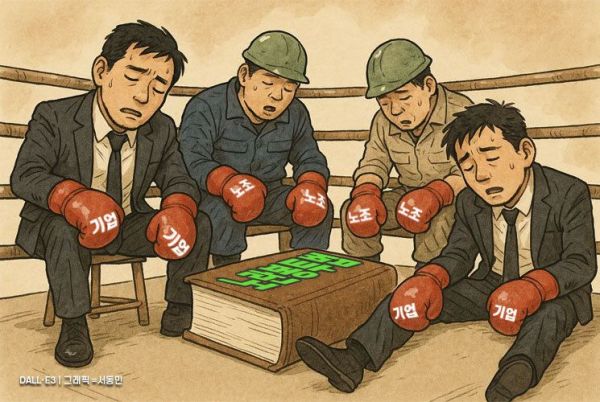
As of August 27, the small and medium-sized business sector reports that anxiety and confusion are rapidly growing among SMEs trading with large corporations ahead of the implementation of the Yellow Envelope Act. As the definition of 'employer' and the scope of labor disputes have expanded, the boundaries of the law are becoming blurred, and ambiguities that allow for broad interpretation are fueling this anxiety and confusion. Due to such lack of clarity, predictability in the industrial field is dropping to unprecedented levels, and there are concerns that conflicts between companies and unions, and even between different unions, could escalate dramatically based on arbitrary interpretations.
Some in the industrial and business sectors, including SMEs, say that the "single bargaining channel" rule-which requires the designation of a representative union and the creation of a single bargaining channel when there are multiple unions in a workplace-is the only provision they can rely on. The government appears to be maintaining its stance that it will ensure this rule is not rendered ineffective, so that primary contractors can avoid the chaos of having to negotiate individually with dozens of subcontractor unions. If this principle is ultimately maintained and enforced, there is an interpretation that the worst-case scenario feared by the industry is unlikely to materialize.
Jeong Bongsoo, a certified labor attorney and CEO of Gangnam Labor Law Firm, commented, "The so-called 'negotiation war of attrition,' where companies are forced to negotiate all year round, is a misunderstanding of the law. Under the single bargaining channel system in the Trade Union Act, the primary contractor can simply request that subcontractor unions form a single bargaining channel and come to the table." He further explained, "The primary contractor only needs to negotiate with the unified bargaining channel, and as long as they do not refuse this, it cannot be considered an unfair labor practice. An unfair labor practice only occurs if, after the channel has been unified, the company refuses to negotiate at all."
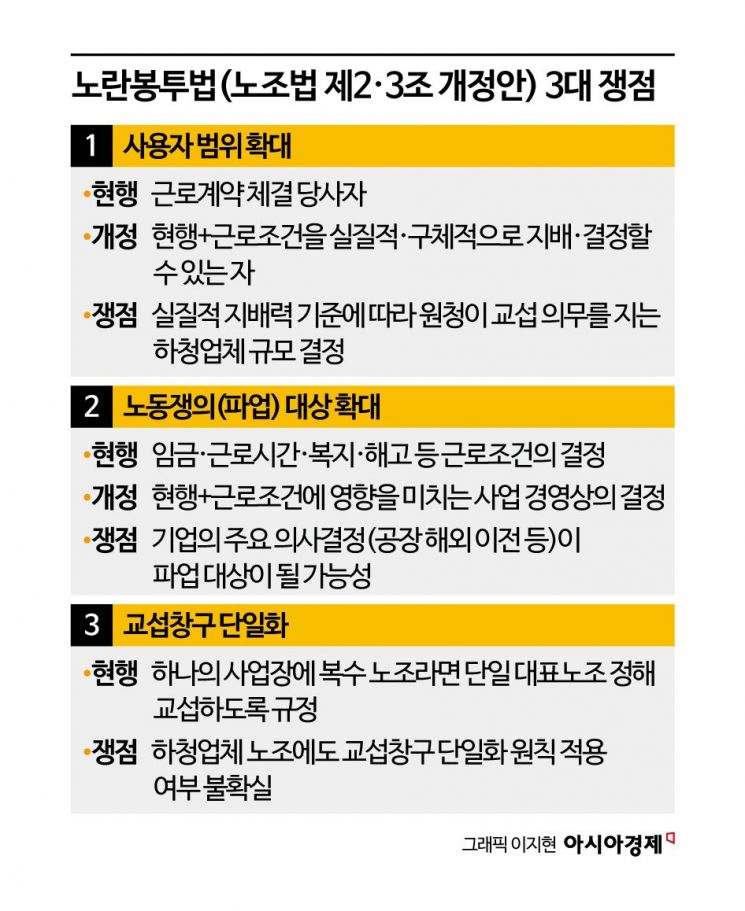
The problem, however, is that even in such cases, the process of forming a unified bargaining channel could spark discord between the primary and subcontractor unions-so-called "union-union conflict"-and this alone could lead to a sharp decline in overall industrial productivity. In some cases, the 'pie' for improvements in wages or benefits may need to be shared with subcontractor unions, and it is questionable whether the primary contractor's union or established factions within the union would accept this.
Yoon Sangpil, a certified labor attorney and CEO of Dowon Labor Law Firm, analyzed, "Until the government issues enforcement ordinances or guidelines, disputes over the requirements for negotiation between primary and subcontractor employees are inevitable." Yoon added, "Primary contractors will try to limit the scope of negotiation as much as possible, while subcontractors will actively use legal interpretations to secure negotiation rights with the primary contractor. The key is how quickly and clearly the scope of negotiation is defined."
The government is considering measures such as amending enforcement ordinances to fill legislative gaps related to the single bargaining channel, and having disputes referred to the Central Labor Relations Commission for mediation if labor-management agreements break down.
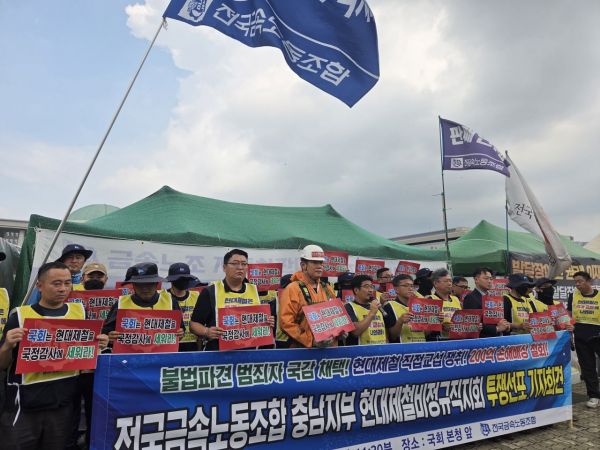 On the 25th, one day after the Yellow Envelope Act passed the National Assembly, non-regular workers of Hyundai Steel held a press conference in front of the National Assembly in Yeouido, urging the primary contractor Hyundai Steel for direct employment. Photo by Yonhap News
However, a representative from the SME sector said, "No matter what, it will be difficult to avoid new types of conflicts and aftershocks that we have never experienced before. The biggest problem is that the bill was passed without sufficient deliberation, leaving ambiguities and shortcomings that are more than enough to foresee controversy and conflict." As irregular worker unions at LG HelloVision, the Hyundai Steel Irregular Workers' Branch of the Korea Metal Workers' Union in South Chungcheong Province, unions at Naver subsidiaries, and the ENS union at Samsung Electronics' partner companies have each begun or announced actions demanding the abolition of the subcontracting structure and conversion of partners into subsidiaries, direct employment of irregular subcontracted workers, and direct resolution of regular wage issues by the primary contractor, there are predictions that this momentum could spread throughout the industry.
Within the industrial sector, especially among small and medium-sized enterprises, there is a sense of urgency to prepare legal and labor-related "response strategies" in anticipation of where the impact of the Yellow Envelope Act might land. A representative from the Korea Automobile Industry Cooperative Association said, "Larger member companies have their own labor attorneys or legal advisors. There is a trend of preparing response manuals related to the Yellow Envelope Act in advance to avoid risks." The representative added, "The real issue is with small businesses. Even if it costs money, at the very least, they need to make some legal or labor preparations."
© The Asia Business Daily(www.asiae.co.kr). All rights reserved.














