Seo-gu Sets Precedent as First District Nationwide to Designate All Areas as "Alley-Type Shopping Districts"
A New Model for Revitalizing the Alley Economy Gains National Attention
Seo-gu in Gwangju has become the first district nationwide to designate all areas within its jurisdiction as alley-type shopping districts, presenting a new model for revitalizing South Korea's alley economy and driving its spread across the country.
On August 26, Seo-gu presented its success story at the "Jeonnam Region Alley-Type Shopping District Revitalization Policy Council," hosted by the Gwangju-Jeonnam Regional Office of SMEs and Startups in Muan and Suncheon, Jeollanam-do.
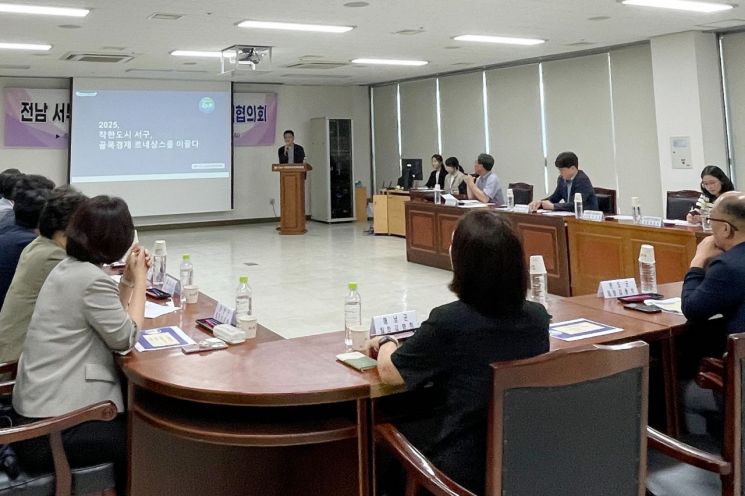 Seo-gu, Gwangju, is gaining attention as a leading model for revitalizing the local alley economy by being the first in the nation to designate the entire district as an alley-type shopping area. Provided by Seo-gu, Gwangju
The council was attended by officials from 22 cities and counties in Jeollanam-do, as well as representatives from related organizations such as the Small Enterprise and Market Service, who shared Seo-gu's pioneering policies.
Hong Seokgi, Director of the Seo-gu Small Business Management Support Center, introduced the implementation process, including resident-merchant collaboration, streamlined franchise procedures, and information sessions on registering for Onnuri gift certificates. He also shared the results, noting that after expanding the use of Onnuri gift certificates, merchants' sales increased by 20-30% and resident satisfaction rose significantly.
Seo-gu has designated approximately 11,000 stores as 119 alley-type shopping districts and is currently implementing the "Alley Economy 119 Project" to promote the use of Onnuri gift certificates. Through mutually beneficial cooperation between residents and merchants, a virtuous cycle has been established in which consumers benefit from discounts and merchants see increased sales, attracting nationwide attention.
In particular, as of the end of last month, 15% of the nation's 799 alley-type shopping districts are concentrated in Seo-gu, making it the single district with the highest proportion. Seo-gu is also enhancing the completeness of its policies by implementing follow-up measures focused on fieldwork and communication, such as installing alley economy dashboards, launching the Alley Economy 119 Hotline, and operating alley workspaces.
Seo-gu Mayor Kim Ikang stated, "This achievement was not led unilaterally by the administration, but was the result of collaboration between residents and merchants. I hope Seo-gu's example will serve as a positive stimulus for alley commercial district policies not only in the Jeonnam region but across the country."
Meanwhile, last month, Seo-gu proved the excellence of its policy by winning the top prize in the economic and regional industry support category at the "2025 National Basic Local Government Manifesto Best Practices Competition," co-hosted by the Korea Manifesto Implementation Headquarters and the Gyeongbuk Research Institute, for its policy of designating all areas as alley-type shopping districts.
Additionally, Gwangju City is strengthening the foundation for revitalizing the alley economy by holding a vision declaration ceremony to expand alley-type shopping districts throughout Gwangju, based on Seo-gu's successful model, and encouraging responsible consumption among citizens.
© The Asia Business Daily(www.asiae.co.kr). All rights reserved.












