Yields Reflect Fed Rate Cut Expectations
Caution Persists Ahead of BOK Meeting and 2025 Budget Proposal
Yields on Korean Treasury bonds fell across the board. This was driven by growing expectations for a U.S. Federal Reserve (Fed) rate cut in September. Since bond yields move inversely to prices, a decline in yields means a rise in bond prices.
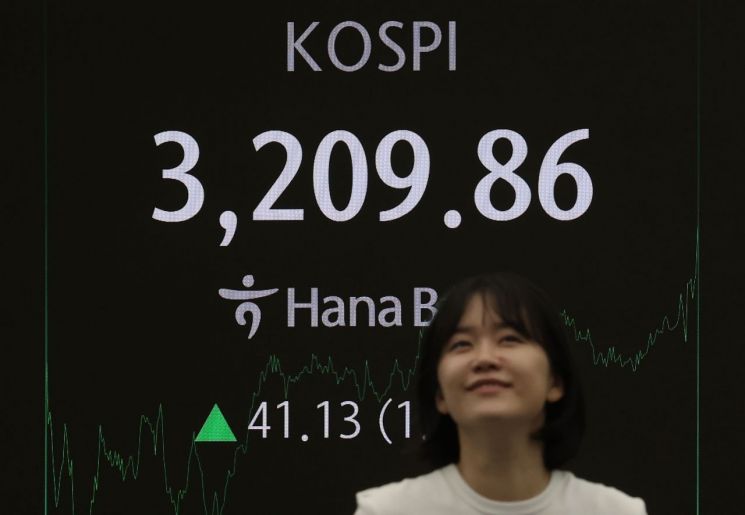
On August 25, in the Seoul bond market, the yield on three-year Treasury bonds closed at 2.434% per annum, down 2.2 basis points (1bp = 0.01 percentage point) from the previous trading day. The yields on five-year and two-year bonds also fell by 2.2 basis points each, finishing at 2.602% and 2.360% per annum, respectively. The 10-year yield dropped by 0.8 basis points to 2.852% per annum, while the 20-year yield ended at 2.864% per annum, down 0.7 basis points.
However, ultra-long-term bonds moved in the opposite direction. The yields on 30-year and 50-year bonds rose slightly by 0.2 basis points and 0.1 basis points, closing at 2.768% and 2.650% per annum, respectively.
This movement in yields is believed to have been influenced by remarks from Federal Reserve Chair Jerome Powell at the Jackson Hole Economic Policy Symposium held last weekend. In his speech, Powell stated, "Downside risks in the labor market are increasing," and added, "Since policy is at a restrictive level, a shift in the balance of risks could justify an adjustment in the policy stance."
The market interpreted this as a signal that the Fed may be shifting its primary focus in monetary policy from inflation to the labor market, increasing the likelihood of a rate cut in September.
However, the Bank of Korea's Monetary Policy Board meeting scheduled for August 28 is also a variable. Initially, the market expected a rate cut in August, but recently, the possibility of a rate freeze has gained traction, citing the need to stabilize the real estate market and other factors.
In addition, the government budget proposal for next year, which will be announced soon, is also seen as a major factor that could significantly affect bond market supply and demand. The market is expected to remain cautious for the time being, paying close attention to these domestic and external uncertainties.
© The Asia Business Daily(www.asiae.co.kr). All rights reserved.












