A Surge in Item Trading Scams and Cyberbullying
Lax Punishments Raise Concerns About Repeated Deviant Behavior
A, a 14-year-old first-year middle school student, was recently scammed while trying to purchase an item on the metaverse platform Roblox. After seeing a post in an online community offering a popular item for 30,000 won, she transferred the money, but the seller disappeared. A said, "It was my hard-earned allowance, so I felt devastated and unfair," adding, "I couldn't even tell my parents and suffered alone."
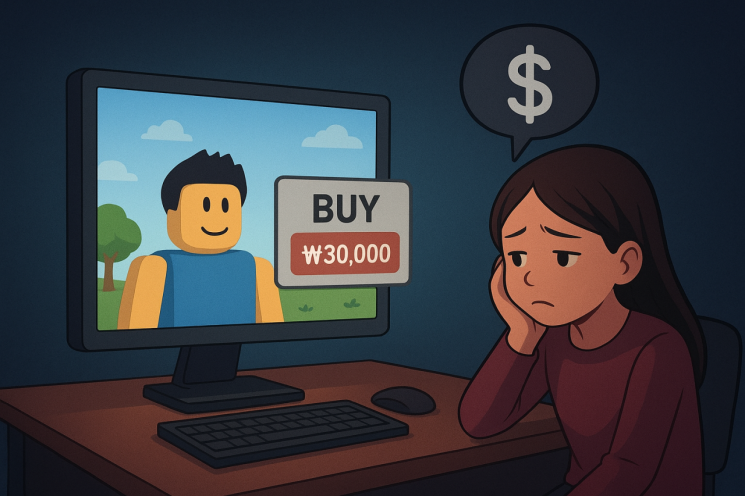
The metaverse, which has become a playground for teenagers, is turning into a space for delinquency. In virtual spaces, crimes such as item trading scams, abusive language, and sexual harassment occur frequently, but because the perpetrators are minors, proper punishment is rarely enforced. The metaverse refers to a digital world where users can engage in social activities in a virtual space through avatars.
As of September 13, reports of small-scale scams on metaverse platforms continue to appear in KakaoTalk open chat rooms. B, a 16-year-old boy who lost 20,000 won in a scam, said, "I looked up the scammer's social media account and was even more upset because they were around my age," but added, "I didn't report it." Another victimized teenager said, "I hid it from my parents because I was afraid they would take away my phone."
There are also cases where victims become perpetrators. C, an 18-year-old boy, confessed, "Since there is little punishment even if you get scammed, some people use the same trick on others." In some spaces, cyberbullying such as abusive language and sexual harassment is rampant. Female avatars have even been subjected to sexual comments like, "Can you do a video call?"
Lim Myungho, a professor of psychology at Dankook University, said, "If adolescents, whose identities are still forming, repeatedly experience deviant behavior in virtual spaces, they may come to view the world in a negative and distorted way," adding, "There is a risk that they will learn to think that the world is just like that. Families and schools need to pay close attention to how teenagers use the metaverse and provide both monitoring and education."
© The Asia Business Daily(www.asiae.co.kr). All rights reserved.












