Baek Youngsoo Art Museum: Uijeongbu’s First Municipal Art Museum and a New Hub for Citizen-Led Culture
Uijeongbu Culture Station Eum: An Open Platform for Everyday Cultural Experiences
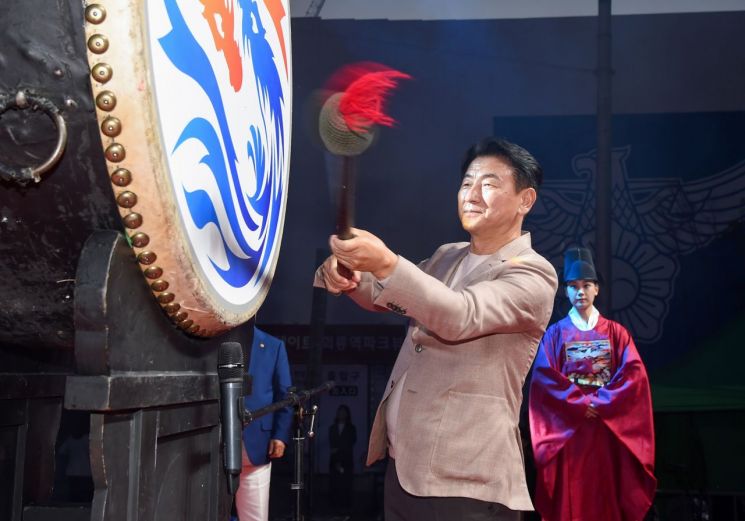
Hoeryong Cultural Festival: Preserving Tradition and Pride Across Generations
Transforming Jungnangcheon Stream and Jikdong Neighborhood Park into Green, Citizen-Centered Spaces
Mangwol-ro Pedestrian Axis: Creating a Walkable and Enjoyable Urban Environment
Baduk Stadium and Camp Jackson: Pioneering New Growth Engines for the Future of Howon
Marking the third anniversary of its 8th popularly elected administration, the city of Uijeongbu in Gyeonggi Province is accelerating its efforts to become a culture-driven city led by its citizens.
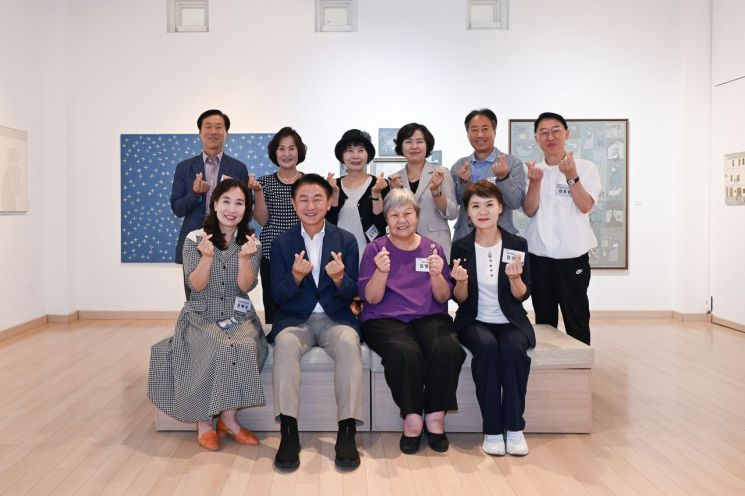 Kim Donggeun, mayor of Uijeongbu, visited Baek Youngsoo Art Museum on the 22nd and held a meeting with residents of the Howon area, then took a commemorative photo together. Provided by Uijeongbu City
According to Uijeongbu City on August 23, the city visited the Howon area on August 22 and toured the Baek Youngsoo Art Museum, which is being considered as the site of Uijeongbu’s first municipal art museum, and held a meeting with local residents. Through this on-site visit, the city shared its achievements in expanding cultural infrastructure with residents and sought new directions for the development of the area.
Uijeongbu City is committed to expanding diverse cultural infrastructure and preserving traditional culture, with the goal of making citizens the main agents of culture. Key hubs that embody cultural enjoyment, creativity, history, and identity include the Baek Youngsoo Art Museum, Uijeongbu Culture Station Eum, and the Hoeryong Cultural Festival.
The city is currently promoting the construction of Uijeongbu’s first municipal art museum. Located in Howon-dong, the Baek Youngsoo Art Museum was where the late master of the New Realism movement, Baek Youngsoo, spent his later years creating art. The museum is currently operated by the Baek Youngsoo Art and Culture Foundation.
In April of last year, the city signed a business agreement with the foundation and began the process of municipalization, including securing land, receiving artwork donations, and operating programs. Going forward, the city plans to build a new museum in conjunction with a cultural park within a redevelopment area, transforming it into an open, multi-purpose cultural space that goes beyond simple exhibitions to include education, hands-on experiences, and research functions. On this day, Mayor Kim Donggeun visited the site, listened to residents’ opinions, and reaffirmed his commitment to establishing the museum as a core cultural facility representing Uijeongbu.
Uijeongbu Culture Station Eum is a multi-purpose cultural space where people can experience culture in their daily lives. Opened in August 2024 after remodeling the unused fourth floor of Uijeongbu Station, it functions as a citizen-centered cultural platform encompassing exhibitions, performances, lectures, and creative activities.
Aiming to be a "space where everyday life becomes a journey and culture," it features an open lounge and travelers’ library, the Eum Gallery for exhibitions and seminars, the Creative Room for citizens and creators, the Modum Hall multipurpose hall, and the Hwaum Hall rehearsal space for arts organizations. Notably, within just one year of opening, more than 260 programs have been held at the request of citizens and arts groups, establishing it as an open space where citizens take the lead.
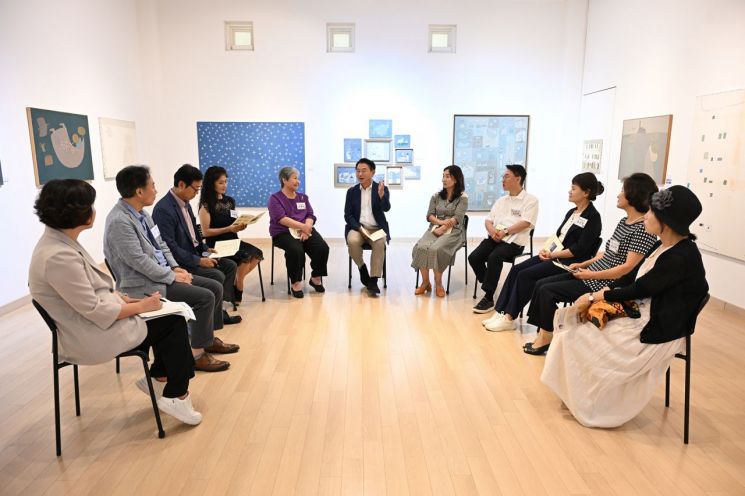 Kim Donggeun, mayor of Uijeongbu, visited Baek Youngsoo Art Museum on the 22nd and communicated with residents of the Howon area. Provided by Uijeongbu City
The Hoeryong Cultural Festival, the city’s most symbolic traditional cultural festival, also represents Uijeongbu’s identity. Based on historical legends about Hoeryongsa Temple, where King Taejo Yi Seonggye of Joseon is said to have stayed, this festival began in 1986 and is Uijeongbu’s oldest cultural event, preserving cultural pride across generations.
This year marks the 40th Hoeryong Cultural Festival, which will be held from September 27 to 28 at Jeonja Village in Howon-dong. The festival will feature a variety of programs, including the Hoeryong Nanjang, a reenactment of King Taejo and King Taejong’s royal procession in Uijeongbu, and the Uijeongbu Children’s Gwageoje. This year, the festival will be co-hosted by the Uijeongbu Cultural Center and the Uijeongbu Cultural Foundation, strengthening both content and execution. It will also be operated as an independent festival, separate from the "Citizen’s Day Commemoration Ceremony," to enhance focus.
Focusing on the Baek Youngsoo Art Museum, Uijeongbu Culture Station Eum, and the Hoeryong Cultural Festival, the city plans to expand its citizen-led cultural platforms where daily life, art, history, and the future come together, making Uijeongbu a culture city driven by its citizens.
To transform the Howon area into a living zone where anyone would "want to walk and stay," the city is redesigning rivers, parks, and roads as citizen-centered spaces. The creation of a waterfront space along Jungnangcheon Stream, the opening of the entrance plaza at Jikdong Neighborhood Park, and improvements to the pedestrian environment on Mangwol-ro are all contributing to a more pleasant and safer living environment, making the Howon area an even more attractive place to live.
Jungnangcheon Stream, in particular, has evolved from a simple flood control space into an ecological and cultural area where citizens can relax and enjoy cultural activities. In spring, the "Cheongboritgil" path is filled with green barley, while in autumn, the "Memilgil" path is blanketed with white buckwheat flowers. The walking trails along Jungnangcheon and busking performances at the Hoamgyo Bridge Rest Area provide year-round enjoyment for citizens. With barefoot walking experiences and seasonal programs, the area has been transformed into a green oasis in everyday life.
The "Jikdong Neighborhood Park Entrance Plaza," which opened in March this year, is a symbolic project that returned a space once cut off by military facilities to the citizens. The removal of bunkers and the creation of the plaza have improved park accessibility, and the area has been reborn as an eco-friendly relaxation space with a lawn, observation plaza, and lighting facilities.
Additionally, to realize the vision of "Uijeongbu, a city you want to walk in," the city is developing Mangwol-ro as a symbolic pedestrian axis. This is a key project to transform the Mangwolsa Station area into a citizen-friendly space, going beyond simple street improvements. By reducing road lanes, expanding sidewalks, and removing unnecessary facilities, the city is creating a pedestrian-oriented street that is being redesigned as a place to stay and enjoy.
In particular, Mangwol-ro, in conjunction with the modernization of Mangwolsa Station, is strengthening its role as a gateway to the Howon area and is expected to drive commercial revitalization and improve the area's image in the future. Construction is currently underway, and with completion scheduled for September, citizens can soon expect to see tangible changes.
The city is also rapidly pursuing major initiatives to make the Howon area a future growth hub, including the expansion of cultural and sports infrastructure, regulatory innovation, and the relocation of military facilities.
First, in September 2024, the city will break ground on the nation’s first dedicated Baduk (Go) stadium near Jikdong Neighborhood Park in Howon-dong, with completion targeted for September 2026. The stadium will have a total floor area of 9,849 square meters and will be built with one basement level and four above-ground floors. It will include a Baduk exhibition hall, match rooms, a national team room, a multipurpose auditorium, and lecture rooms. The facility will serve not only as a sports venue but also as a multi-purpose cultural space where citizens and youth can enjoy Baduk culture together.
Another major turning point for the future of the Howon area is the easing of regulations for "Camp Jackson." Although the 82,000-square-meter site was previously ineligible for removal from the Green Belt (GB) due to its small size, the city led continuous negotiations with the Ministry of Land, Infrastructure and Transport, Gyeonggi Province, and the Office for Government Policy Coordination, resulting in policy improvements.
As a result, in April last year, the Ministry of Land revised its guidelines to allow GB removal for sites under 200,000 square meters. Camp Jackson is now set to be developed as a hub for advanced industries and R&D research facilities, leveraging its excellent transportation access via National Route 3, the Seoul Metropolitan Area Circular Expressway, and Subway Line 1. It is expected to emerge as a key base for attracting businesses. Environmental cleanup is currently in its final stages, and the site is poised to become a new growth axis for southeastern Uijeongbu.
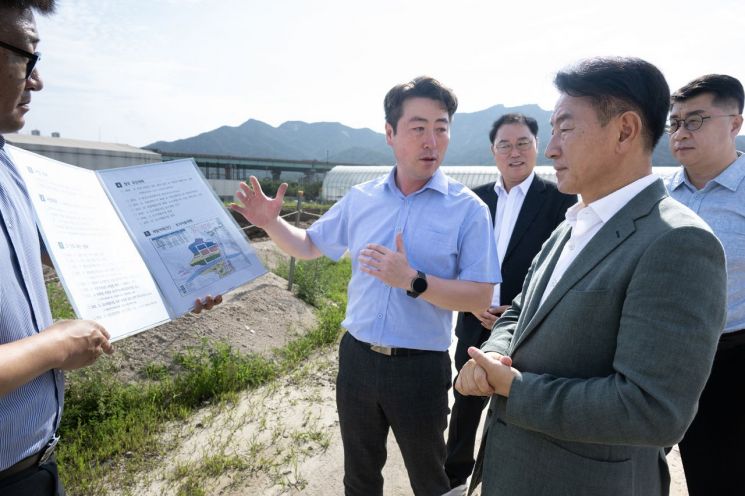
Even greater change is expected with the development of the returned Camp Jackson site. Thanks to the revision of the Green Belt removal guidelines, the area is set to become a new growth hub focused on advanced industries and R&D facilities. Combined with the planned relocation of the nearby reserve forces training center, this is expected to provide new momentum for the development of the Howon area.
Mayor Kim Donggeun stated, "The Howon area is undergoing a variety of changes across the city, from culture and the arts to ecology, living environment, and future growth foundations. We will continue to work with citizens to achieve sustainable development so that Howon and all of Uijeongbu can become more livable and competitive cities."
© The Asia Business Daily(www.asiae.co.kr). All rights reserved.














