Visit to the National Institute for Korean Medicine Development on August 21
Cooperation in Research, Development, and Workforce Training
On August 21, a delegation from the Tanzanian Ministry of Health and the Traditional Medicine Agency visited the National Institute for Korean Medicine Development to promote and cooperate in the field of traditional medicine.
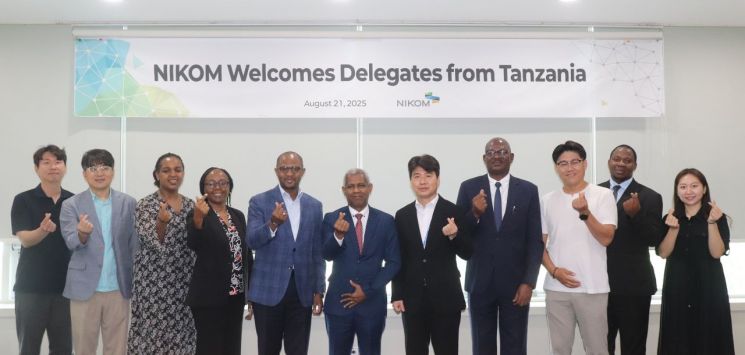 On the 21st, a delegation from the Ministry of Health and Traditional Medicine of Tanzania visited the National Institute for Korean Medicine Development. Photo by the National Institute for Korean Medicine Development
This exchange began at the "ODA Roundtable for Foreign Mission Heads in Korea," co-hosted by the Ministry of Health and Welfare and the Korea Foundation for International Healthcare (KOFIH) in March.
At that time, the Tanzanian Ambassador to Korea expressed a strong interest in cooperation in the field of traditional medicine. Subsequent discussions between the National Institute for Korean Medicine Development and both countries regarding possible avenues of collaboration led to this visit.
The delegation, led by Tanzanian Ambassador to Korea H.E. Togolani Edriss Mavura, consisted of six members, including Said Shebe Aboud, Secretary General of the National Institute for Medical Research (NIMR) of Tanzania, and Winifrida Kidima, Assistant Minister at the Tanzanian Ministry of Health.
Ambassador Togolani Edriss Mavura, head of the delegation, stated, "The Tanzanian government is strongly committed to fostering traditional medicine, but we lack infrastructure in areas such as research, education, and facilities. I believe that if Tanzania, which is rich in plant resources, collaborates with Korea, which has advanced technology, there will be significant synergy in the traditional medicine industry," expressing high expectations.
Currently, more than 60% of Tanzanians use traditional medicine. The government is implementing various policies to incorporate traditional medicine into the formal healthcare system and to verify its safety and efficacy.
Said Shebe Aboud, Secretary General, said, "For the modernization of traditional medicine in Tanzania, it is most urgent to advance research and development, technological progress, and expert training. We would like to pursue various models of cooperation with the National Institute for Korean Medicine Development, including joint research, personnel exchanges, and policy consultation."
The delegation is visiting the National Institute for Korean Medicine Development, as well as universities, hospitals, and industrial sites.
On August 21, the delegation held a meeting at the headquarters of the National Institute for Korean Medicine Development and toured the Quality Certification Center. They then visited the Daegu Yangnyeongsi Oriental Medicine Experience Town to experience traditional Korean medicine culture and medical services.
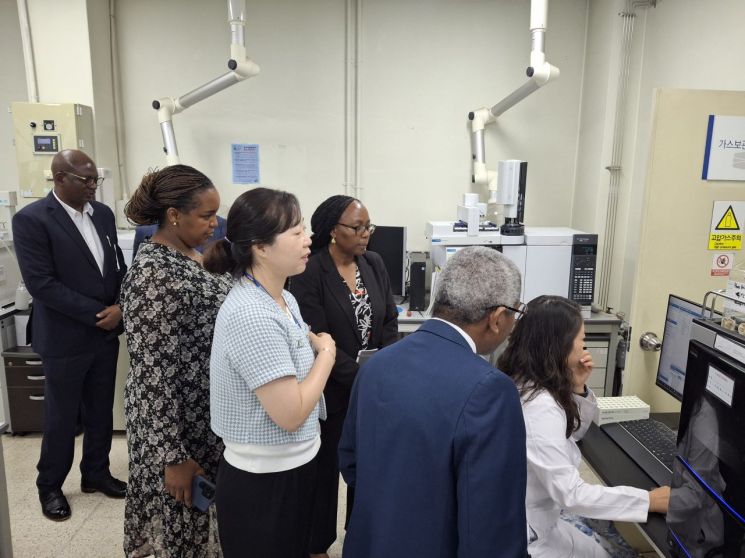 Tour of the Quality Certification Center. Provided by the National Institute for Korean Medicine Development
On August 22, the delegation will tour the Herbal Medicine Preparation Center (GMP) at the National Institute for Korean Medicine Development and the affiliated Korean Medicine Hospital at Daegu Haany University.
Lee Hwadong, Acting President of the National Institute for Korean Medicine Development, said, "I hope this visit by the Tanzanian delegation will serve as a practical opportunity to expand exchange and cooperation between the two countries in the field of traditional medicine. We will work to materialize this cooperation through ODA projects, such as improving traditional medicine policies and systems and providing workforce education."
The National Institute for Korean Medicine Development plans to implement the "Dr. Lee Jong-wook Fellowship" traditional medicine program as part of its ODA project for Tanzanian traditional medicine. Through this, it aims to help establish the traditional medicine system in Tanzania and to foster professional personnel.
© The Asia Business Daily(www.asiae.co.kr). All rights reserved.













