Bipartisan Introduction of the "Safe Trade Act"
10% Basic Tariff on All Imports, Up to 100% on Chinese Goods
Congress Moves to Codify Tariff Policies Amid Rising U.S.-China Tensions
The U.S. House of Representatives has introduced a bipartisan bill that would impose a 10% basic tariff on all imports and up to a 100% tariff on products from China.
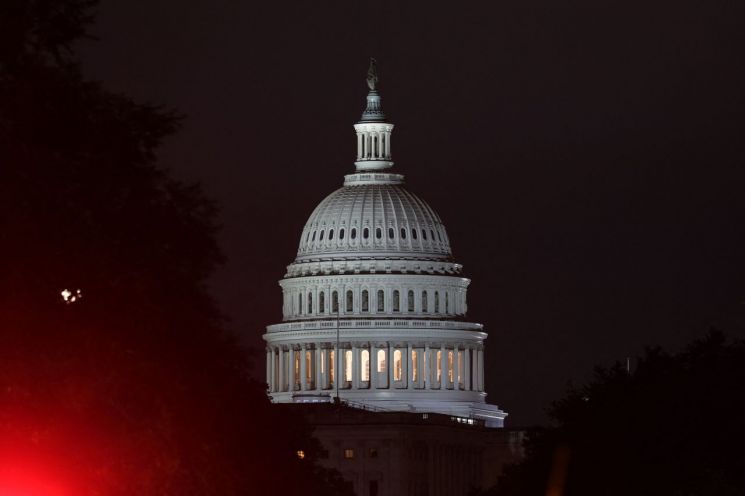
According to Congress on August 20 (local time), Representatives Jared Golden (Democrat, Maine) and Greg Steube (Republican, Florida) submitted the "Safe Trade Act" on August 15, which includes these measures.
The bill stipulates that a 10% basic tariff will be added to existing tariffs on all goods imported into the United States. Previously, on April 2, President Trump announced a "reciprocal tariff" policy, stating that a 10% basic tariff would be imposed on all countries, and this is currently being implemented in full.
The bill also establishes a separate tariff system for Chinese products, imposing a 35% tariff on non-strategic items and a 100% tariff on strategic items. Strategic items include aircraft engine parts, military micro drones, and freeze dryers for preserving sensitive pharmaceuticals. The tariff on strategic items from China will start at 10% 180 days after the law takes effect, then increase to 25% in the second year, 50% in the fourth year, and 100% in the fifth year.
Additionally, the bill grants the president the authority to adjust tariff rates if it is demonstrated to Congress that such changes serve the national interest.
Furthermore, the bill stipulates that the Committee on Foreign Investment in the United States (CFIUS) will review foreign investment activities-such as land purchases or factory construction-by "countries of concern" including Russia, China, North Korea, and Iran.
Until now, President Trump has imposed tariffs through executive orders. Some of the policies promoted by President Trump are reflected in this bill, and it is seen as an effort by Congress to legitimize tariff policy through legislation. In particular, since the bill was jointly introduced by both Republican and Democratic lawmakers, there is significant attention on whether it will pass in Congress.
© The Asia Business Daily(www.asiae.co.kr). All rights reserved.












