Direct Hit to Cost of Living if Non-GMO Becomes Mandatory
Self-Sufficiency Rate for Grains Below 1%
Concerns Over Growing Dependence on Imports
The National Assembly Health and Welfare Committee's Second Subcommittee on Legislative Review is drawing keen attention from the food industry as it is scheduled on August 20 to deliberate a partial amendment to the Food Sanitation Act, which includes the introduction of a mandatory full labeling system for genetically modified organisms (GMOs). A total of four bills are up for discussion, including the bill to strengthen GMO labeling sponsored by Assemblywoman Nam Insoon of the Democratic Party of Korea.
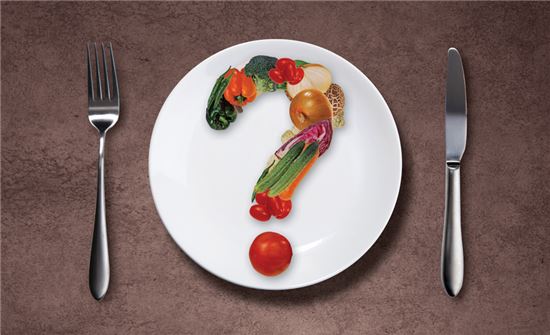 ▲"What food is on your table today?".
 [Photo by Asia Economy DB]
According to the review report released on August 19 by Lee Jimin, the chief expert of the Health and Welfare Committee, the purpose of the amendment is to "guarantee consumers' right to know." However, related government agencies such as the Ministry of Agriculture, Food and Rural Affairs, the Korea Food Industry Association, and industry stakeholders have all expressed strong opposition, citing concerns over unstable raw material supply, soaring costs, and reverse discrimination against domestic industries.
The primary concern for the industry is the rise in costs. If the full labeling system becomes mandatory, manufacturers would be effectively forced to switch entirely to non-GMO raw materials. This would essentially mean the elimination of GMO raw materials from the domestic market.
The issue lies in the price. According to the Korea Food Industry Association, the price gap between GMO and non-GMO raw materials ranges from 20% to 70%. For basic processed foods that are consumed in large quantities, such as soy sauce, starch syrup, and cooking oil, the increase in production costs is inevitable, which will in turn lead to higher prices for consumers. An industry representative pointed out, "The cost of food ingredients is directly linked not only to corporate profitability but also to the cost of living. The introduction of a full labeling system is not just a regulatory issue but a socioeconomic issue that would increase the financial burden on ordinary households."
The stability of raw material supply is also a risk factor. Currently, the domestic self-sufficiency rate for soybeans is only 7.5%, and for corn, just 0.7%. If non-GMO raw materials are used as substitutes, dependence on certain supplier countries (such as Ukraine) will inevitably increase. This could lead to supply instability and sharp price hikes, especially given the growing volatility in the grain market. The food industry has argued, "Blindly adopting the EU-style full labeling system without adapting it to Korea's circumstances is overly hasty. Ultimately, this will result in greater dependence on imported grains, soaring prices, and weakened industrial competitiveness."
The expert review report also pointed out limitations in the effectiveness of the system. The report noted, "If genetically modified DNA or proteins are not present, scientific verification is impossible," highlighting structural limitations in post-market oversight. There are concerns that mandating labeling requirements without the scientific means to verify them could only lead to administrative confusion. Even under the current system, the use of GMO raw materials is already restricted in school meals and by some local governments, and a private-sector non-GMO certification system is also in operation. The industry emphasized, "While the value of consumers' right to know is important, a thorough review of social consensus, costs, and benefits must come first."
The international community has also expressed concerns. During the World Trade Organization (WTO) Technical Barriers to Trade (TBT) consultations, major trading partners such as the United States, Canada, and Brazil recommended maintaining the current system, citing "unnecessary cost increases, consumer confusion, and trade disruptions." An industry representative stated, "Introducing a full GMO labeling system without social consensus, especially when prices and raw material supplies are unstable, could undermine the economy for ordinary people and erode the competitiveness of domestic industries. The government and the National Assembly should make a careful decision on whether to introduce the system only after sufficient research and public debate, rather than pushing for hasty legislation."
© The Asia Business Daily(www.asiae.co.kr). All rights reserved.











