Total Recovery Cost for Agriculture: 272.4 Billion KRW
Replanting Compensation Rates Fully Adjusted to Actual Prices
Subsidy Rates for Replanting and Livestock Restocking Raised to 100%
All Damaged Agricultural Machinery Covered, Additional Living Expense Support Provided
The government is strengthening its support for the agricultural sector affected by last month's extreme heavy rainfall. To help affected farms resume operations quickly and to facilitate recovery, the government will implement significantly enhanced recovery measures. These include adjusting the compensation rates for replanting costs to reflect actual prices, increasing subsidy rates, expanding the range of supported agricultural machinery, raising subsidy rates for agricultural facilities, and providing additional living expense support.
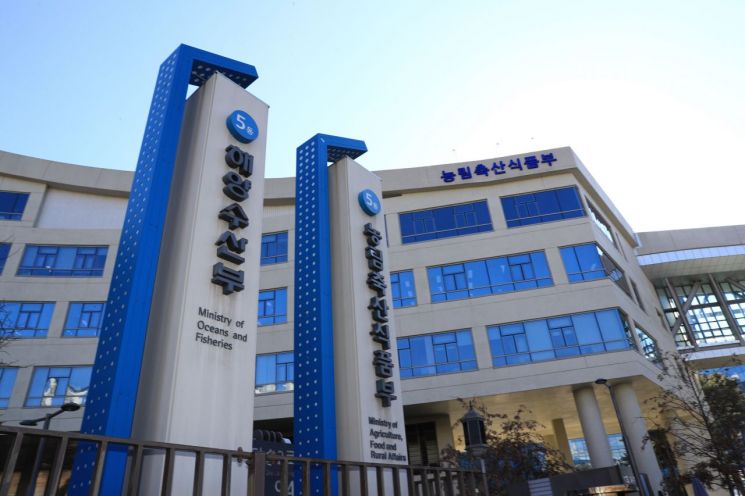
The Ministry of Agriculture, Food and Rural Affairs announced on the 17th, during a meeting of the Central Disaster and Safety Countermeasures Headquarters, that it had reviewed and approved disaster relief funds and financial support measures for the swift recovery of the agricultural sector from the extreme heavy rainfall that occurred in July.
The heavy rainfall in July caused nationwide damage, including 29,686 hectares of flooded crops, 1,447 hectares of lost or buried farmland, the death of approximately 1.79 million livestock, damage to about 397 hectares of agricultural and livestock facilities, 37,509 facility installations, 7,311 pieces of agricultural machinery, and 979 water management facilities such as reservoirs, drainage stations, irrigation and drainage channels, and pumping stations.
The total recovery cost for the agricultural sector amounts to 272.4 billion KRW, with 148 billion KRW allocated as disaster relief funds for privately owned facilities and 124.4 billion KRW for the restoration of public facilities.
The government has decided on significantly strengthened recovery support measures. First, for the 10 most severely affected crops-watermelon, cucumber, strawberry, chili pepper, cherry tomato, green onion, melon, zucchini, Welsh onion, and apple-the compensation rates for replanting costs will be adjusted to fully reflect actual prices. The subsidy rates for replanting costs and livestock restocking will also be increased to 100%.
The subsidy rate for agricultural and livestock facilities, such as greenhouses, fruit cultivation facilities, and livestock barns, will be raised from the previous 35% to 45%. In addition, the range of supported agricultural machinery will be expanded from 14 types, including tractors and cultivators, to all types affected, such as water pumps, power sprayers, and mowers, with the subsidy rate also increased from 35% to 50%.
For farms that have suffered damage exceeding the replanting threshold, living expense support will be provided. Taking into account the damaged area by crop or livestock type and the number of household members, general crops will receive additional living expense support equivalent to one to two months based on area, vegetable crops and livestock will receive one to five months, and perennial crops such as fruit trees will receive up to seven to eleven months of additional support.
In addition to disaster relief funds, affected farms will receive support in the form of deferred repayment and interest reduction on agricultural policy loans (one year for 30% damage, two years for over 50% damage). If additional funds are needed for farm management, disaster management loans will be provided at an interest rate of 1.8%.
Furthermore, 124.4 billion KRW will be allocated for the restoration of 979 water management facilities, including reservoirs, drainage stations, irrigation and drainage channels, and pumping stations.
Additionally, to address damage to strawberry seedling production in major production areas, the government will assess the required quantity and available supply of strawberry seedlings and support the supply of approximately 3.4 million seedlings through farm-to-farm matching, ensuring no disruption to strawberry production.
Minister of Agriculture, Food and Rural Affairs Song Miryung stated, "To help farms affected by heavy rainfall return to normal life as quickly as possible, we will actively cooperate with relevant ministries and local governments to ensure that disaster relief funds are disbursed promptly and recovery projects are completed as soon as possible."
© The Asia Business Daily(www.asiae.co.kr). All rights reserved.












