Delivery Outlets Using Shop-in-Shop Model Rely on Simple Preparation
Policy Changes by Delivery Apps Also Blamed for Growing Controversy
Revelations that a bowl of juk priced over 10,000 won was actually a convenience meal costing around 2,000 won and simply heated in a microwave have been stirring controversy online. Allegations have surfaced that a delivery business is selling low-cost convenience foods by merely heating them up, sparking significant backlash.
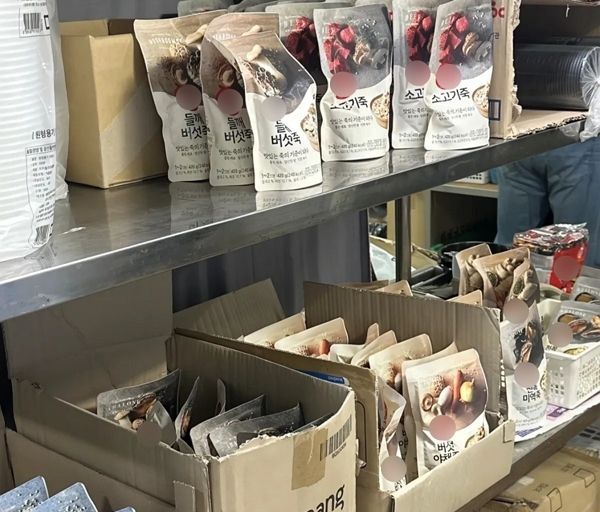 Claims have emerged that a delivery jukjip sells convenience foods with simple preparation. Online community screenshot
A recent post on an online community included both photos taken by a delivery worker and their account of the experience. The post featured images of retort juk products such as beef juk, perilla mushroom juk, and mushroom vegetable juk, all neatly organized in a Coupang box. These products are sold online for around 2,000 to 3,000 won each, with some available at half price through '1+1' promotions.
The author explained that the business in question is not a franchise, but rather a so-called 'shop-in-shop' operation, where multiple brands are run from a single kitchen for delivery. The actual selling price averaged 13,500 won per bowl, and the author pointed out that it is difficult for consumers to recognize this kind of business structure. They advised, "When ordering delivery, it is essential to check whether the registered business information matches the actual business name."
The so-called 'shop-in-shop' system, where a single business operates under multiple brand names for delivery, offers advantages for self-employed owners such as menu expansion and increased exposure. However, consumers continue to express concerns about hygiene and quality. In shop-in-shop operations, inventory management can be challenging and the owner's lack of cooking expertise may lead to a decline in food quality.
Users who saw the photos responded negatively, saying, "Charging over 10,000 won just to heat something up in the microwave is excessive," "Is this really a restaurant?" and "It seems the food service industry has turned into a packaging business." Some shared similar experiences, commenting, "I found out that a delivery-only gukbap restaurant used only frozen products," and "I was surprised when a naengmyeon restaurant simply heated up a meat pack for my order."
One user even calculated the profit margin, stating, "Based on the beef juk product, the profit exceeds 5,000 won even after deducting the cost," but added, "This method may have arisen due to practical limitations such as managing expiration dates and inventory burdens."
This shop-in-shop trend is also linked to changes in delivery platform policies. Until last year, Baemin allowed only one business name per business registration number, but starting this year, up to four are permitted. However, each brand must offer different menus, and the menu listed in the brand name must actually be sold, even if operated by the same owner.
Yogiyo has also revised its policy in a similar direction. Previously, only up to three business names could be registered, but now there is no limit, and even different brand names within the same category are allowed. As a result, a single chicken restaurant can now be listed under multiple names simultaneously.
© The Asia Business Daily(www.asiae.co.kr). All rights reserved.












