As Korea marks the 80th anniversary of Liberation Day this year, a recent survey has revealed generational differences in awareness of Liberation Day, historical consciousness, and perceptions of Japan.
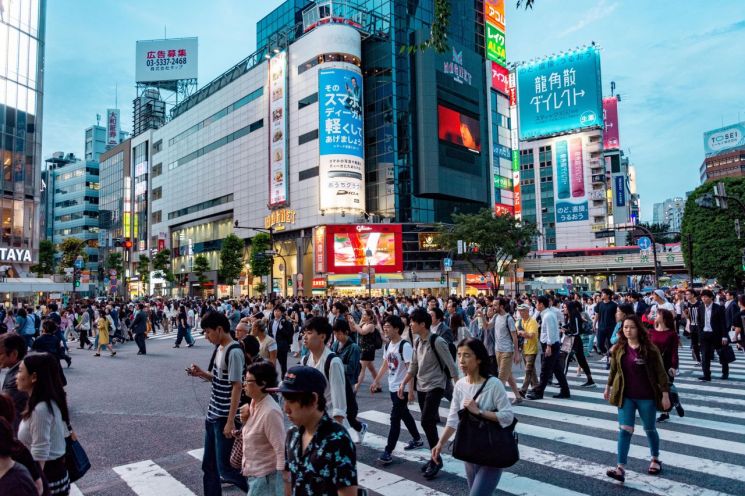
On August 14, data consulting firm PMI Co., Ltd. announced the results of its "2025 Liberation Day Awareness" survey, conducted through the "GS&Panel" with 1,000 men and women aged 19 and older nationwide.
Awareness Highest Among Those in Their 60s at 92.5%, Lowest Among Those in Their 30s at 72.4%
First, 82.4% of respondents said they "know the meaning, purpose, and date of Liberation Day." By age group, awareness was highest among those in their 60s at 92.5%, followed by those in their 50s (85.3%), 40s (79.4%), 20s (77.7%), and lowest among those in their 30s (72.4%). This is similar to the 2023 survey result (83.4%), but this year, all respondents in their 20s, 30s, and 40s reported awareness rates below the overall average of 82.4%.
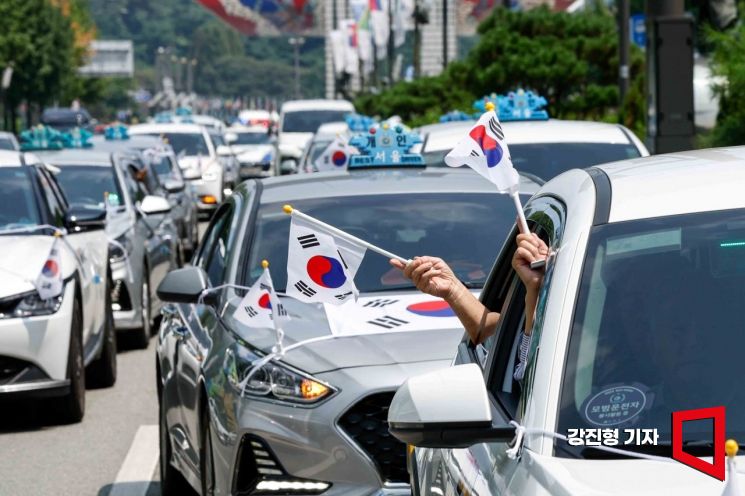 Two days before Liberation Day last year, a family of independence activists waving the Taegeukgi flag while riding a taxi decorated with Taegeukgi flags on Olympic-ro, Songpa-gu, Seoul. Photo by Kang Jinhyung
When asked about the importance of Liberation Day, 87.8% of all respondents said it was "important." Agreement on its importance was higher than average among those in their 60s (95.2%), 40s (90.1%), and 50s (89.4%), but lower among those in their 30s (81.0%) and 20s (77.3%). The data showed a trend of decreasing perception of Liberation Day's importance among younger age groups.
Positive Views on Patriotic Marketing... 43.6% Say Japanese Character Consumption Is Affected
For plans on this year's Liberation Day (Friday, August 15), the most common response was "resting at home" at 58.4%. This was followed by "no special plans" (16.4%) and "gathering with family or acquaintances" (12.3%). In contrast, 10.2% said they "plan to work" on Liberation Day, a higher rate than those planning "domestic travel" (9.6%), "participation in Liberation Day events" (5.7%), or "overseas travel" (1.6%). (Multiple responses allowed)
Regarding corporate and brand patriotic marketing and campaigns for Liberation Day, 80.7% responded positively. Of these, 19.7% said they "actively participate in or use such campaigns as a priority."
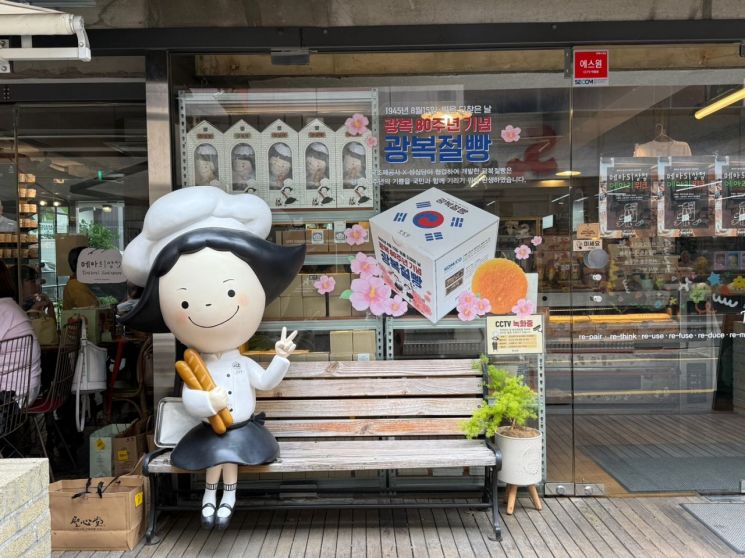 The Liberation Day Bread, jointly developed, launched, and sold by the Korea Minting and Security Printing Corporation and Seongsimdang to commemorate the 80th anniversary of Liberation Day. Korea Minting and Security Printing Corporation
Japan Travel: "Inappropriate" vs. "Personal Freedom" Opinions Nearly Even
Recently, collaborations and marketing using Japanese characters have become active in the retail, fashion, and food and beverage industries. During the Liberation Day period, 43.6% of respondents said they would "reduce or avoid consumption" of Japanese brand or character products. "Neutral" responses accounted for 32.7%, and 23.7% said they would be "unaffected." By age group, the rate was highest among those in their 40s (48.4%) and lowest among those in their 20s (36.8%), a difference of 11.6 percentage points between the two groups.
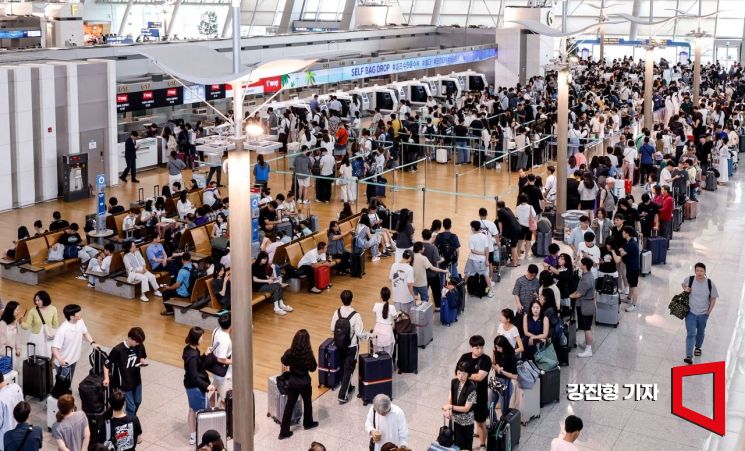
When asked about traveling to Japan during the Liberation Day holiday, 29.8% said "the timing is inappropriate," and 29.2% said "personally, I don't mind, but it could be sensitive socially," showing nearly equal proportions. Other responses included "it's a matter of personal freedom and not a problem" (19.2%), "alternative travel destinations should be considered" (12.3%), and "I've never really thought about it" (9.5%), reflecting a diversity of opinions.
A PMI official stated, "Rather than evaluating a specific generation, this survey is meaningful in that it quantifies perceptions at a given point in time," adding, "By continuously analyzing future trends, the results can serve as a reference for setting policies and communication strategies to narrow generational perception gaps."
© The Asia Business Daily(www.asiae.co.kr). All rights reserved.