FedWatch Prices In 93.7% Chance of 0.25% Cut
Secretary Besant Calls for a Large Cut
Diverging Views Within the Fed on the Need for Easing
As expectations grow that the US Federal Reserve (Fed) will cut interest rates next month, the market has effectively adopted a "small cut" (a 0.25 percentage point reduction) as its base scenario. However, some analysts note that the actual direction of monetary policy could change depending on upcoming economic indicators, including the August employment report. Within the Fed, there is a division between those advocating for easing and those urging caution, leading to speculation that the September Federal Open Market Committee (FOMC) meeting could be a "live" meeting where the rate decision is made without a predetermined conclusion.
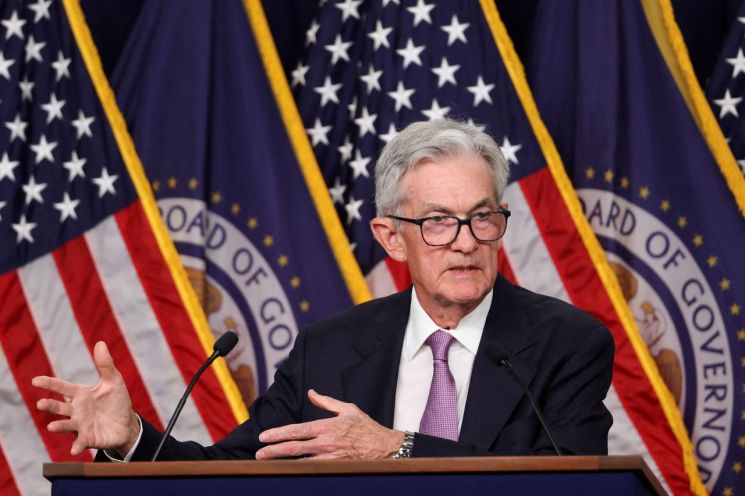
According to CME FedWatch on August 13 (local time), the interest rate futures market is pricing in a 93.7% probability of a 25 basis point (1bp = 0.01 percentage point) cut at the September FOMC. Among major global investment banks, Citigroup, Goldman Sachs, HSBC, Nomura Securities, and UBS all forecast that the upper bound of the policy rate, currently at 4.50%, will be lowered to 4.25% in September.
This outlook is largely due to the stabilization of the Consumer Price Index (CPI) in July, after it exceeded market expectations in June. The US Department of Labor announced that the July CPI rose 2.7% year-on-year. On a monthly basis, the CPI increased by 0.3%, coming in below the market forecast of 2.8%. Contrary to concerns that the Trump administration’s tariff policy would fuel inflation, the inflation rate has remained relatively stable.
Reuters reported, "With inflation moderating and recent employment data weakening, the likelihood of a Fed rate cut in September has increased," adding, "Market participants are pricing in the probability of a rate cut at nearly 100%."
Meanwhile, US Treasury Secretary Scott Besant has urged the Fed to take more aggressive action. In an interview with Bloomberg TV, he stated, "A 50bp cut in September could be the start of a series of consecutive rate cuts," and added, "No matter which model you look at, rates need to be lowered by 150 to 175bp." This means the current policy rate of 4.25-4.50% should be cut to the 2.50-2.75% range. Secretary Besant cited the downward revision of job growth in recent months and the clear signs of economic slowdown as grounds for a large cut.
Now, market attention is focused not on whether there will be a cut, but on the "magnitude" of the cut. However, the likelihood of a large cut, as Secretary Besant suggests, is low. The response in the futures market is also cautious. FedWatch reflects only a 6.3% probability of a 50bp cut.
Analysts say the key issue is whether the August employment report, to be released on September 5, will provide enough justification for a 50bp cut. Barron's, a US investment magazine, stated, "A 50bp cut would require a broad freeze in the labor market," and concluded, "For now, a small cut remains the base scenario."
While the market is treating a September rate cut as a foregone conclusion, there are still differences of opinion within the Fed regarding the need for a cut. Chicago Fed President Austan Goolsbee warned at an event in Springfield, Illinois, that, "We should not pivot to rate cuts before inflation is fully contained." He specifically pointed out the recent rise in service sector prices in the CPI, saying, "If this trend continues for several months, it will be concerning."
The Financial Times (FT) reported that these comments reflect internal disagreements within the Fed. While some members, such as Vice Chair Michelle Bowman and Governor Christopher Waller, have expressed dovish support for policy easing in response to labor market slowdown and data trends, most officials continue to maintain a cautious stance, prioritizing price stability.
As a result, there is a growing expectation that the September FOMC will be a "live" meeting. President Goolsbee also said, "The meetings this fall will be quite live, and we will have to make decisions on the spot." This suggests that the rate direction may not be decided in advance, but rather determined through discussion and a vote during the actual meeting.
Looking ahead, there are expectations that Fed Chair Jerome Powell’s speech at Jackson Hole and the release of the September FOMC minutes will clarify the direction of monetary policy. MarketWatch noted, "With continued uncertainty in economic indicators, Chair Powell’s Jackson Hole speech could serve as a key turning point for assessing future policy trends."
© The Asia Business Daily(www.asiae.co.kr). All rights reserved.












