Gender Gap Persists in Long-Term Care Professions
Valerie Frey: “Increasing Male Participation Could Improve Wages and Job Conditions”
Calls to Address Women’s Poverty and Unpaid Care Work in Aging Societies
As the pace of population aging accelerates, demand for long-term care services is rising. However, a report has pointed out that 9 out of 10 care providers in OECD member countries are women, highlighting a significant gender gap. There are growing calls to address gender-based division of labor in care professions and to improve care-related jobs.
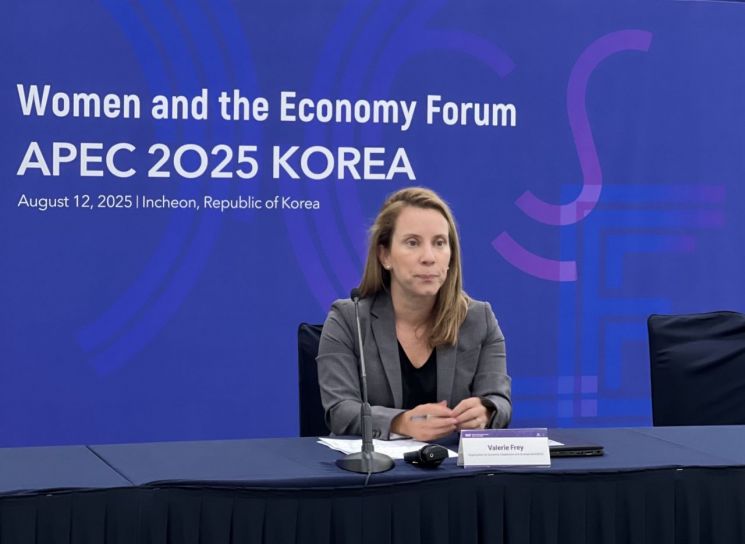
On August 12, Valerie Frey, Senior Economist at the OECD, stated in an interview following the '2025 APEC Women and the Economy High-Level Policy Dialogue (HLPDWE)' held at Songdo Convensia in Incheon that “9 out of 10 care providers are women,” and added, “We need to improve jobs in this sector, such as by increasing male participation, which could also help raise wages for care providers.”
Valerie Frey, who gave a presentation at the forum on “Strengthening Care Systems for Gender Equality and Population Aging,” said, “By 2033, population aging is expected to increase demand for long-term care workers in OECD member countries by 22%.” She continued, “On average, 87% of long-term care workers in the OECD are women,” emphasizing the need to foster more male workers in this field.
She noted, “Although demand for care is high, the wages of care workers have not improved,” and said, “This suggests the need for smarter government intervention and greater public-private cooperation.” She also pointed out, “The income of long-term care workers is lower than the OECD average income. Many long-term care providers work part-time, and their income is also lower than that of other part-time jobs, so addressing this issue is important going forward.” She further stated, “Care providers need a variety of skills such as empathy, time management, and patience, but these skills are not being properly recognized or evaluated,” and added, “We need to consider which skills should be included in job evaluations in order to improve job conditions.”
When asked about essential women’s policies for an aging society, Valerie Frey cited “addressing women’s poverty.” She said, “Among OECD member countries, the issue of women’s poverty stands out in elderly poverty statistics,” and stressed, “We must ensure that women can remain in the labor market as they age.” She also pointed out the need to address the issue of “unpaid care provision.” She explained, “Problems are exacerbated when both gender and old age are involved,” and advised, “Unpaid care provided by women for family members is also a social issue that needs to be addressed.”
© The Asia Business Daily(www.asiae.co.kr). All rights reserved.












