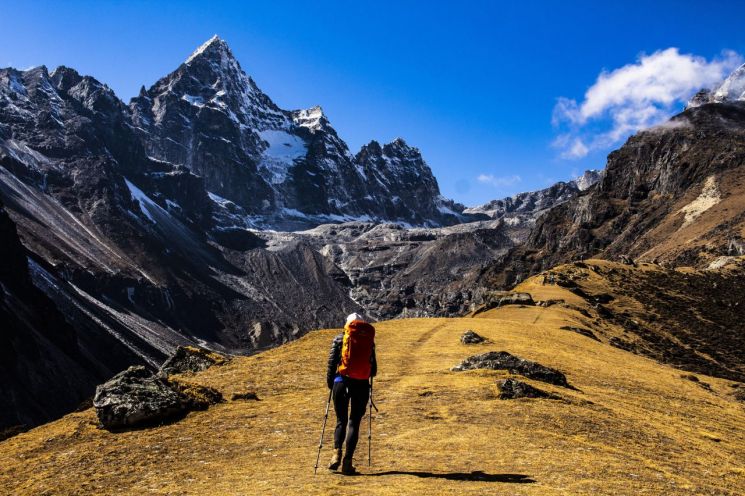
As Nepal moves to address overcrowding and environmental pollution by raising the entrance fee for Mount Everest starting in September, the country has also decided to allow free climbing on 97 peaks to promote tourism in remote regions.
According to the BBC on August 12 (local time), Nepalese tourism authorities announced this plan. The peaks with no entrance fee are located in Nepal's Karnali and Sudurpashchim provinces and range in height from 5,970 meters to 7,132 meters. Both provinces are situated at the western edge of Nepal and are among the country’s poorest and least developed regions. The director of Nepal’s tourism board stated, "Despite the breathtakingly beautiful scenery, the areas are extremely difficult to access, so the number of tourists and climbers is very low. We hope the new measures will help."
However, the BBC pointed out, "It is unclear whether authorities have plans to improve infrastructure and connectivity in these remote regions, and it is also uncertain how well local communities would be able to cope with a sudden influx of climbers if the free climbing initiative takes off." Historically, climbers have shown little interest in these 97 remote peaks. In the past two years, there have been only 68 climbing applications. In contrast, Mount Everest alone saw about 421 climbing permits issued in 2024.
Nepal, home to 10 of the world’s highest peaks, derives significant revenue from mountaineering. Last year, climbing fees generated $5.9 million (8.2 billion won), with more than three-quarters of that coming from Everest expeditions.
Although Everest stands as the world’s highest peak at 8,849 meters, it has faced challenges in recent years due to overcrowding, environmental issues, and a series of climbing accidents. In April 2024, Nepal’s Supreme Court ordered the government to limit the number of climbing permits issued for Everest and several other peaks.
As a result, in January this year, Nepalese authorities announced a 36% increase in the entrance fee. Starting in September, the entrance fee during the peak season (March to May) will rise to $15,000 (20 million won). From September to November, the fee will be $7,500 (1 million won), and from December to February, it will be $3,750 (520,000 won). Nepal’s parliament is also considering a new bill that would require climbers to first summit a mountain over 7,000 meters in Nepal before attempting Everest. According to the Kathmandu Post, the peaks in Karnali and Sudurpashchim have been cited as 'ideal training grounds.'
© The Asia Business Daily(www.asiae.co.kr). All rights reserved.












