London, Singapore, and Hong Kong: The Top Three
Four Chinese Cities, Including Beijing, Rank in the Top
Seoul and KCAB Have No Presence on the International Stage
In the US, Only New York and Washington DC Make the Top 15
The most preferred arbitration seats among practitioners worldwide were London, Singapore, Hong Kong, and Beijing, in that order. Practitioners also favored the arbitration rules of institutions located in these preferred seats, such as the Hong Kong International Arbitration Centre (HKIAC), Singapore International Arbitration Centre (SIAC), and London Court of International Arbitration (LCIA). In addition to Beijing, other major Chinese cities, including Shanghai and Guangzhou, were also named as preferred arbitration seats. The rules of Chinese arbitration institutions ranked highly as well, confirming that China is expanding its influence on the international arbitration stage. In contrast, Seoul and the Korean Commercial Arbitration Board (KCAB) were not mentioned at all.
White & Case, a global law firm headquartered in New York, recently published the report "2025 International Arbitration Survey: The Path Forward ? Realities and Opportunities in International Arbitration" in collaboration with the School of International Arbitration at Queen Mary University of London (QMUL). A total of 2,402 participants took part in this survey, including lawyers, arbitrators, representatives of arbitration institutions, academics, and tribunal secretaries from around the world.
London, Singapore, and Hong Kong: The Top Three
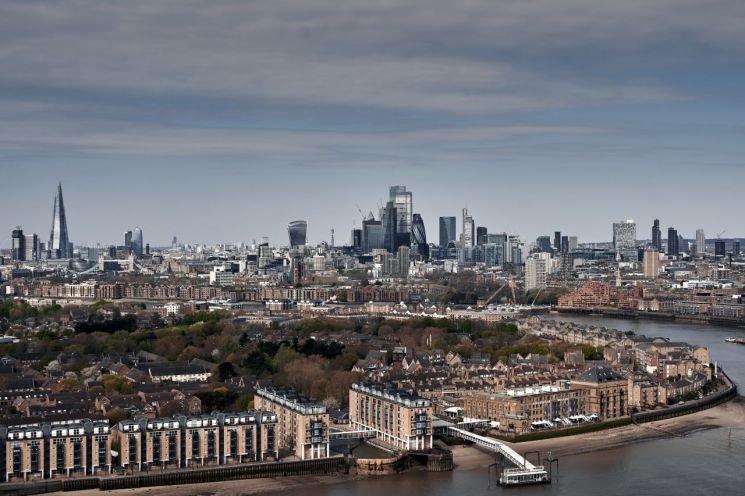
When asked about their preferred arbitration seat, 34% of respondents chose London, placing it first. Respondents cited the high reliability of award enforcement and an efficient judicial system as reasons for selecting London.
Singapore and Hong Kong followed, each receiving support from 31% of respondents. Those who selected Singapore pointed to the Singaporean government’s favorable attitude toward international arbitration, the judiciary’s respect for arbitral awards, and procedural efficiency as advantages.
Respondents who chose Hong Kong highlighted its long-standing arbitration culture and the enforceability of awards in mainland China.
Four Chinese Cities, Including Beijing, Rank in the Top
Notably, Beijing (20%) overtook Paris (19%) to claim fourth place. Shenzhen (19%) tied for fifth, Shanghai (11%) ranked eighth, and Guangzhou (6%) tied for eleventh, meaning that four Chinese cities?excluding Hong Kong?were selected as preferred arbitration seats by practitioners.
The rise of Chinese cities is attributed to several factors: the expanding commercial influence of Chinese companies, the accumulation of arbitration experience, and strong support from practitioners in the Asia-Pacific region. Some respondents from Europe and North America stated that they would consider Asia as an arbitration seat in the future. Another respondent remarked, "Arbitration is moving east."
In the survey on preferred arbitration rules, the rules of the China International Economic and Trade Arbitration Commission (CIETAC), Shenzhen Court of International Arbitration (SCIA), and Guangzhou Arbitration Commission (GZAC) all ranked within the top 15. However, some respondents noted that enforcement of awards within mainland China remains challenging.
Some experts believe that the survey results differ somewhat from what is experienced in practice. One international arbitration specialist commented, "It is possible that a large number of Chinese respondents participated, which may have led to higher support for Chinese cities and institutions. While it is true that China’s presence has grown, it is still difficult to say that arbitration in China guarantees procedural fairness and transparency."
Seoul and KCAB Have No Presence on the International Stage
In this survey, neither Seoul nor KCAB ranked in the categories of preferred arbitration seats or rules. They had no presence whatsoever, even though respondents could select up to five options. There was no mention of Korea in the entire report.
A mid-career arbitration lawyer analyzed, "Although Chinese courts are not yet particularly arbitration-friendly, nor is enforcement of arbitral awards easy, the enormous transaction volume of Chinese companies seems to have influenced their selection as preferred arbitration seats. Whether companies like it or not, it has become unavoidable to arbitrate in China." He added, "China has made significant government-level investments in arbitration development for several years, and Shenzhen has recently established large-scale, state-of-the-art arbitration facilities. While Korea has neglected investment in the arbitration sector, China has surged ahead."
Another arbitration lawyer said, "Korean courts are arbitration-friendly, and the judicial system is of a high standard and stable, but there is a severe lack of English-language materials introducing excellent case law and systems. To compete with leading arbitration hubs like Singapore, Hong Kong, and even Chinese cities, Korea must actively promote information and resources in English and invest in advanced facilities and infrastructure." He further pointed out, "Korea lacks long-term government-level investment."
In the US, Only New York and Washington DC Make the Top 15
In this survey, only New York (13%, 7th place) and Washington DC (4%, 14th place) were named as preferred arbitration seats in the United States. Another arbitration lawyer explained, "Traditionally, US companies have a strong tendency to resolve disputes through litigation rather than arbitration, and they have the bargaining power to enforce this preference with their counterparts." He continued, "Many companies consider US courts more trustworthy than foreign arbitration institutions, and as a result, they prefer to bring disputes before US courts, which appears to have influenced these results."
Hong Yoonji, Legal Times Reporter
※This article is based on content supplied by Law Times.
© The Asia Business Daily(www.asiae.co.kr). All rights reserved.












